Villa Walk In Closet Furniture Suppliers
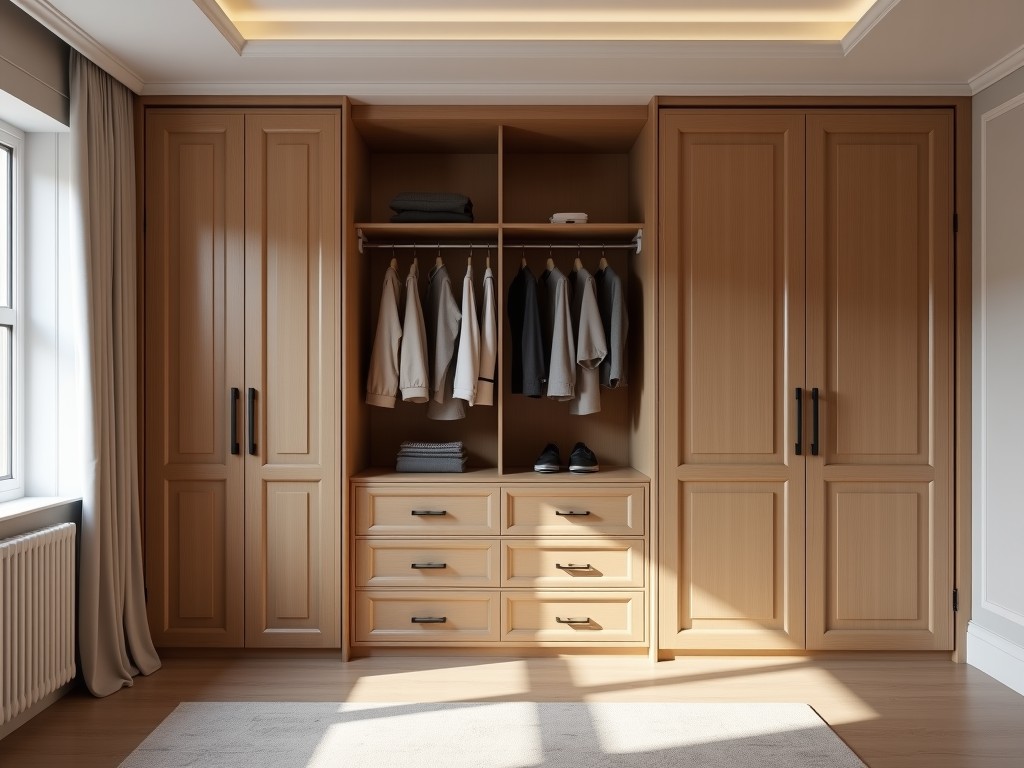
Villa Walk In Closet Furniture Suppliers
Selecting appropriate walk-in closet furniture for villa projects requires evaluating structural integrity, material compatibility with interior finishes, and adaptability to spatial constraints.
- Category:
- Walk In Closet
Villa Walk-In Closet Furniture Suppliers
Selecting appropriate walk-in closet furniture for villa projects requires evaluating structural integrity, material compatibility with interior finishes, and adaptability to spatial constraints. Suppliers serving this segment must provide systems that integrate seamlessly with architectural designs while meeting durability expectations for high-end residential use.
Core Structural Systems in Walk-In Closet Furniture
The load-bearing framework determines long-term stability and reconfigurability. Aluminum extrusions with T-slot profiles allow modular assembly without welding, enabling on-site adjustments. Steel uprights with powder-coated finishes offer higher shear resistance for heavy-load applications like shoe storage or stacked units. Connection hardware—such as cam locks and concealed brackets—must maintain alignment under cyclic loading to prevent sagging over time.
Material Selection for Interior Components
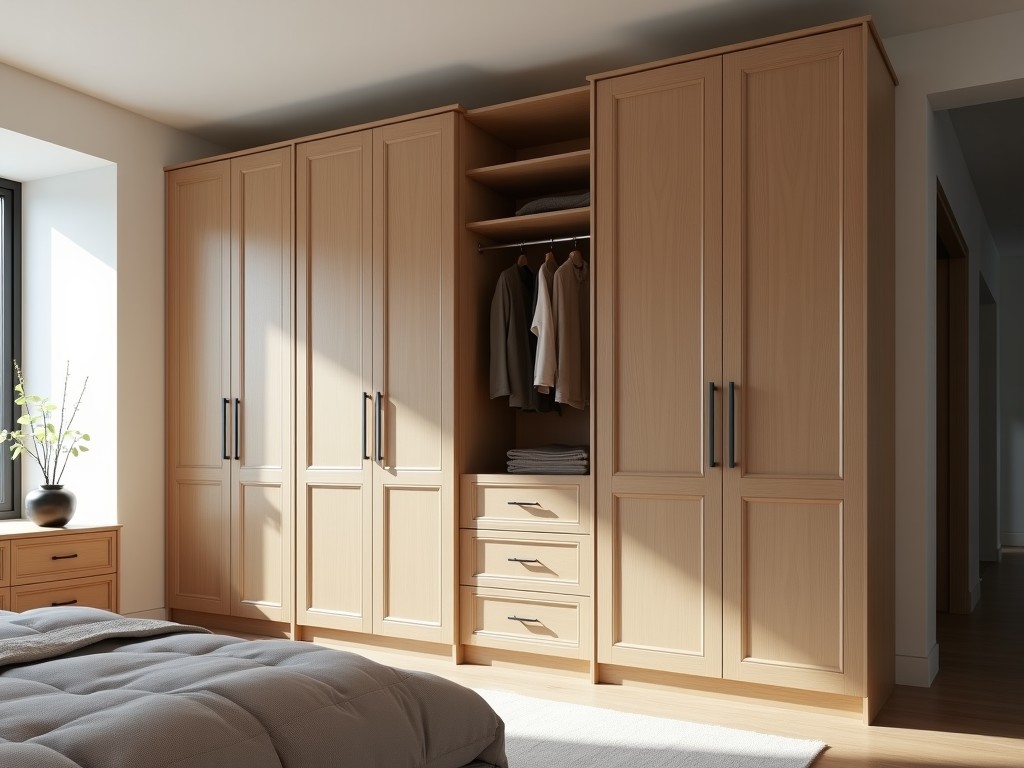
Panel materials influence both aesthetics and environmental resistance. Melamine-faced chipboard (MFC) provides consistent surface quality at lower cost, suitable for dry environments with edge sealing to prevent moisture ingress. Medium-density fiberboard (MDF) with PVC laminate offers superior screw-holding strength and smoother finish for painted or veneered surfaces, though it requires edge protection in humid zones. Solid wood veneers (e.g., oak, walnut) deliver premium appearance but demand climate control to minimize expansion/contraction cycles.
Hardware and Functional Accessories
Operational longevity depends on hardware quality. Soft-close drawer slides rated for 30,000 cycles reduce impact wear, while full-extension runners maximize access depth. Hinges with 3-way adjustment (vertical, horizontal, depth) compensate for wall inconsistencies during installation. Accessories such as pull-out trouser racks, adjustable shelving with metal brackets, and integrated lighting channels must align with the system’s load specifications to avoid premature failure.
Customization and Dimensional Flexibility
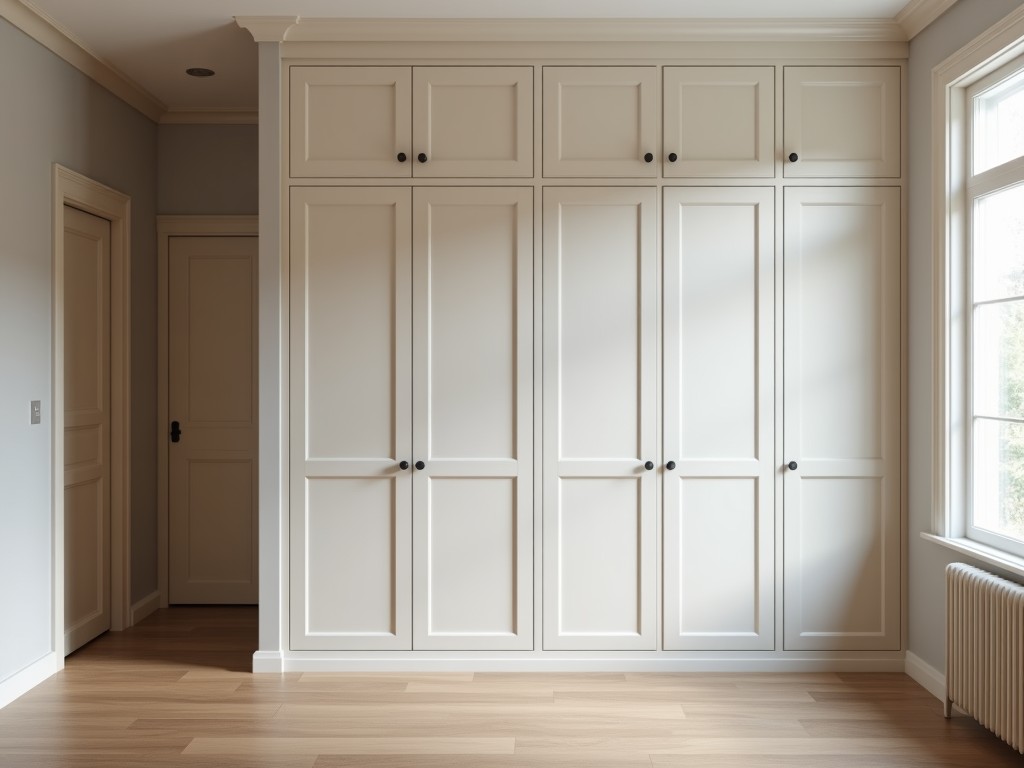
Villa closets often feature irregular layouts due to architectural features like dormers or angled walls. Suppliers should offer cut-to-length components for horizontal rails and vertical posts, enabling precise fitting without compromising structural continuity. Custom panel cutting accommodates niches and sloped ceilings, while adjustable shelving systems (e.g., pin-and-hole or rail-mounted) allow reconfiguration as storage needs evolve. Clear documentation of modification limits—such as maximum allowable cut lengths for load-bearing members—is essential for safe adaptation.
Finish Options and Surface Durability
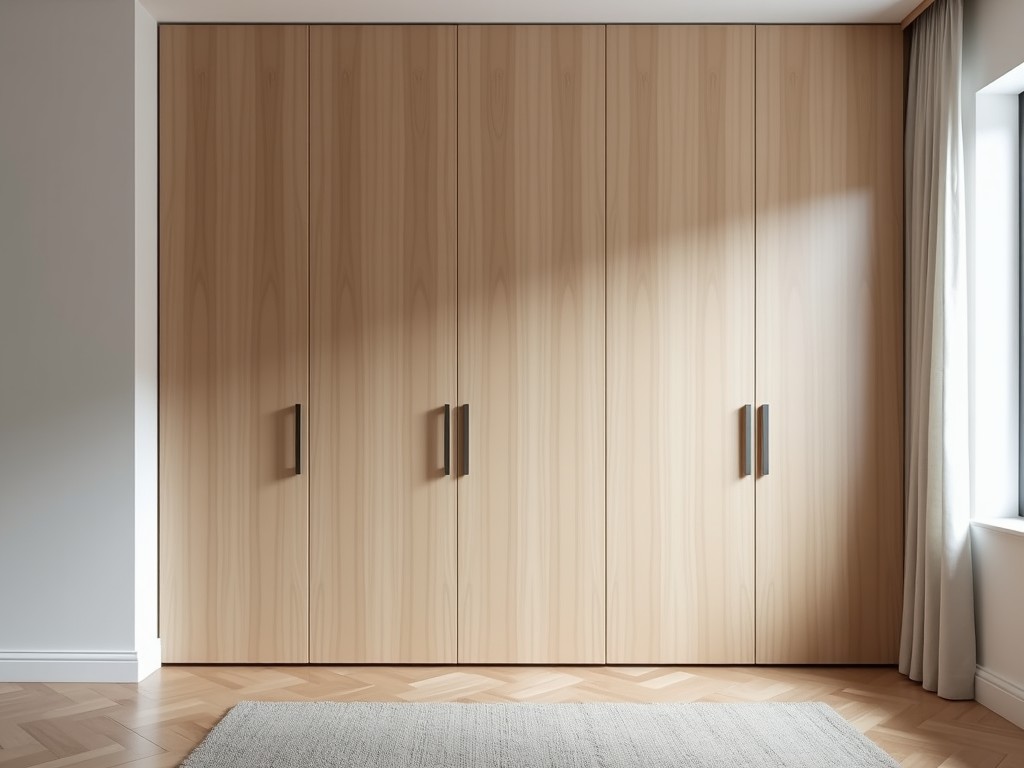
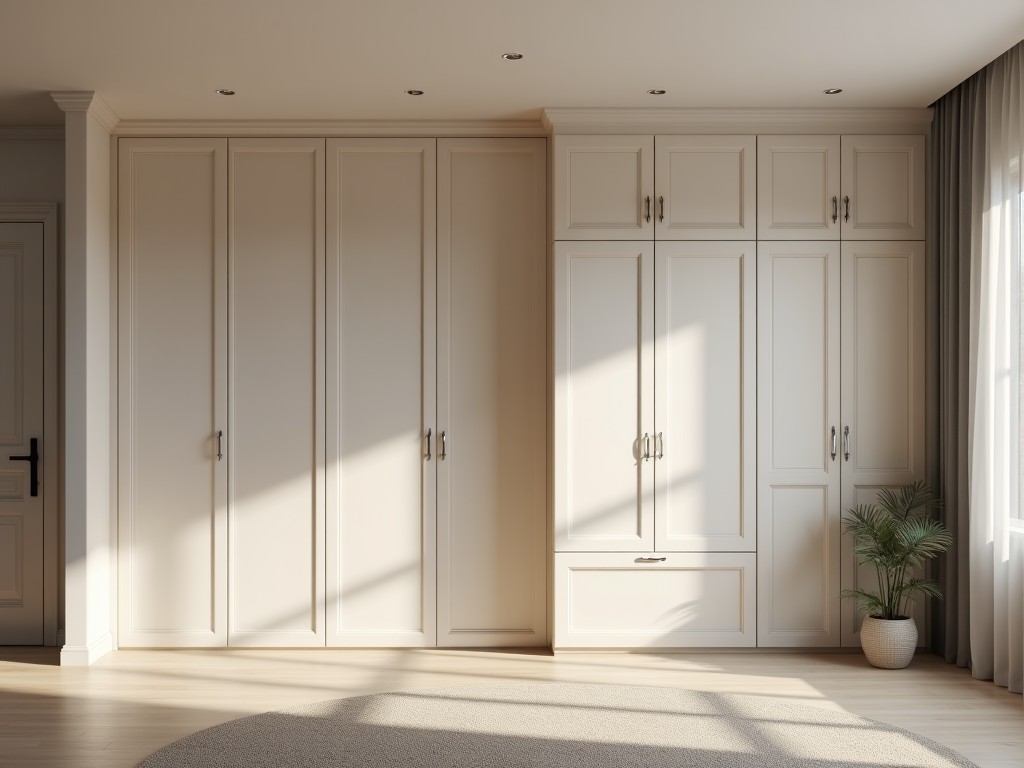
Surface finishes affect both visual harmony and maintenance requirements. Matte laminates reduce glare in well-lit spaces but may show fingerprints more readily than textured or satin variants. UV-coated surfaces resist fading from prolonged sunlight exposure, critical for closets with skylights or large windows. Anti-fingerprint treatments on metal components (e.g., handles, rails) maintain appearance in high-touch areas. Edgebanding thickness (typically 0.5–2.0 mm) impacts chip resistance; thicker bands provide better protection for high-impact zones like drawer fronts.
Quality Control and Manufacturing Consistency
Dimensional tolerances directly affect assembly accuracy. Panel thickness variations should remain within ±0.2 mm to ensure proper fit in dado joints and hardware mounting. Edge straightness deviations exceeding 0.5 mm per meter can cause misalignment in long runs. Surface finish adhesion is tested via cross-hatch (ASTM D3359) to verify resistance to peeling under humidity cycling. Suppliers should provide inspection reports detailing these metrics for batch consistency, particularly for large villa projects requiring multiple identical units.
Packaging and Logistics Considerations
Flat-pack design reduces shipping volume but requires clear labeling and sequence-guided assembly. Components should be packed in ordered bundles (e.g., all left-side panels together) with hardware kits matched to specific modules. Corner protectors and edge guards prevent damage during transit, especially for finished surfaces. Internal dividers within cartons minimize shifting of loose parts like screws and brackets. For international shipments, ISPM 15-compliant pallets and moisture-barrier wrapping mitigate risks from customs delays or humid storage.
Typical Specification Ranges for Villa Applications
| Parameter | Typical Range | Notes |
|---|---|---|
| Upright Height (Single Section) | 2000–2600 mm | Extensible via connectors for full-height installations |
| Shelf Depth | 400–600 mm | 600 mm standard for folded garments; 400 mm for accessories |
| Drawer Load Capacity | 25–40 kg | Depends on slide rating and box construction |
| Panel Thickness | 16–25 mm | 16 mm common for backs; 18–25 mm for shelves and doors |
| Edge Banding Thickness | 0.5–2.0 mm | 1.0–2.0 mm recommended for high-wear edges |
Evaluating Supplier Capabilities
Technical due diligence should assess a supplier’s ability to support project-specific demands. Inquire about their engineering support for custom layouts—whether they provide CAD files or BIM models for clash detection. Confirm if they conduct pre-assembly checks (e.g., dry-fit verification) for complex geometries. Evaluate their quality documentation: do they supply material safety data sheets (MSDS) for finishes, or test reports for load-bearing claims? Understanding their production lead times for standard vs. custom items helps align with construction schedules, especially when seasonal factors affect material availability (e.g., wood veneer drying cycles).