Stainless Steel Column Wardrobe Closet
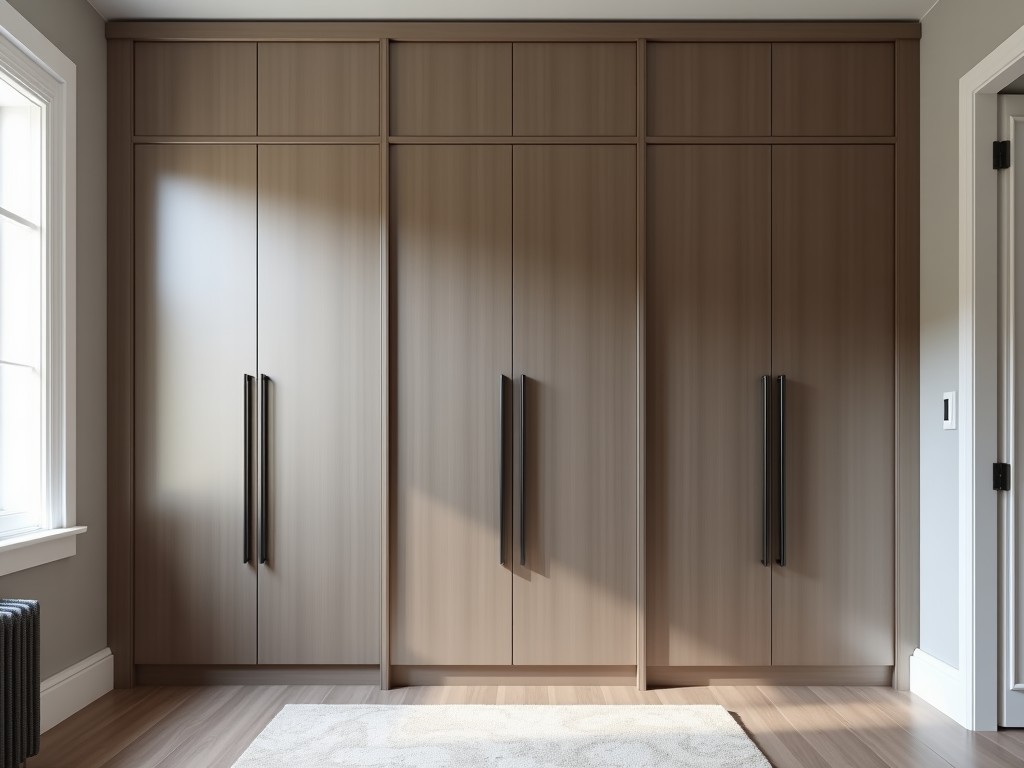
Stainless Steel Column Wardrobe Closet
A stainless steel column wardrobe closet is a vertical storage system constructed from corrosion-resistant alloy grades, designed for environments requiring hygiene, durability, and resistance to
- Category:
- Walk In Closet
Stainless Steel Column Wardrobe Closet
A stainless steel column wardrobe closet is a vertical storage system constructed from corrosion-resistant alloy grades, designed for environments requiring hygiene, durability, and resistance to chemical or moisture exposure. Unlike painted steel or laminate alternatives, these units maintain structural integrity in high-humidity, sanitary, or industrial settings where long-term surface stability is critical.
The column-based configuration integrates hanging rails, shelving, and accessory mounts within a single load-bearing profile, minimizing floor footprint while maximizing vertical utility. This design is particularly suited to facilities where space optimization and cleanability are operational priorities, such as pharmaceutical cleanrooms, food processing zones, or marine installations.
Material Composition and Grade Selection
The primary structural elements are fabricated from austenitic stainless steel, most commonly AISI 304 or 316L, selected based on environmental exposure levels. Grade 304 provides adequate resistance to atmospheric corrosion and mild chemical agents, while 316L incorporates molybdenum to enhance protection against chlorides and acidic solutions, making it suitable for washdown areas or coastal installations.
All exposed surfaces undergo mechanical finishing to achieve a No. 4 brushed finish (Ra 0.4–0.6 μm), which minimizes particulate adhesion and facilitates cleaning. Welded joints are fully polished to match the base material, eliminating crevices where contaminants could accumulate — a critical factor in industries governed by FDA, GMP, or HACCP standards.
Structural Design and Load Characteristics
The vertical column serves as the main load path, constructed from hollow or solid rectangular sections with wall thicknesses typically ranging from 1.5 mm to 3.0 mm, depending on height and intended load. Horizontal components — including hanging rails and shelves — are attached via mechanical fasteners or welded gussets, designed to transfer loads efficiently to the column without inducing stress concentrations.
Standard configurations support a uniformly distributed load of up to 80 kg per shelf and 150 kg on the hanging rail, with deflection limits kept under L/200 under maximum load. For heavier-duty applications, reinforced gussets or increased section modulus can be specified, with load ratings validated through finite element analysis prior to production.
Dimensional Flexibility and Modularity
Column height is customizable in 50 mm increments, commonly ranging from 1800 mm to 2400 mm to accommodate standard ceiling clearances while allowing for top-mounted ventilation or lighting fixtures. Depth varies between 500 mm and 650 mm, balancing garment storage requirements with aisle clearance in narrow facilities.
Internal components are adjustable along the column’s length using slotted channels or threaded inserts, enabling reconfiguration without tools. Shelves typically adjust in 25 mm vertical increments, while hanging rails can be repositioned to accommodate varying garment lengths — from short jackets to full-length coveralls.
Surface Treatment and Hygienic Properties
Beyond base material selection, surface treatments enhance resistance to microbial colonization and chemical degradation. Passivation treatments (per ASTM A967) remove free iron from the surface, improving the chromium oxide layer’s stability. Electropolishing is available upon request for applications requiring ultra-low surface roughness (Ra < 0.2 μm), such as in semiconductor or biotech environments.
These finishes reduce the likelihood of biofilm formation and allow for effective cleaning with alkaline or acidic agents without surface pitting. Unlike coated systems, stainless steel does not delaminate, chip, or off-gas, ensuring consistent performance over decades of service life — a key consideration in total cost of ownership assessments.
Accessory Integration and Functional Add-Ons
The column’s modular interface supports a range of accessories without compromising structural integrity. Common additions include shoe racks, pull-out trouser presses, valet rods, and integrated lighting conduits — all fabricated from matching stainless steel to maintain galvanic compatibility.
For environments requiring contamination control, optional features such as seamless drip pans, magnetic door seals (for enclosed variants), or UV-C sanitization modules can be incorporated. These are designed as bolt-on or slip-fit components, allowing for field upgrades or reconfiguration as process needs evolve.
Quality Assurance and Inspection Protocol
Dimensional verification occurs at multiple stages: raw material inspection, post-forming, and final assembly. Critical tolerances — such as column verticality (±2 mm over 2 m), shelf levelness (±1 mm), and hole alignment (±0.5 mm) — are verified using calibrated gauges and coordinate measuring machines where applicable.
Surface finish is assessed visually and via profilometry to ensure compliance with specified Ra values. Weld integrity is inspected using dye penetrant testing on 100% of exposed joints, with acceptance criteria aligned to ASME Section VIII standards. Final units undergo load testing at 125% of rated capacity to validate safety margins before packaging.
Typical Applications Across Industries
In pharmaceutical manufacturing, these closets are installed in gowning rooms where repeated exposure to sanitizing agents (e.g., hydrogen peroxide, alcohol) demands non-degrading surfaces. The smooth, crevice-free design minimizes particle retention, supporting ISO 14644-1 cleanliness classifications.
Food processing facilities utilize them in employee hygiene zones, where resistance to salt, acids, and high-pressure washdowns is essential. Marine and offshore installations benefit from 316L’s chloride resistance, preventing rust formation in salt-laden atmospheres where carbon steel would require frequent replacement.
Additionally, they are specified in cleanrooms for electronics assembly, laboratories handling corrosive reagents, and fire stations requiring gear storage that withstands repeated decontamination cycles. The absence of organic coatings eliminates VOC concerns in sensitive indoor air environments.
Comparison with Alternative Materials
| Attribute | Stainless Steel (304/316L) | Powder-Coated Steel | Laminated Particle Board |
|---|---|---|---|
| Corrosion Resistance | Excellent (inherent alloy property) | Good (dependent on coating integrity) | Poor (swells, delaminates) |
| Cleanability | High (non-porous, smooth finish) | Moderate (coating can trap microbes) | Low (porous, harbors contaminants) |
| Fire Performance | Non-combustible (A1 rating) | Non-combustible (coating may degrade) | Combustible (C rating or worse) |
| Service Life (Industrial) | 20+ years | 5–10 years (coating failure) | 2–5 years (moisture damage) |
| Recyclability | 100% (closed-loop) | Limited (coating separation needed) | Very low (composite material) |
*Typical values; actual performance depends on grade, finish, and environmental exposure. Data based on industry standards and accelerated testing protocols.
Customization and Ordering Considerations
Quotations require specification of overall dimensions (height, width, depth), preferred stainless steel grade, surface finish level, and internal configuration (number of shelves, rail height, accessory types). Environmental factors — such as exposure to chlorides, temperature cycling, or cleaning agents — should be disclosed to ensure appropriate material selection.
Lead times typically range from 4 to 6 weeks for standard configurations, extending to 8–10 weeks for highly customized units involving special tolerances, integrated systems, or electropolished finishes. Packaging includes corner protection, stretch wrapping, and palletizing suitable for forklift handling, with optional crate packaging available for long-haul or export shipments.
For technical inquiries, custom design support, or to request a detailed quotation with load calculations and material certification, contact our engineering team.
Request Technical Consultation