Pole Wardrobe Storage System Organizer
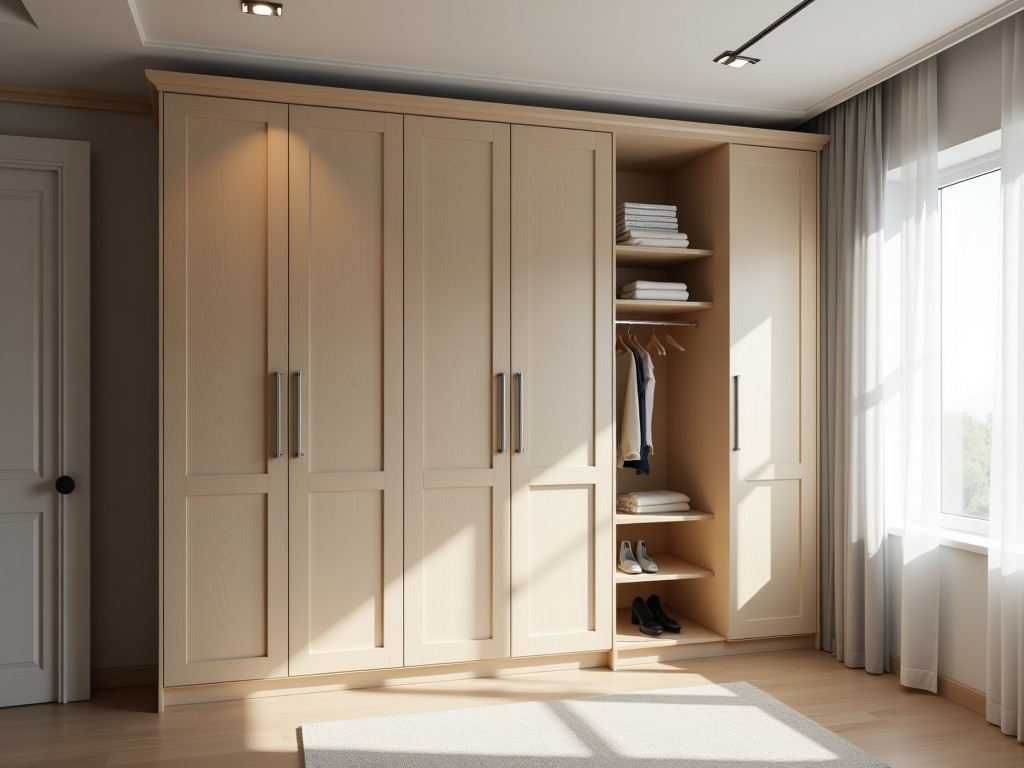
Pole Wardrobe Storage System Organizer
A pole wardrobe storage system organizer is a modular, wall-mounted or freestanding framework designed to maximize vertical storage efficiency in industrial, commercial, and institutional
- Category:
- Walk In Closet
Pole Wardrobe Storage System Organizer
A pole wardrobe storage system organizer is a modular, wall-mounted or freestanding framework designed to maximize vertical storage efficiency in industrial, commercial, and institutional environments. It consists of vertical support poles, horizontal rails, adjustable shelving, hanging rods, and accessory mounts that can be reconfigured to accommodate changing inventory, equipment, or apparel storage needs.
Unlike fixed cabinetry or static shelving, this system leverages adjustable components mounted along load-bearing poles to create customizable storage zones. The design minimizes floor footprint while enabling easy access to stored items. Typical applications include uniform storage in facilities management, tool and PPE organization in maintenance shops, linen handling in healthcare laundries, and garment staging in retail backrooms.
Core Structural Characteristics
The system’s structural integrity depends on pole material, wall anchoring method, and load distribution across horizontal elements. Vertical poles are commonly constructed from extruded aluminum (6063-T5) or cold-rolled steel with powder-coated finish, selected based on environmental exposure and required load capacity. Aluminum poles offer corrosion resistance in humid environments and weigh approximately 1.8 kg/m, while steel variants provide higher yield strength (up to 350 MPa) for heavy-duty applications.
Horizontal rails and shelves attach via sliding brackets or locking pins that engage with vertical channels on the poles. This allows incremental height adjustment—typically in 25 mm or 50 mm increments—without tools. Shelf depths range from 300 mm to 600 mm, with standard widths of 900 mm, 1200 mm, and 1500 mm to match common panel or bin dimensions. Load ratings are specified per linear meter: aluminum systems typically support 80–120 kg/m, while steel configurations exceed 200 kg/m when properly anchored to structural walls or floor mounts.
Anchoring methods vary by installation type. Wall-mounted units use lag bolts through steel backing plates into studs or masonry, with load transfer calculated per anchor point. Freestanding versions incorporate base plates with adjustable leveling feet and optional diagonal bracing to resist lateral forces. In seismic zones, additional bracing or direct structural welding may be required per local building codes.
Configuration Flexibility and Accessory Integration
The system’s value lies in its ability to adapt storage geometry to specific workflows. Users can mix and match components—such as pull-out baskets, angled shoe racks, fold-down work surfaces, or ventilated bins—without altering the primary pole framework. This adaptability reduces the need for permanent renovations when storage requirements evolve.
Accessory mounting interfaces are standardized across the pole channel, enabling third-party or custom fabrications to integrate seamlessly. For example, a maintenance facility might install magnetic tool holders at eye level, heavy-duty coat hooks at 1600 mm height, and stackable parts bins below 1000 mm—all on the same pole run. Adjustable hanging rods for garments typically operate between 1000 mm and 1800 mm from the floor, with cantilever brackets rated for 15–20 kg per linear meter of rod.
Ventilation and hygiene considerations are addressed through perforated shelf designs, open-frame construction, and materials resistant to cleaning agents. In food processing or pharmaceutical settings, shelves may feature NSF-compliant polyethylene coatings or stainless steel inserts to meet sanitation standards. Cable management cutouts and integrated lighting channels can be added to poles for technical storage applications involving electronics or instrumentation.
Material Selection and Environmental Suitability
Material choice directly impacts longevity, maintenance needs, and total cost of ownership. Aluminum poles (6063-T5 alloy) provide a natural oxide layer that resists corrosion in indoor environments with relative humidity below 80%. For coastal or high-moisture areas, anodized finishes (minimum 15 µm thickness) or marine-grade seals are recommended. Steel poles use powder coating (epoxy-polyester blend, 80–120 µm thickness) with zinc-rich primer for rust inhibition; periodic inspection is advised in areas prone to condensation.
Shelving and accessories vary by use case. Cold-rolled steel shelves with powder coating suit general industrial loads. Stainless steel (grade 304) is selected for cleanrooms, chemical exposure, or frequent washdowns. Polymer options—such as polypropylene or ABS—offer lightweight, non-corrosive alternatives for light storage or where magnetic attachment is needed. All materials are selected for compatibility with common industrial cleaning solvents (e.g., isopropyl alcohol, diluted alkaline cleaners) without degradation.
Load testing follows industry standards such as ANSI/BIFMA X5.6 for storage units or EN 16121 for domestic storage, adapted for commercial use. Deflection limits are typically set to L/180 under uniform load, ensuring shelves remain functional without permanent deformation. End-users should verify anchoring strength against anticipated dynamic loads (e.g., pulling heavy garments, sliding bins) to prevent gradual loosening of fasteners over time.
Typical Applications Across Sectors
| Sector | Primary Use Case | Key Configuration Drivers |
|---|---|---|
| Facilities Management | Uniform and PPE storage for security, janitorial, and engineering staff | Adjustable hanging rods, ventilated shelves for moisture control, label holders for inventory tracking |
| Maintenance Shops | Tool, consumable, and safety gear organization | Heavy-duty bins at floor level, magnetic strips for hand tools, retractable cords for power tools |
| Healthcare Laundry | Clean linen staging and soiled garment segregation | Non-porous surfaces, sloped shelves for drainage, color-coded bins for contamination zones |
| Retail Backrooms | Seasonal merchandise staging and employee personal storage | Double-tier hanging rods, pull-out accessory trays, interchangeable shelf depths for folded goods |
| Educational Institutions | Athletic equipment, lab coats, and student belongings | Ventilated lockers integrated into pole system, adjustable bench seating, lockable compartments |
Each application leverages the system’s core advantage: reconfigurability without structural modification. For instance, a maintenance shop might initially install 400 mm deep shelves for oil cans and later replace them with 600 mm deep bins for bulk filters—using the same pole uprights and anchor points. This eliminates demolition waste and reduces reinstallation labor compared to fixed cabinetry.
Customization and Project-Specific Engineering
While standard configurations cover common needs, many installations require tailored solutions to match spatial constraints, load profiles, or regulatory requirements. Customization begins with site assessment: measuring clearances, identifying structural supports, and evaluating environmental factors (temperature swings, chemical exposure, cleaning frequency).
Pole length can be specified in 100 mm increments from 1800 mm to 3000 mm for wall-mounted units, or segmented for taller freestanding arrays. Horizontal components are cut to exact widths to fit between columns or within alcoves. Special finishes—such as antimicrobial coatings, FDA-compliant paints, or UV-stabilized powders—are available for regulated environments. Load testing reports and material safety data sheets (MSDS) are provided upon request for validation purposes.
Integration with existing infrastructure is a key consideration. Poles can be notched to avoid conduit or piping, or mounted via offset brackets to clear protrusions. Electrical data ports, lighting fixtures, or pneumatic hose reels can be attached using standardized adapter plates. For mobile applications, lockable casters (rated for 250–400 kg per set) replace base plates, enabling repositioning while maintaining load stability when locked.
Quality Assurance and Longevity Factors
Durability is determined by material selection, surface protection, and assembly precision. Powder coating adhesion is verified via cross-hatch testing (ASTM D3359), with minimum 4B rating required for industrial use. Welded joints (where applicable) undergo visual and dye-penetrant inspection to detect micro-cracks. Load-bearing components are sampled for tensile strength and hardness verification before shipment.
Wear points—such as bracket sliding channels or pin holes—are designed with hardened inserts or low-friction polymers to prevent galling over thousands of adjustment cycles. Threaded fasteners use prevailing-torque lock nuts or nylon inserts to resist vibration loosening. In high-vibration environments (e.g., near machinery), additional thread-locking compounds may be specified.
Expected service life exceeds 15 years under normal indoor conditions with annual inspection. Coastal or industrial environments may reduce this to 8–10 years without protective upgrades. Manufacturers typically offer warranties covering material defects and coating adhesion for 5–10 years, excluding damage from improper installation or overloading. Spare parts (brackets, pins, leveling feet) are kept in stock for minimum 7 years after product discontinuation.
For technical inquiries, customization requests, or project consultation, contact our engineering team to discuss your specific storage challenges and site requirements.