Oem Wall Mounted Aluminum Closet Frame
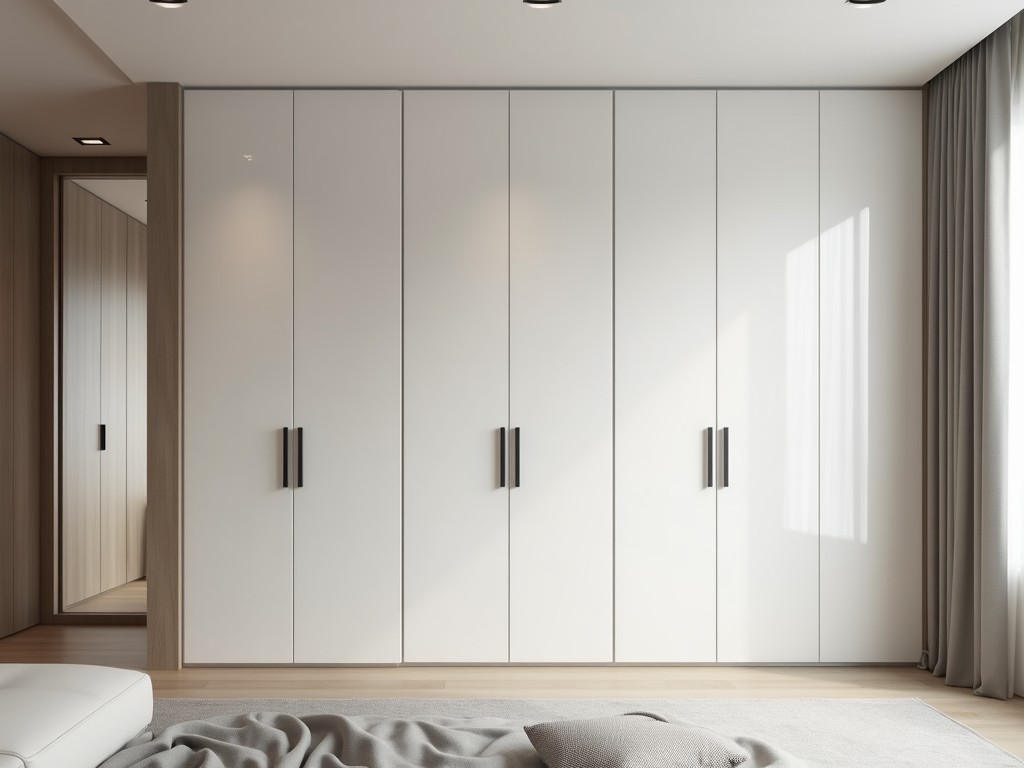
Oem Wall Mounted Aluminum Closet Frame
Wall-mounted aluminum closet frames provide structural support for interior storage systems while minimizing floor space usage. Designed for OEM integration, these frames are engineered to meet
- Category:
- Walk In Closet
OEM Wall Mounted Aluminum Closet Frame
Wall-mounted aluminum closet frames provide structural support for interior storage systems while minimizing floor space usage. Designed for OEM integration, these frames are engineered to meet precise dimensional tolerances and load requirements specified by furniture manufacturers and interior fit-out contractors. The primary function is to transfer closet system loads—including dynamic forces from door operation and static loads from stored items—directly to the building substrate through predictable mechanical interfaces.
Material Selection and Alloy Properties
The frame is constructed from extruded 6063-T5 aluminum alloy, selected for its balance of extrudability, surface finish quality, and mechanical performance. This alloy typically achieves a tensile strength of 140–180 MPa and a yield strength of 115–160 MPa after T5 tempering, sufficient for residential and light commercial closet applications. The natural oxide layer provides inherent corrosion resistance in indoor environments, eliminating the need for additional coatings in standard installations.
Extrusion allows for complex cross-sectional profiles that integrate mounting flanges, wire management channels, and shelf support ledges in a single component. Wall thickness typically ranges from 1.5 mm to 3.0 mm depending on load path requirements, with thicker sections concentrated at anchor points and load-bearing interfaces. Dimensional tolerances conform to ISO 2768-m for linear dimensions and ISO 2768-c for form and position, ensuring repeatable fit with mating components.
Structural Design and Load Path
The wall-mounted configuration relies on direct mechanical fastening to structural substrates such as wood studs, metal framing, or masonry. Load transfer occurs through engineered fastener zones designed to distribute shear and tensile forces across multiple anchor points. Each mounting point is typically rated for a shear capacity of 800–1200 N and tensile capacity of 600–1000 N when installed into #12 wood screws driven into pine studs, with actual values dependent on embedment depth and substrate quality.
Finite element analysis shows that deflection under a uniform 150 N/m load (simulating folded garments on shelves) remains below L/200 for spans up to 900 mm, where L is the unsupported length between mounts. Stiffness is enhanced through sectional moment of inertia optimization—common profiles achieve Ixx values between 20,000–50,000 mm⁴ and Iyy between 8,000–15,000 mm²—limiting sway under lateral loads from sliding doors.
Surface Finish and Integration Features
Standard finish is mill finish aluminum, which preserves the as-extruded surface for applications where subsequent painting or anodizing by the OEM is required. For pre-finished options, clear anodize (AA-M10C22A41) provides a 5–15 µm coating with improved abrasion resistance and visual consistency. Powder coating in RAL 9016 (traffic white) or RAL 9005 (jet black) is available for OEMs requiring color-matched integration with closet systems.
Integrated features include pre-drilled mounting holes at 16-inch or 400 mm on-center intervals to align with standard stud spacing, removable end caps for clean termination, and optional adhesive-backed wire channels for low-voltage lighting or sensor routing. Hole diameters typically range from 4.5 mm to 6.0 mm to accommodate #8–#10 wood screws or M4–M5 machine screws with appropriate anchors.
Customization for OEM Requirements
OEMs frequently require adjustments to length, hole patterns, flange geometry, and accessory integration to match specific closet system designs. Lengths are customizable from 300 mm to 3600 mm in 1 mm increments, with no minimum order quantity for standard profiles. Hole patterns can be modified to match non-standard stud layouts, integrate with prefabricated wall panels, or accommodate specific bracket geometries.
Flange depth and width can be adjusted to optimize clearance for door tracks, shelving standards, or ventilated panels. Common modifications include adding 5–10 mm return flanges for edge protection or integrating 3–5 mm thick mounting tabs for direct attachment to cam locks or euro screws. All customizations maintain the base 6063-T5 alloy specification unless otherwise agreed upon for volume orders.
Quality Control and Dimensional Verification
Dimensional verification occurs at multiple stages: incoming billet inspection, extrusion line monitoring, and final product audit. Critical dimensions such as hole position (±0.2 mm), wall thickness (±0.1 mm), and overall length (±0.5 mm) are checked using calibrated CMM or optical comparators. Surface finish is assessed visually and by profilometer for anodized or painted variants to ensure Ra < 1.6 µm for mill finish and coating uniformity.
Mechanical properties are verified through periodic tensile testing of extrusion samples per ASTM B557, with results tracked against 6063-T5 specification limits. Anodic coating thickness is measured via eddy current or micrometer methods per ASTM B244. All inspection data is retained for traceability and available to OEM customers upon request as part of PPAP documentation.
Typical Applications in Interior Systems
These frames are commonly integrated into reach-in closets, walk-in wardrobes, and modular storage systems where wall mounting preserves floor clearance for cleaning or furniture placement. In residential applications, they support combined loads of clothing, folded items, and light storage (typically 40–60 kg per linear meter). In commercial settings such as hotel suites or multifamily units, they accommodate higher cycle loading from frequent use and standardized interior packages.
The aluminum construction provides a non-magnetic, non-corrosive substrate compatible with electronic locking systems, RFID inventory tags, and low-voltage lighting—features increasingly specified in premium closet designs. Unlike steel alternatives, aluminum does not require galvanization or painting to prevent rust in humid environments, reducing long-term maintenance considerations for end users.
| Parameter | Typical Value / Range | Notes |
|---|---|---|
| Alloy | 6063-T5 | Standard extrusion alloy for architectural applications |
| Tensile Strength | 140–180 MPa | ASTM B557 |
| Yield Strength | 115–160 MPa | 0.2% offset |
| Wall Thickness | 1.5–3.0 mm | Varies by load zone |
| Moment of Inertia (Ixx) | 20,000–50,000 mm⁴ | About strong axis |
| Mounting Hole Diameter | 4.5–6.0 mm | For #8–#10 screws or M4–M5 |
| Standard Length Range | 300–3600 mm | Custom lengths available |
| Finish Options | Mill, Clear Anodize, Powder Coat | RAL colors on request |
Packaging and Handling
Frames are packaged individually in polyethylene sleeves to prevent surface abrasion during transit, then bundled in groups of 5–10 units depending on length. Each bundle is secured with recyclable polyester strapping and placed in corrugated cardboard boxes with end caps to protect against impact. For lengths exceeding 2400 mm, additional middle supports are added to prevent flexing during handling.
Labeling includes part number, length, alloy, finish, and batch traceability code. OEM-specific packaging requirements—such as custom barcodes, pallet configurations, or protective corner inserts—can be accommodated upon request. All packaging materials are ISPM 15 compliant for international shipments.
Installation Considerations
Installation requires locating structural supports behind the finished wall surface—typically wood or metal studs at 400 mm or 16-inch centers. Fasteners should be selected based on substrate type: #8–#10 wood screws for timber framing, self-drilling taps for metal studs, or appropriate anchors for masonry. Pilot holes are recommended in hardwood to prevent splitting.
Leveling is critical for proper door alignment and shelf function; shims may be used behind the frame to compensate for wall irregularities. A 2–3 mm gap is typically maintained between the frame top and ceiling to allow for thermal expansion and installation tolerances. All fasteners should be torqued to manufacturer specifications to avoid over-compression of the aluminum flange.
Environmental and Compliance Attributes
Aluminum is infinitely recyclable without loss of properties, and scrap from extrusion and machining is routinely reclaimed in closed-loop manufacturing systems. The 6063 alloy contains no restricted substances under RoHS or REACH, making it suitable for global markets. VOC emissions are negligible during use, and finishes such as clear anodize or powder coat meet low-emission criteria for indoor air quality standards.
The product contributes to LEED MRc4 (Recycled Content) and MRc5 (Regional Materials) when sourced locally, and its long service life reduces replacement frequency compared to less durable alternatives. No halogenated flame retardants or volatile solvents are used in standard production processes.



