Oem Aluminum Profile Open Wardrobe System
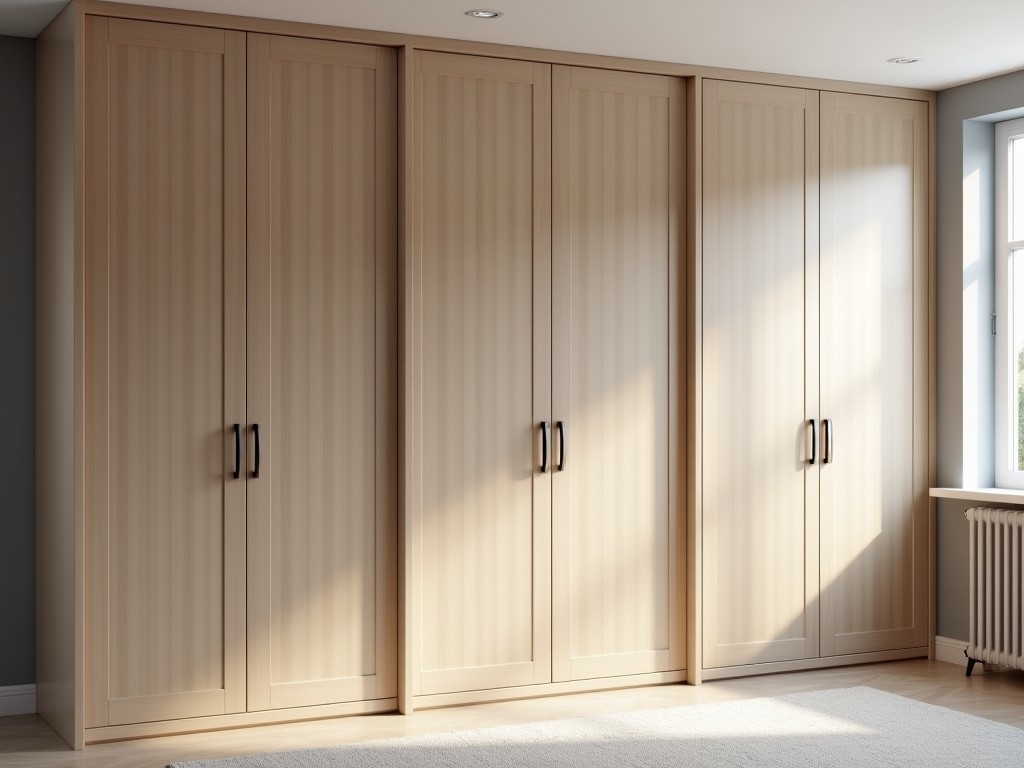
Oem Aluminum Profile Open Wardrobe System
An open wardrobe system built from aluminum profiles provides a modular framework for storing garments, accessories, and related items without enclosing doors or panels. The design relies on extruded
- Category:
- Walk In Closet
OEM Aluminum Profile Open Wardrobe System
An open wardrobe system built from aluminum profiles provides a modular framework for storing garments, accessories, and related items without enclosing doors or panels. The design relies on extruded aluminum members to form vertical uprights, horizontal rails, and supporting brackets that together create a visible, accessible storage structure. Unlike closed cabinetry, this approach emphasizes ease of access, visual openness, and adaptability to changing storage needs.
The system is typically used in retail display environments, residential walk-in closets, hotel storage areas, and industrial changing rooms where quick visual identification of stored items is beneficial. Aluminum’s inherent corrosion resistance allows the system to perform reliably in humid environments such as bathrooms or coastal facilities without requiring protective coatings. Its high strength-to-weight ratio enables long spans between supports while minimizing deflection under load.
Core Structural Characteristics
The primary load-bearing components are extruded aluminum profiles with standardized cross-sections, commonly featuring T-slots or grooves along their length to accommodate accessories such as hanging rods, shelf brackets, and shoe racks. Profile dimensions typically range from 20mm x 20mm to 40mm x 40mm in outer diameter, with wall thicknesses between 1.2mm and 2.5mm depending on the expected load profile. These dimensions are selected to balance stiffness, weight, and ease of fabrication.
Aluminum alloy 6063-T5 is frequently used for extrusion due to its good surface finish, adequate mechanical properties (minimum tensile strength of 160 MPa, yield strength of 110 MPa), and excellent extrudability. For applications requiring higher strength, such as heavy-duty garment storage in commercial settings, alloy 6061-T6 may be specified (tensile strength ≥240 MPa, yield strength ≥275 MPa). The choice of alloy directly influences the maximum allowable load per linear meter of profile.
Connections between profiles are typically made using mechanical fasteners such as T-nuts, bolts, and corner brackets, or via snap-fit accessories designed to engage the T-slot geometry. This avoids the need for welding, preserving the material’s corrosion resistance and allowing for disassembly and reconfiguration. The modular nature of the connection system enables users to adjust shelf heights, add hanging sections, or integrate lighting components without specialized tools.
Load Capacity and Performance Data
The load-bearing capacity of the system depends on profile geometry, material alloy, span length, and connection type. For a standard 30mm x 30mm 6063-T5 profile with a 1.5mm wall thickness, the maximum uniformly distributed load on a horizontal shelf spanning 900mm is approximately 25kg before noticeable deflection occurs. This value assumes proper support at both ends and evenly distributed weight.
Vertical uprights made from the same profile can typically support axial loads exceeding 200kg when properly anchored to the floor and ceiling, though practical limits are often determined by the anchoring method rather than the profile itself. Deflection under load is a key design consideration; for hanging applications, vertical deflection should generally remain under 3mm over a 2-meter height to prevent visible sagging of garments.
Dynamic loads, such as those caused by frequent sliding of hangers or accessing shelves, are generally lower than static loads but may induce fatigue over time. Aluminum’s high fatigue resistance makes it suitable for such cyclic loading, especially when stress concentrations are minimized through smooth profile transitions and proper fastener placement.
Comparison of Profile Options
| Parameter | 20x20mm 6063-T5 (1.2mm wall) | 30x30mm 6063-T5 (1.5mm wall) | 40x40mm 6061-T6 (2.0mm wall) |
|---|---|---|---|
| Max. Shelf Load (900mm span) | 12 kg | 25 kg | 50 kg |
| Max. Vertical Load (upright) | 80 kg | 200 kg | 400 kg |
| Weight per Meter | 0.35 kg/m | 0.65 kg/m | 1.2 kg/m |
| Typical Applications | Light residential, display stands | Standard closets, retail | Heavy-duty, commercial, industrial |
*Values are typical for standard configurations; actual performance depends on connection quality, anchoring, and load distribution. Custom profiles and alloys available upon request.
Surface Finish and Environmental Resistance
Aluminum profiles are commonly supplied with an anodized finish to enhance surface hardness and corrosion resistance. Anodizing thicknesses typically range from 10µm to 25µm, with thicker coatings providing greater protection in harsh environments. The process creates a transparent oxide layer that integrates with the substrate, preventing peeling or flaking under mechanical stress.
Alternative finishes include powder coating, which allows for color customization (e.g., black, white, bronze) while adding a protective polymer layer. Powder-coated surfaces generally offer good UV stability and scratch resistance, though they may be less effective than anodizing in highly abrasive conditions. For environments with exposure to salts or chemicals, such as near swimming pools or industrial washdown areas, sealing the anodized layer or selecting a marine-grade alloy may be advisable.
The natural oxide layer on aluminum provides inherent resistance to atmospheric corrosion, making unpainted profiles suitable for dry indoor environments. However, in humid or saline conditions, untreated surfaces may develop surface oxidation over time, which, while not structurally significant, can affect appearance. Specifying a finish appropriate to the installation environment ensures long-term aesthetic and functional performance.
Customization and Integration Capabilities
The T-slot design inherent in many aluminum profiles allows for the integration of a wide range of accessories without machining. Standard components such as hanging rods, shelf brackets, shoe racks, pull-out baskets, and lighting fixtures can be inserted directly into the slots and secured with set screws or specialized fasteners. This enables on-site reconfiguration as storage needs evolve.
For applications requiring non-standard geometry, such as angled sections or curved profiles, custom extrusion dies can be developed, though this typically involves higher tooling costs and longer lead times. Alternatively, standard profiles can be cut and joined using corner brackets or miter joints to approximate complex shapes. Accessories like drawer slides or folding mechanisms can be added using adapter plates that interface with the T-slot system.
Electrical integration is also feasible; LED strips or motion-sensor lighting can be mounted within profiles designed with internal channels, or attached externally using adhesive-backed tracks. Power routing can be managed through hollow profiles or surface-mounted conduits, allowing for clean, wire-free appearances in retail or residential settings.
Quality Control and Manufacturing Considerations
Dimensional accuracy of extruded profiles is critical for proper fit of accessories and structural stability. Typical tolerances for extruded aluminum conform to ISO 2768-m or similar standards, with linear dimensions held within ±0.2mm for smaller profiles and ±0.3mm for larger ones. Straightness and twist are also controlled, with typical limits of 0.5mm per meter for straightness and 0.3mm per meter for twist, ensuring profiles assemble without binding.
Surface quality is inspected for scratches, dents, or inconsistencies in finish. Anodized or coated surfaces are evaluated for color uniformity, coating thickness (using eddy current or magnetic induction methods), and adhesion quality (via cross-hatch tape testing). Any defects exceeding agreed-upon thresholds are rejected before further processing.
Final assembly verification includes checking for proper alignment of uprights and levels, confirming that all fasteners are tightened to specified torque values, and validating that accessories operate smoothly without obstruction. Load testing may be performed on sample assemblies to confirm design assumptions, particularly for custom or high-load configurations.
Typical Applications and Industry Fit
In retail environments, open wardrobe systems allow customers to view garments without obstruction, improving product visibility and encouraging interaction. The modular design enables rapid reconfiguration for seasonal displays or promotional layouts, reducing labor costs associated with fixture changes. Aluminum’s clean appearance complements modern store aesthetics while resisting wear from frequent handling.
In residential settings, particularly walk-in closets, the system offers a minimalist alternative to built-in cabinetry, preserving a sense of space while providing flexible storage. Homeowners can adjust shelf heights or add compartments as their wardrobe evolves, avoiding the need for renovation. The visibility of stored items also encourages better organization and reduces duplicate purchases.
Industrial and institutional uses include employee changing rooms in factories, gyms, or healthcare facilities, where durability and ease of cleaning are priorities. The smooth, non-porous surface resists bacterial growth and can be wiped down with standard cleaning agents. In humid environments such as spas or poolside changing areas, anodized aluminum maintains performance where steel might corrode or wood might warp.
For project-specific configurations, load requirements, or finish selections, contact our technical team to discuss your application. Provide details such as intended use, expected loads, environmental conditions, and dimensional constraints to receive a tailored solution.
Submit Inquiry