Floor Standing Aluminum Column Closet
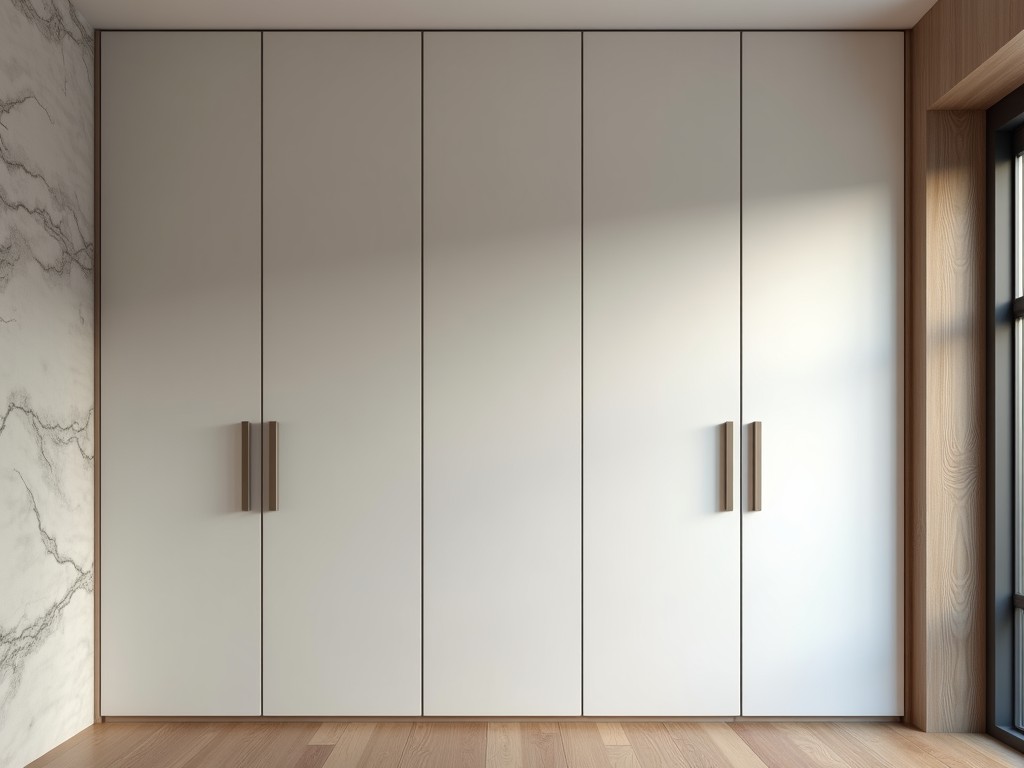
Floor Standing Aluminum Column Closet
A floor standing aluminum column closet is a vertical storage system constructed from extruded aluminum profiles, designed to stand independently on the floor without requiring wall mounting or
- Category:
- Walk In Closet
Floor Standing Aluminum Column Closet
A floor standing aluminum column closet is a vertical storage system constructed from extruded aluminum profiles, designed to stand independently on the floor without requiring wall mounting or structural integration. It functions as a modular enclosure for organizing tools, equipment, documents, or industrial components in environments where accessibility, durability, and corrosion resistance are priorities. Unlike wall-mounted cabinets or freestanding steel units, this configuration leverages aluminum’s strength-to-weight ratio to provide rigid support while minimizing floor load and simplifying repositioning.
The system typically consists of vertical columns, horizontal shelves, door assemblies, and optional accessories such as drawers, lighting, or locking mechanisms—all interconnected via precision-engineered connectors that maintain alignment and structural integrity under load. These units are commonly specified in manufacturing facilities, laboratories, maintenance workshops, and distribution centers where exposure to moisture, chemicals, or frequent cleaning protocols necessitates non-corrosive materials. The absence of welded joints or paint finishes eliminates common failure points associated with steel alternatives in humid or washdown environments.
Design considerations include load distribution across the base footprint, resistance to lateral forces from door operation or seismic activity, and thermal expansion compensation in fluctuating temperature zones. Engineers evaluate column wall thickness, base plate geometry, and anchor point design to ensure stability under both static and dynamic loads. Unlike plastic or composite alternatives, aluminum maintains dimensional stability across wide temperature ranges and does not off-gas, making it suitable for cleanroom-adjacent or food processing areas where material purity is monitored.
Material Specification and Structural Properties
The primary structural components are fabricated from 6063-T5 aluminum alloy, selected for its balance of extrudability, mechanical strength, and surface finish consistency. This alloy typically achieves a minimum tensile strength of 145 MPa and yield strength of 115 MPa, with elongation at break exceeding 8%, allowing for plastic deformation before fracture under impact loads. The T5 temper indicates artificial aging after elevated temperature cooling, which stabilizes mechanical properties without requiring solution heat treatment.
Extrusion profiles feature wall thicknesses ranging from 1.2 mm to 3.0 mm depending on load path, with vertical columns commonly using 2.0–2.5 mm thick sections to resist buckling under eccentric loading. Surface treatments include clear anodizing (typically 10–15 μm thick) or powder coating in RAL colors, both providing barrier protection against oxidation while maintaining electrical conductivity where grounding is required. Anodized finishes exhibit surface hardness of 250–350 HV, significantly surpassing bare aluminum and resisting abrasion from carts or tool handling.
Fasteners and connectors are predominantly stainless steel (A2-70 or A4-80 grade) to prevent galvanic corrosion when joined to aluminum, particularly in environments with chloride exposure. Thermal expansion coefficient of 23.5 µm/m·K is accounted for in design through sliding joints or expansion gaps at floor interfaces, preventing stress accumulation during seasonal temperature swings. These material choices collectively support a service life exceeding 25 years in indoor industrial settings with minimal maintenance.
Load Capacity and Stability Engineering
Load capacity is determined through finite element analysis of the column-base interface under combined vertical and lateral forces, with safety factors applied per ISO 14122-3 for industrial workstation framing. Typical configurations support uniformly distributed loads of 300–500 kg per shelf level, with total system capacity reaching 1500–2000 kg when weight is evenly distributed across multiple tiers. Eccentric loading—such as heavy items placed at the front edge of a shelf—reduces effective capacity by up to 40% due to induced bending moments in the column.
Base plates are engineered to distribute load over a minimum footprint of 400×400 mm per column, using 6–8 mm thick aluminum or steel plates with predrilled anchor holes for optional mechanical fastening to concrete floors. In seismic zones (e.g., IEC 60721-3-4 Class 4M3), units incorporate base isolators or reinforced gussets to limit horizontal displacement to less than 5 mm under peak ground acceleration of 0.3g. Anti-tip brackets are optional but recommended when center of gravity exceeds 1.8 m height or when doors are frequently opened with significant force.
Deflection limits are governed by functional requirements: shelf sag is restricted to L/200 (where L is shelf span) to prevent item sliding or door misalignment, while column lateral drift is kept under H/500 (H = column height) to maintain door seal integrity. These thresholds are validated through physical testing with calibrated load cells and laser displacement sensors, ensuring performance aligns with simulated outcomes. Units intended for vibratory environments (e.g., near presses or conveyors) include damping washers in bolted connections to mitigate resonance.
Configuration Options and Customization Logic
Modularity is achieved through standardized column grid increments (typically 50 mm or 100 mm), allowing shelves, doors, and accessories to be positioned at precise vertical intervals without custom fabrication. Horizontal members use T-slot or dovetail connectors that enable tool-free adjustment in some models, while others employ set-screw clamping for higher torque retention. This adaptability supports reconfiguration as workflows evolve, reducing lifecycle costs compared to fixed cabinetry.
Door types include swing (single or double), sliding, and lift-off variants, each selected based on aisle clearance, frequency of access, and environmental sealing needs. Swing doors use concealed hinges with 110° opening angle and optional soft-close dampers; sliding doors incorporate low-friction polymer rollers rated for 20,000 cycles; lift-off doors feature quick-release pins for tool-free removal during deep cleaning. Sealing is achieved via EPDM or silicone gaskets compressed to 15–25% deflection, achieving IP54 rating in enclosed configurations.
Interior accessories are specified according to 5S methodology: adjustable shelves (25 mm pitch), tool holders with removable bins, document trays with angled fronts, and power/data raceways integrated into column channels. Lighting options include LED strips with motion sensors, providing 300–500 lux uniformity on work surfaces while consuming <5 W per linear foot. All internal components are designed to avoid crevices where contaminants accumulate, supporting compliance with ISO 14644-1 cleanroom standards when paired with appropriate filtration.
Comparison with Alternative Materials
| Parameter | Aluminum Column Closet | Powder-Coated Steel Closet | Stainless Steel Closet | HDPE Plastic Closet |
|---|---|---|---|---|
| Density (g/cm³) | 2.7 | 7.8 | 8.0 | 0.95 |
| Corrosion Resistance (Indoor) | Excellent (anodized) | Good (if coating intact) | Excellent | Excellent |
| Corrosion Resistance (Washdown) | Excellent | Poor (coating degradation) | Excellent | Good (chemical dependent) |
| Typical Shelf Capacity (UDL) | 300–500 kg | 400–600 kg | 500–700 kg | 100–200 kg |
| Weight (2000mm H Unit) | 35–45 kg | 90–110 kg | 95–115 kg | 12–18 kg |
| Fire Rating (Non-Combustible) | Yes | Yes | Yes | No (melts at ~130°C) |
| Modifiability On-Site | High (slotted columns) | Low (welded/riveted) | Low | Medium (limited accessories) |
Values represent typical ranges; actual performance depends on specific profile design, thickness, and surface treatment. Steel values assume intact powder coating; degradation significantly reduces washdown suitability.
Quality Control and Manufacturing Process
Manufacturing begins with precision extrusion of 6063-T5 billets through hardened dies, maintaining tolerances of ±0.15 mm on critical dimensions per EN 755-9. Profiles undergo straightening and cutting to length using CNC saws with blade speeds optimized to prevent burr formation or surface tearing. Secondary operations include drilling, tapping, and milling for connector interfaces, performed on fixtured CNC centers to ensure positional repeatability within ±0.2 mm.
Surface treatment follows strict bath chemistry control: anodizing tanks maintain 18–22% sulfuric acid concentration at 18–22°C with current density ramped to 1.5–2.5 A/dm² for consistent coating thickness. Powder coating applications use electrostatic spray with particle size distribution controlled to 10–80 μm, followed by curing at 180–200°C for 10–15 minutes to achieve full cross-linking. All coated surfaces are tested for adhesion (ASTM D3359 Method B, target 5B) and holiday detection (wet sponge, 67.5 V) before assembly.
Final assembly includes torque-controlled fastening of all critical joints (typically 8–12 Nm for M6 stainless steel fasteners) using calibrated drivers, with 10% of units undergoing full load testing to 125% of rated capacity. Dimensional inspection verifies column plumbness (<2 mm/m), shelf levelness (<1.5 mm/m), and door gap uniformity (<1.5 mm variation). Packaging employs corner protectors, stretch wrap, and horizontal palletization to prevent edge damage during transit, with shock indicators attached to monitor handling severity.
Typical Applications in Industrial Environments
In automotive manufacturing plants, these units store torque wrenches, diagnostic tools, and calibration fixtures along assembly lines, where frequent washdowns and exposure to cutting fluids necessitate non-corrosive, easy-to-clean surfaces. The aluminum construction prevents rust transfer to precision instruments, while the open-bottom design allows floor cleaning equipment to pass underneath without obstruction—critical in lean manufacturing layouts where floor space is continuously reclaimed for flow optimization.
Pharmaceutical and biotechnology facilities deploy them in gowning rooms and material staging areas to hold sterile supplies, documentation, and personal protective equipment. The non-particulating surface, combined with seamless door gaskets and minimal horizontal ledges, supports ISO Class 7–8 cleanroom requirements when subjected to regular alcohol-wipe down procedures. Their lightweight nature allows repositioning during facility revalidation without requiring structural engineering review.
Food processing plants utilize them in dry storage zones and packaging lines for holding spare parts, changeover kits, and sanitation logs, where resistance to acidic washdowns (e.g., citric or lactic acid-based cleaners) and salt spray from brine environments is essential. Unlike steel, they do not require touch-up painting after impact, eliminating contamination risks from paint chips. In cold storage areas (>−20°C), aluminum maintains ductility and does not become brittle, unlike some polymers that lose impact strength at low temperatures.
For technical inquiries, customization requests, or quotation details regarding floor standing aluminum column closets, please contact our engineering team.
Request Technical Specification


