Custom Column Closet Organizer Kit
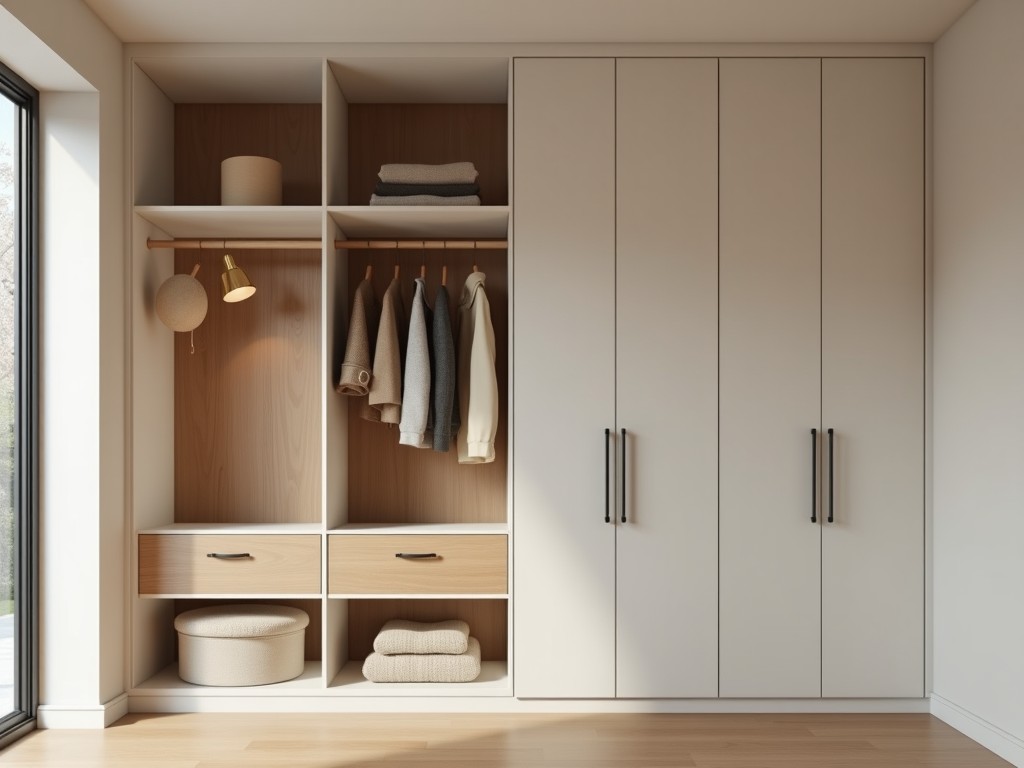
Custom Column Closet Organizer Kit
A custom column closet organizer kit is a modular storage system engineered to fit within vertical structural columns in industrial, commercial, or institutional facilities. Unlike freestanding
- Category:
- Walk In Closet
Custom Column Closet Organizer Kit
A custom column closet organizer kit is a modular storage system engineered to fit within vertical structural columns in industrial, commercial, or institutional facilities. Unlike freestanding units, these kits are designed to integrate directly with load-bearing columns, utilizing otherwise wasted vertical space for tool, supply, or inventory storage. The system consists of precision-machined brackets, adjustable shelving, and locking mechanisms that attach securely to column surfaces without compromising structural integrity. Each kit is configured based on column dimensions, load requirements, and accessibility needs, ensuring a tailored fit for specific site conditions.
Engineering Design Principles
The organizer kit employs a cantilevered bracket system that transfers load directly to the column’s vertical axis, minimizing bending moments and preventing rotational stress. Brackets are fabricated from 10-gauge cold-rolled steel with a yield strength of 360 MPa, featuring pre-drilled mounting patterns compatible with I-beam, HSS, and rectangular column profiles. Adjustable shelf supports use hardened steel pins with ±1.5mm positional tolerance, allowing vertical repositioning in 25mm increments to accommodate varying item heights. All load-bearing components undergo finite element analysis to verify safety factors exceeding 3:1 under maximum rated load.
Surface preparation follows SSPC-SP6 commercial blast cleaning standards before applying a two-coat epoxy-polyester hybrid powder coating with 80–100μm dry film thickness. This finish provides resistance to abrasion, chemical splashes, and UV degradation in environments ranging from -20°C to 80°C. Fasteners are galvanized to ASTM A153 Class D specifications, ensuring corrosion resistance in high-humidity or washdown areas. The design avoids welds in high-stress zones, relying instead on mechanical interlocks and bolted connections for field-serviceability and inspection.
Load Capacity and Structural Performance
Each shelf level is rated for a uniformly distributed load (UDL) of 180 kg, with concentrated load capacity limited to 90 kg at the shelf edge to prevent deflection-induced tilting. Maximum system height is constrained by column height and buckling limits, typically not exceeding 3.6 meters for standard configurations. Deflection under full load is limited to L/180 (where L is shelf span), ensuring stored items remain level and accessible. These values are derived from physical testing per ANSI/BIFMA X5.6 standards for storage units, adapted for column-mounted applications.
Load ratings assume proper installation per manufacturer specifications, including torque-controlled bolt tightening (25 Nm for M10 fasteners) and verification of column flatness within 1.5mm over 300mm. Dynamic loads from frequent access or vibration are accounted for via a 1.5x impact factor in design calculations. For seismic zones, optional bracing kits are available to meet ASCE 7-16 requirements, increasing lateral stability by 40% through diagonal gussets attached to column flanges.
Material Options and Surface Treatments
Primary structural components are available in three base materials: standard carbon steel (ASTM A36), galvannealed steel (ASTM A653 Grade 33), and 304 stainless steel (ASTM A240). Carbon steel offers the highest strength-to-cost ratio for dry indoor environments. Galvannealed steel provides enhanced corrosion resistance in humid or mildly chemical-exposed areas, with a zinc-iron alloy coating that withstands 500 hours salt spray testing per ASTM B117. 304 stainless steel is selected for washdown zones, food processing areas, or coastal facilities where chloride exposure is a concern.
Shelf decks can be specified as perforated steel (40% open area for airflow and visibility), solid steel with powder coating, or marine-grade plywood with phenolic overlay for impact resistance. Perforated decks reduce dust accumulation and allow sprinkler head penetration in fire-protected spaces. Solid decks are preferred for small parts storage where fall-through is a risk. All shelf surfaces feature a 2mm front lip to prevent item slide-off during access.
Customization Process and Integration
Customization begins with column survey data: outer dimensions, flange thickness, web height, and surface condition (painted, primed, or bare). This information determines bracket geometry, bolt pattern, and required shimming to compensate for column irregularities. Customers submit column profiles via DXF or PDF, or provide on-site measurements using a standardized measurement guide. Engineering review confirms compatibility and generates a shop drawing showing bracket placement, shelf levels, and access clearances.
Adjustable features include shelf depth (300mm, 450mm, or 600mm), vertical spacing (minimum 200mm between levels), and optional accessories such as drawer units, hanging rods, or bin rails. For facilities requiring frequent reconfiguration, quick-release pins replace standard bolts on shelf supports, enabling tool-free adjustment. End panels and back guards are available to enclose the system and prevent item displacement in high-traffic aisles.
Quality Control and Manufacturing
Production follows ISO 9001:2015 quality management protocols, with incoming material verification including mill test certificates and dimensional inspection of raw stock. Bracket blanks are laser-cut to ±0.1mm tolerance, then CNC-punched for mounting holes. Shelf supports undergo induction hardening to 50–55 HRC at contact points, ensuring durability under repeated load cycles. All welded sub-assemblies (if any) are 100% visually inspected per AWS D1.1 standards, with magnetic particle testing applied to critical joints.
Finished units receive a 24-hour cure cycle at 180°C for powder coating, followed by adhesion testing (ASTM D3359) and holiday detection for coating continuity. Each kit undergoes a functional test cycle: shelf installation, load application to 125% of rated capacity, and verification of zero permanent deformation. Packaging includes corner protectors, vapor barriers, and shock-absorbing foam to prevent damage during transit. A QR code on each package links to the product’s installation manual, load chart, and material certification.
Typical Applications in Industrial Facilities
In manufacturing plants, these organizers are installed on structural columns along assembly lines to store jigs, fixtures, and portable tools within arm’s reach of operators, reducing motion waste and improving 5S compliance. By utilizing column space, facilities reclaim up to 1.2 m² of floor area per column compared to floor-standing cabinets, directly increasing usable production footprint. In warehouses, they hold picking totes, packaging materials, or maintenance supplies near dispatch points, minimizing travel time for order fulfillment.
Automotive service centers use them to organize diagnostic equipment, fluid containers, and specialty wrenches on service bay columns, keeping floors clear and reducing trip hazards. In pharmaceutical facilities, stainless steel versions with sealed shelving store cleaning agents and sampling tools in ISO Class 7 corridors, where particulate control and cleanability are essential. Educational institutions mount them in workshop columns to secure student tools and safety gear, preventing loss and unauthorized access.
Installation and Field Serviceability
Installation requires only standard hand tools: torque wrench, level, and drill/driver for anchor preparation. Brackets are positioned using laser-aligned templates, then secured to the column with through-bolts or expansion anchors depending on column material and access. Shims are provided to address column taper or surface irregularities, ensuring uniform load distribution across the bracket base. All hardware is accessible from the front, allowing future adjustments or component removal without disturbing adjacent shelving.
Shelf levels attach via drop-in pins or bolt-on brackets, depending on load requirements and reconfiguration needs. The system is designed for single-person installation, with components weighing less than 22 kg each to meet manual handling guidelines. No welding or hot work is required during installation, making it suitable for occupied facilities. Post-installation, a load test checklist verifies proper assembly before placing items on shelves.
Maintenance and Lifecycle Considerations
Maintenance involves quarterly visual inspection of fasteners for loosening, shelf deformation, or coating damage. In corrosive environments, touch-up coating is recommended at chip or scratch points using manufacturer-supplied matching paint. Load signs should be verified annually to ensure they remain legible and accurate. The modular design allows individual shelf replacement without dismantling the entire unit, reducing downtime during repairs.
Expected service life exceeds 15 years in indoor non-corrosive environments with proper maintenance. In harsh conditions (chemical exposure, outdoor exposure, or frequent washdown), 304 stainless steel variants maintain integrity for 10+ years. The system is fully recyclable at end-of-life, with steel components accepted by standard scrap processors. No proprietary components or specialized tools are required for disassembly, supporting sustainable facility practices.
| Parameter | Typical Value | Notes |
|---|---|---|
| Shelf UDL Capacity | 180 kg | Uniformly distributed load |
| Shelf Concentrated Load | 90 kg | At shelf edge, max deflection L/180 |
| Vertical Adjustment Increment | 25 mm | Via hardened steel pins |
| Coating Thickness | 80–100 μm | Epoxy-polyester powder |
| Salt Spray Resistance (Galvannealed) | 500 hours | ASTM B117, no red rust |
| Max System Height | 3.6 m | Dependent on column height and buckling |
| Installation Torque (M10) | 25 Nm | For bracket-to-column bolts |
| Operating Temperature Range | -20°C to 80°C | With standard powder coating |
For facilities seeking to optimize vertical space utilization without compromising structural safety or operational flexibility, the custom column closet organizer kit provides a engineered solution grounded in measurable design parameters. Each system is configured based on verifiable column data, load requirements, and environmental conditions, ensuring compatibility and long-term performance. To initiate a quotation or discuss site-specific configuration, please provide column dimensions, intended load profile, and facility environment details.



