Aluminum Column Closet System
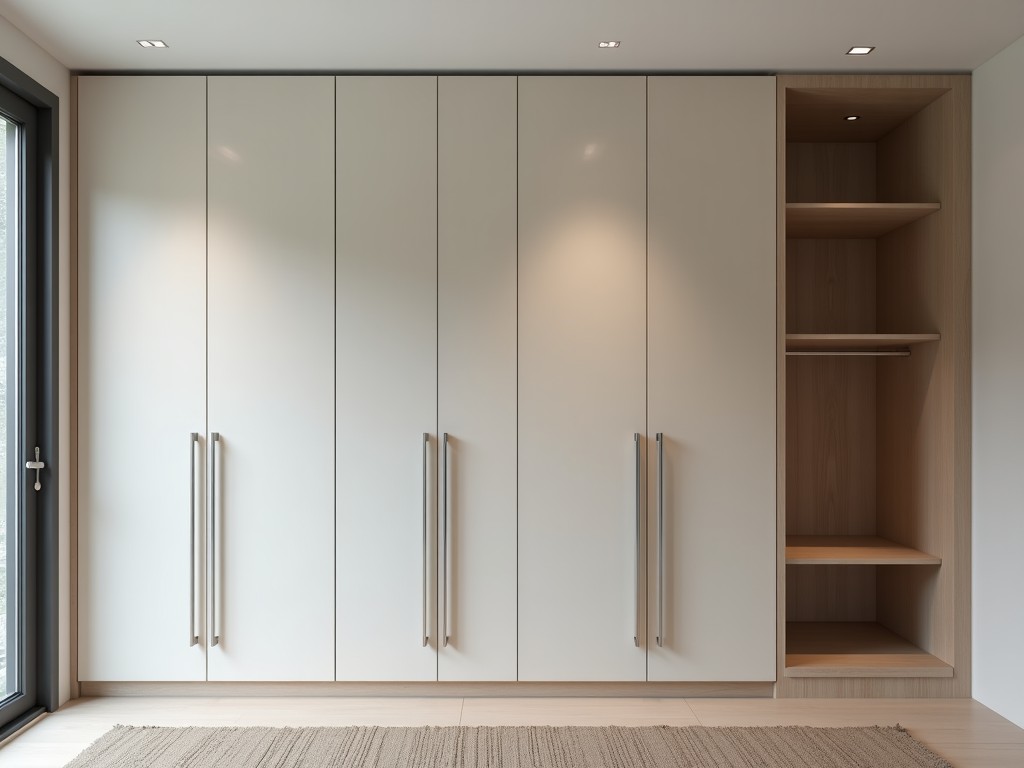
Aluminum Column Closet System
An aluminum column closet system provides a modular, corrosion-resistant framework for organizing storage spaces in commercial, industrial, and institutional environments. Unlike traditional wood or
- Category:
- Walk In Closet
Aluminum Column Closet System
An aluminum column closet system provides a modular, corrosion-resistant framework for organizing storage spaces in commercial, industrial, and institutional environments. Unlike traditional wood or steel systems, it combines lightweight construction with high strength-to-weight ratio, enabling easy installation while maintaining structural integrity under sustained loads. The system consists of vertical columns, horizontal shelving supports, and interconnecting brackets designed for reconfigurability without specialized tools.
Primary applications include warehouse garment storage, uniform distribution centers, military barracks, healthcare facility linen closets, and retail backroom organization. The aluminum construction resists moisture, chemicals, and temperature fluctuations common in these settings, eliminating rust and reducing long-term maintenance. Modularity allows adaptation to changing inventory profiles or spatial constraints, supporting lean storage principles and efficient space utilization.
Key Technical Characteristics
Structural performance is defined by material specifications and connection design. Columns are typically extruded from 6063-T5 aluminum alloy, offering a minimum tensile strength of 205 MPa and yield strength of 170 MPa. Wall thicknesses range from 2.0 mm to 3.5 mm depending on load requirements, with standard column heights of 2400 mm, 2700 mm, and 3000 mm. Horizontal supports use C-channel or Z-profile sections engineered to resist deflection under distributed loads, with moment of inertia values optimized for shelf span lengths up to 1200 mm.
Connection mechanisms utilize stainless steel fasteners or aluminum-to-aluminum interlocking joints to prevent galvanic corrosion. Adjustable shelf pins or bolt-on brackets allow vertical adjustment in 25 mm increments, accommodating varying item heights. Load capacity per shelf typically ranges from 80 kg to 150 kg uniformly distributed, determined by support spacing, material thickness, and fastening method. Deflection limits are designed to stay under L/180 under maximum load, ensuring stability and preventing shelf sag over time.
Material and Finish Options
Base material selection focuses on alloy suitability for extrusion and environmental resistance. 6063-T5 is standard for its balance of extrudability, strength, and corrosion resistance; 6061-T6 is available for higher load applications requiring increased tensile strength (up to 310 MPa). Surface treatments include clear anodizing (typically 15 µm thickness) for enhanced wear resistance and dielectric properties, or powder coating in RAL colors for aesthetic integration and additional barrier protection. Anodizing thickness can be increased to 25 µm upon request for harsher environments.
Finish selection impacts both longevity and maintenance. Clear anodizing preserves the metallic appearance while providing a hard, non-reactive surface resistant to scratching and chemical exposure. Powder coating offers thicker film builds (60–80 µm) with UV stability and color retention, suitable for visible installations where appearance matters. Both finishes are non-toxic and comply with indoor air quality standards, making them appropriate for healthcare and food-adjacent areas. Mill finish is available for cost-sensitive applications where subsequent painting or coating will be applied by the installer.
Design Flexibility and Customization
Modularity enables adaptation to specific spatial and functional needs. Column spacing can be adjusted to match standard garment widths (450 mm, 600 mm, or 900 mm) or customized for bulky items. Shelving depths typically range from 400 mm to 600 mm but can be extended to 800 mm for folded linens or equipment storage. Accessories such as hanging rods, pull-out bins, label holders, and shoe organizers integrate via standardized slots or clamp mechanisms, allowing reconfiguration without drilling or welding.
Custom lengths are achievable through precision cutting of extrusions to millimeter accuracy, with tolerances of ±0.5 mm on length and ±0.2 mm on wall thickness. Punched patterns for shelf pins or ventilation holes can be customized per drawing, enabling integration with lighting, sensors, or RFID systems. End caps, filler strips, and corner posts are available to address uneven walls or create continuous runs. All custom features are quoted based on CAD files or detailed sketches provided during the inquiry phase.
Load and Performance Considerations
Engineering evaluation begins with assessing the intended load profile. Uniformly distributed loads (e.g., folded clothing) impose different stresses than point loads (e.g., heavy boots on a shelf). For dynamic loads such as sliding bins or frequently accessed items, lateral stability and connection fatigue become relevant factors. The system’s modular nature allows reinforcement at high-stress points—such as adding gussets or increasing column wall thickness—without redesigning the entire unit.
Environmental factors influence long-term performance. In high-humidity environments (above 80% RH), anodized finishes outperform powder coating in resisting blistering or delamination. In areas with chemical exposure (e.g., cleaning agents in janitorial closets), coating compatibility should be verified; anodizing provides inherent resistance to many alkaline and acidic substances. Thermal expansion of aluminum (~23 µm/m·°C) is accounted for in design, allowing for expansion gaps in long runs to prevent buckling or joint stress.
Installation and Integration
Installation relies on basic mechanical fastening to floor and wall substrates. Columns are secured using base plates anchored to concrete with mechanical or chemical anchors, typically M8 or M10 bolts. Wall attachment uses angle brackets or cleats fastened to studs or masonry, providing lateral stability against sway. Shims accommodate floor unevenness, ensuring plumb alignment. No welding or specialized tools are required; assembly uses hex keys or torque wrenches for fastener tightening to specified values (usually 20–25 Nm for shelf brackets).
Lead times depend on complexity and finish. Standard configurations with stock lengths and clear anodizing typically ship within 2–3 weeks. Custom lengths, punched patterns, or powder coating in non-standard colors extend lead time to 4–6 weeks. Packaging includes protective corner guards, stretch film, and palletizing for LTL or FTL shipment. Assembly instructions include exploded views, fastener schedules, and torque specifications. On-site adjustments are minimal due to precut tolerances and adjustable components.
Quality Assurance and Inspection
Quality control begins with material verification. Incoming aluminum extrusions are checked for mill test certificates, alloy composition (via spectrometer), and surface finish consistency. Dimensional inspections confirm straightness, twist, and wall thickness using calibrated gauges and coordinate measuring machines (CMM) for critical features. Anodizing thickness is measured via eddy current probes, with adherence to ISO 7599 standards. Powder coating is tested for adhesion (cross-hatch test), thickness (magnetic gauge), and hardness (pencil hardness test).
Functional validation includes load testing of sample assemblies to verify deflection and safety factors. Joint integrity is assessed through torque audits and vibration resistance checks. Final inspection confirms completeness of hardware, correctness of accessories, and absence of surface damage. Documentation includes material certifications, finish reports, and inspection records available upon request. All processes follow ISO 9001-aligned procedures, though certification status is project-specific and should be confirmed during quotation.
| Parameter | Typical Value or Range | Notes |
|---|---|---|
| Column Alloy | 6063-T5 (standard), 6061-T6 (optional) | 6061-T6 offers ~50% higher tensile strength |
| Column Wall Thickness | 2.0 mm – 3.5 mm | Selected based on height and load |
| Standard Heights | 2400 mm, 2700 mm, 3000 mm | Custom lengths available |
| Shelf Load Capacity | 80 kg – 150 kg UDL | Per shelf, depends on support spacing |
| Vertical Adjustment | 25 mm increments | Via shelf pins or brackets |
| Anodizing Thickness | 15 µm (standard), up to 25 µm | Clear or dyed options |
| Powder Coating Thickness | 60 µm – 80 µm | RAL colors available |
| Deflection Limit | L/180 under max load | L = shelf span |
| Lead Time (Standard) | 2–3 weeks | Stock lengths, clear anodize |
| Lead Time (Custom) | 4–6 weeks | Includes cutting, punching, coating |
For project-specific requirements, including load calculations, accessory integration, or environmental compatibility assessments, technical consultation is recommended. Provide layout sketches, load profiles, and finish preferences to receive a detailed quotation with lead time confirmation and installation guidance.