Waterproof Tv Cabinet For Basement
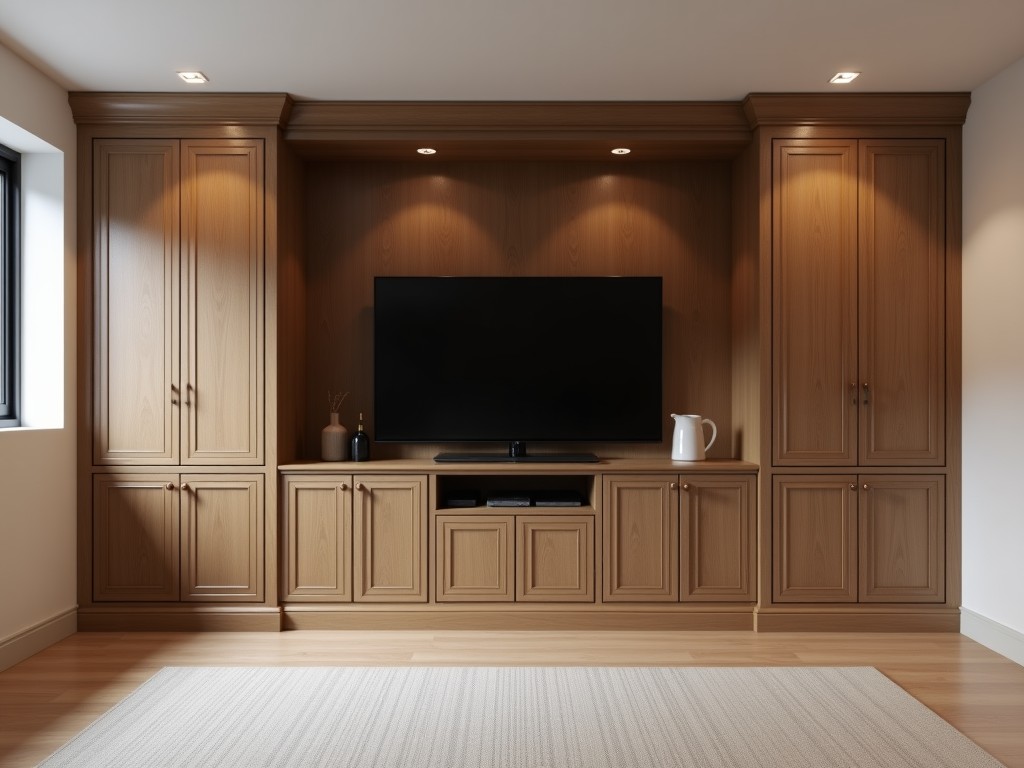
Waterproof Tv Cabinet For Basement
Basements present unique challenges for electronic enclosures due to elevated humidity levels, potential moisture intrusion, and temperature fluctuations. Standard furniture-grade cabinets lack the
- Category:
- TV Cabinet
Waterproof TV Cabinet for Basement Environments
Basements present unique challenges for electronic enclosures due to elevated humidity levels, potential moisture intrusion, and temperature fluctuations. Standard furniture-grade cabinets lack the sealing integrity and material stability required for long-term protection of display equipment in these conditions. This document details the engineering considerations for a waterproof TV cabinet specifically designed for basement installation, focusing on moisture barrier performance, structural durability, and environmental resilience rather than aesthetic features alone.
The primary function of such an enclosure is to maintain a stable internal microclimate that prevents condensation on electronic components while allowing necessary thermal dissipation. This requires a multi-layered approach combining gasket sealing, corrosion-resistant materials, and passive ventilation design—each parameter quantified to meet IP65 or equivalent ingress protection standards under sustained 80% RH conditions.
Material Selection and Corrosion Resistance
Material choice directly impacts longevity in damp environments. Cold-rolled steel with hot-dip galvanization (Z275 coating) provides baseline corrosion resistance, but for basement applications where chloride ingress from concrete efflorescence may occur, 304 stainless steel is preferred due to its chromium-nickel alloy composition resisting pitting and crevice corrosion. Alternative options include powder-coated aluminum alloys (6063-T5) with chromate conversion coating, offering 30% weight reduction while maintaining structural rigidity for screens up to 65 inches.
All seams and joints undergo continuous laser welding followed by passivation treatment to eliminate micro-crevices where moisture could accumulate. Fasteners are exclusively A2-70 stainless steel with nylon-insert lock nuts to prevent loosening from vibration while maintaining sealing torque over time. Surface treatments avoid porous finishes; instead, smooth, non-hygroscopic surfaces are specified to minimize moisture retention and simplify cleaning.
Sealing Mechanism and IP Rating Validation
Achieving reliable waterproofing depends on compression-set resistant gaskets positioned at all panel interfaces. EPDM rubber with Shore A 60 hardness is standard, providing 25% compression set after 72 hours at 70°C per ASTM D395, ensuring long-term seal integrity under cyclic temperature exposure. For dynamic access points (doors), a labyrinth seal design with dual EPDM lips and drainage channels prevents water ingress even during direct spray exposure, validated via IEC 60529 IP65 testing (6.3mm nozzle, 100L/min, 3min).
Pressure equalization membranes (0.2µm PTFE) are integrated into opposing walls to prevent internal pressure buildup from thermal expansion while blocking liquid water and particulates. These membranes maintain airflow equivalence of 0.5 L/min/kPa at 0.1 bar differential, sufficient to equalize pressure without compromising moisture barrier performance. Condensation drainage is facilitated by a 2° internal floor slope directing moisture to sealed weep holes with hydrophobic baffles.
Thermal Management and Ventilation Design
Enclosed electronics generate heat that must be dissipated without compromising the moisture barrier. Passive convection is engineered through low and high vent placements creating a stack effect. Intake vents (bottom front) and exhaust vents (top rear) each incorporate 90% airflow efficiency louvers with hydrophobic membranes, maintaining IP65 rating while enabling 1.5 m³/hour air exchange at 20°C ΔT. This prevents hotspot formation that could reduce LCD lifespan or cause power supply drift.
Thermal modeling assumes a 100W internal heat load (typical for 55" LED TV + soundbar). Under steady-state conditions with 25°C ambient, the design limits internal temperature rise to ≤12°C above ambient. No active cooling is specified to avoid introducing failure points; instead, surface emissivity is enhanced via anodized internal finishes (ε > 0.8) to maximize radiative heat transfer to the enclosure walls, which act as heat sinks to the surrounding basement structure.
Structural Integrity and Load Distribution
Basement floors may exhibit minor settling or moisture-induced swelling. The cabinet employs a monoblock chassis with reinforced corner gussets (3mm thick) to resist racking forces. Mounting brackets for the TV are isolated from the enclosure shell using 6mm neoprene pads to prevent transmission of vibrational energy from the display to the cabinet structure, reducing potential fatigue at weld points. All load paths are designed to transfer weight directly to the floor via four-point leveling feet with 50mm diameter stainless steel spindles and UV-stabilized polyamide bases.
Dynamic load testing simulates 1.5g horizontal acceleration (equivalent to seismic zone 4) with a 40kg payload centered at mid-height. Deflection remains under 0.5mm at the door seal plane, ensuring gasket compression stays within effective range. Cable entry points use strain-relief glands rated for 10N pull force, preventing stress on internal connections during installation or adjustment.
Customization Parameters for Site-Specific Conditions
Basement configurations vary significantly in ceiling height, access constraints, and ambient conditions. Width adjustments accommodate different TV aspect ratios and soundbar configurations in 50mm increments (standard range: 800–1600mm). Height is modular in 100mm segments (base: 600mm) to allow for riser platforms or recessed flooring. Depth is fixed at 200mm to balance rear cable access with front protrusion limits, but can be extended to 250mm for larger AV receivers upon engineering review.
Material thickness scales with span: 1.2mm for widths <1000mm, 1.5mm for 1000–1400mm, and 2.0mm for >1400mm to limit panel deflection under humidity-induced swelling. Finish options include brushed 304 stainless (Ra 0.8µm) for high-hygiene zones or matte black powder coat (60µm thickness, 85+ hour salt spray resistance) for aesthetic integration. Internal lighting (12V LED strips with IP68 rating) is available as a factory-installed option with external magnetic switch activation.
Quality Control and Factory Testing
Each unit undergoes three-stage validation before shipment. Primary seal integrity is verified via differential pressure decay test (100Pa pressure differential, <0.5% loss over 5min). Secondary validation includes thermal cycling (-10°C to +40°C, 10 cycles) followed by IP65 spray re-test to confirm seal performance after environmental stress. Final functional check powers a simulated load (100W resistive) for 2 hours while monitoring internal RH with calibrated sensors (<5% variation from ambient).
Documentation includes material test certificates (EN 10204 3.1 for stainless steel), IP test reports, and dimensional inspection records (CMM-validated critical features). Packaging uses VCI-treated foam corners and double-wall corrugated with external humidity indicator cards. Units are stacked no higher than two on pallets with corner boards and stretch wrap to prevent transit deformation that could compromise alignment.
Typical Specifications
| Parameter | Typical Value / Range | Notes |
|---|---|---|
| External Dimensions (WxHxD) | 800–1600mm x 600–1200mm x 200mm | Height modular in 100mm increments |
| Internal Clearance | 750mm x 500mm x 150mm (base config) | Accommodates up to 55" TV + soundbar |
| Material Options | 304 Stainless Steel, Galvanized Steel, Powder-Coated Aluminum | Thickness scaled to width |
| Ingress Protection | IP65 (IEC 60529) | Validated with nozzle test |
| Temperature Rise (ΔT) | ≤12°C above ambient | At 100W internal load, 25°C ambient |
| Weight (Empty) | 18–35kg | Dependent on material and size |
| Load Capacity | 40kg evenly distributed | Includes TV and peripherals |
| Seal Compression | 25–35% of gasket thickness | EPDM Shore A 60 |
| Ventilation Flow Rate | 1.5 m³/hour at 20°C ΔT | Passive convection only |
Engineering teams requiring a moisture-resistant enclosure for basement AV installations should submit site-specific details including: exact screen dimensions (including stand or mount depth), anticipated heat load from all internal components, basement floor finish and elevation relative to grade, and any known history of moisture intrusion or flooding. This enables precise material selection, gasket specification, and ventilation tuning to match the actual environmental exposure rather than relying on generic assumptions.
To initiate a technical inquiry, provide the required information via our application form. A response including material recommendations, sealing strategy validation, and lead time estimate will be delivered within 2 business days. All quotations include third-party test report options and dimensional drawings for client approval prior to production.



