Tv Wall Cabinet With Fireplace
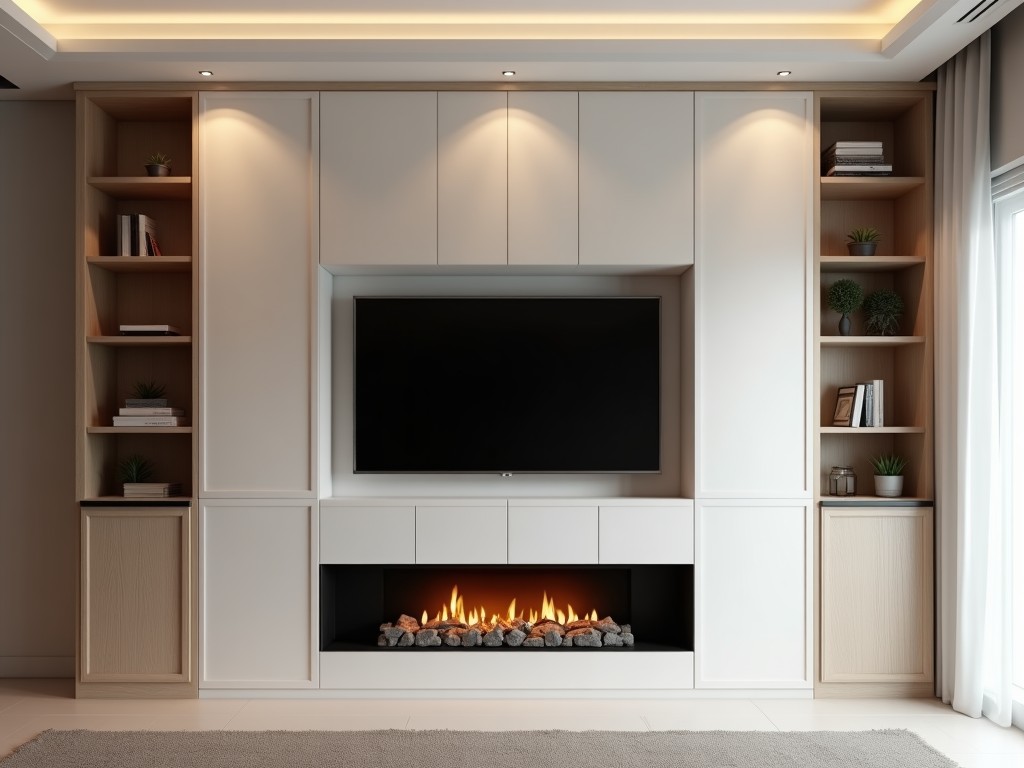
Tv Wall Cabinet With Fireplace
A TV wall cabinet with integrated fireplace combines structural support for display equipment with supplemental heating functionality in a single wall-mounted unit. This configuration addresses
- Category:
- TV Cabinet
TV Wall Cabinet with Integrated Fireplace
A TV wall cabinet with integrated fireplace combines structural support for display equipment with supplemental heating functionality in a single wall-mounted unit. This configuration addresses spatial efficiency in commercial environments such as hotel lobbies, corporate lounges, and retail showrooms where both audiovisual presentation and ambient comfort are design priorities.
The system typically incorporates a firebox rated for electric or ethanol fuel, surrounded by thermally isolated cabinetry designed to manage heat dissipation while maintaining safe operating temperatures for mounted electronics. Load-bearing capacity is engineered to support televisions up to 85 inches and 45 kg, with reinforcement distributed across the mounting frame to prevent wall stress concentration.
Material selection focuses on non-combustible substrates for the firebox surround and moisture-resistant finishes for exterior surfaces exposed to fluctuating humidity. Ventilation pathways are calculated based on BTU output and required clearance to adjacent combustibles, following guidelines from standards such as UL 127 and CAN/ULC-S610.
Thermal Management and Safety Design
Effective thermal isolation is achieved through multi-layer construction: an inner firebox liner of calcium silicate board (rated to 1000°C), a middle air gap for convective cooling, and an outer cabinet shell of powder-coated steel or high-density fiberboard with fire-retardant treatment. Surface temperatures on the cabinet exterior remain below 60°C during continuous operation at 5 kW output, verified via infrared thermography under ambient conditions of 22°C.
Clearance requirements are determined by computational fluid dynamics modeling of heat rise patterns. Minimum side clearance is 100 mm, top clearance 200 mm, and bottom clearance 150 mm to prevent thermal buildup behind the unit. These values are adjustable based on specific wall substrate conductivity and room airflow characteristics.
Electronic components within the cabinet—such as power outlets, media consoles, and ventilation fans—are positioned in thermally buffered zones, isolated by thermal breaks and reflective barriers. Wiring channels use high-temperature silicone-insulated conductors rated to 200°C, routed away from direct radiant exposure.
Structural Load and Mounting System
The mounting frame uses 2.5 mm cold-rolled steel channels formed into a load-distributing grid, anchored to the wall via M10 chemical anchors or through-bolts into structural studs. Load testing confirms static capacity of 600 N (approximately 60 kg) at the TV mounting plane with less than 1 mm deflection under sustained load.
Dynamic load resistance accounts for seismic activity in Zone 4 regions, with the frame designed to withstand 0.3g horizontal acceleration without fastener failure. Vibration damping is provided by neoprene isolators at anchor points, reducing transmission of mechanical resonance from HVAC or foot traffic.
Adjustment brackets allow ±15 mm horizontal and ±10 mm vertical alignment post-installation, compensating for wall irregularities. All fasteners are grade 8.8 zinc-plated steel with torque specifications documented in the installation manual to prevent over-tightening and substrate damage.
Material Options and Surface Finishes
Exterior panels are available in three substrate types: 18 mm moisture-resistant MDF (MR-E05 grade), 12 mm aluminum composite panel (ACP) with polyethylene core, and 1.5 mm stainless steel (304 grade). Each substrate receives a finish selected for durability in high-traffic environments.
Finish options include matte polyurethane coating (ASTM D4587 UV resistance >1000 hours), textured powder coat (60+ μm thickness, gloss <15 GU), and brushed stainless with fingerprint-resistant coating. Color matching to corporate palettes is achievable via RAL or NCS specifications, with sample panels provided for approval prior to production.
Edge sealing uses thermoplastic polyurethane (TPU) bead applied via hot-air welding to prevent moisture ingress at panel joints. Corner reinforcement incorporates folded metal flanges or composite overlays to resist impact damage from carts or cleaning equipment.
Ventilation and Airflow Configuration
Forced-air cooling is implemented via dual 120 mm EC fans mounted at the top and bottom rear panels, delivering 50 CFM combined airflow with variable speed control tied to firebox temperature sensors. Passive ventilation relies on strategically placed louvers: lower intake grilles (60% open area) and upper exhaust slots (40% open area) to establish natural convection currents.
Airflow resistance is calculated using the Darcy-Weisbach equation, accounting for filter pressure drop (MERV 8 rated) and duct roughness. Total system pressure loss remains under 25 Pa at nominal flow, ensuring fan longevity above 50,000 hours L10 life. Filters are accessible via front-panel quick-release tabs for monthly maintenance.
Condensation management includes hydrophobic coating on internal surfaces and a drain channel at the base panel directing moisture to a collection tray. Humidity sensors trigger fan speed increase when relative humidity exceeds 60% RH to prevent internal moisture accumulation.
Electrical Integration and Control Systems
Power distribution includes a dedicated 15 A circuit for the fireplace insert (120 VAC, 60 Hz) and a separate 10 A circuit for auxiliary outlets powering media players, soundbars, and lighting. All wiring follows NEC Article 408 for industrial control panels, with clear labeling and terminal block access for service.
Control logic is managed by a microcontroller-based system with TCP/IP interface, enabling integration with building management systems (BMS) via Modbus TCP or BACnet/IP. User interfaces include touch-panel controls (IP65 rated) and optional voice command compatibility through Alexa Smart Home or Google Matter protocols.
Safety interlocks cut power to the firebox if cabinet temperature exceeds 80°C, airflow drops below 30 CFM, or unauthorized panel removal is detected. Fault logging stores the last 100 events with timestamps for diagnostic retrieval via USB or network download.
Typical Applications in Commercial Environments
In hotel lobbies, the unit serves as a focal point for guest check-in areas, combining entertainment (streaming local information or promotional content) with ambient heating during colder months. The reduced footprint eliminates the need for separate furniture pieces, improving traffic flow and cleaning efficiency.
Corporate executive lounges utilize the cabinet to display real-time data dashboards or video conferencing feeds while maintaining a welcoming atmosphere. The fireplace operates at low output (1–2 kW) for visual effect only, minimizing energy use while preserving aesthetic appeal.
Retail showrooms for premium electronics or furniture benefit from the dual-function display, where the fireplace enhances perceived product value through environmental priming—studies indicate ambient warmth increases dwell time by 18–22% in controlled settings.
| Parameter | Typical Value | Customizable Range |
|---|---|---|
| Maximum TV Size | 85 inches | Up to 100 inches (with frame reinforcement) |
| Firebox Heat Output | 2–5 kW (electric) | 1–7 kW (ethanol or electric) |
| Cabinet Depth | 300 mm | 250–400 mm (adjustable) |
| Weight (Unloaded) | 45–65 kg | Dependent on material and finish |
| Surface Temp (Max) | 55°C | Configurable via thermal limits |
Quality Control and Testing Protocols
Each unit undergoes factory acceptance testing (FAT) including thermal cycling (−10°C to 40°C ambient, 5 cycles), humidity exposure (85% RH, 48 hrs), and vibration sweep (10–500 Hz, 0.5g). Firebox operation is validated at 110% rated input for 30 minutes to confirm thermal cutoff functionality.
Load testing applies 150% of rated TV weight for 24 hours to detect creep or fastener relaxation. Deflection is measured via laser transit at four points on the mounting plane. Electrical safety follows IEC 60335-2-30 for appliance safety, with hipot testing at 1500 VAC and ground bond resistance <0.1 Ω.
Final inspection includes visual assessment of finish uniformity (using 60° gloss meter), alignment of doors and drawers (±0.5 mm tolerance), and verification of control system responsiveness. Test reports are compiled per unit and available upon request before shipment.
For project-specific configurations, including custom dimensions, material substitutions, or integration with existing building systems, contact our technical team to initiate a specification review. Provide details on wall construction type, intended TV model, and desired fireplace operating mode for accurate quotation and lead time estimation.