Tv Unit With Glass Display Cabinets
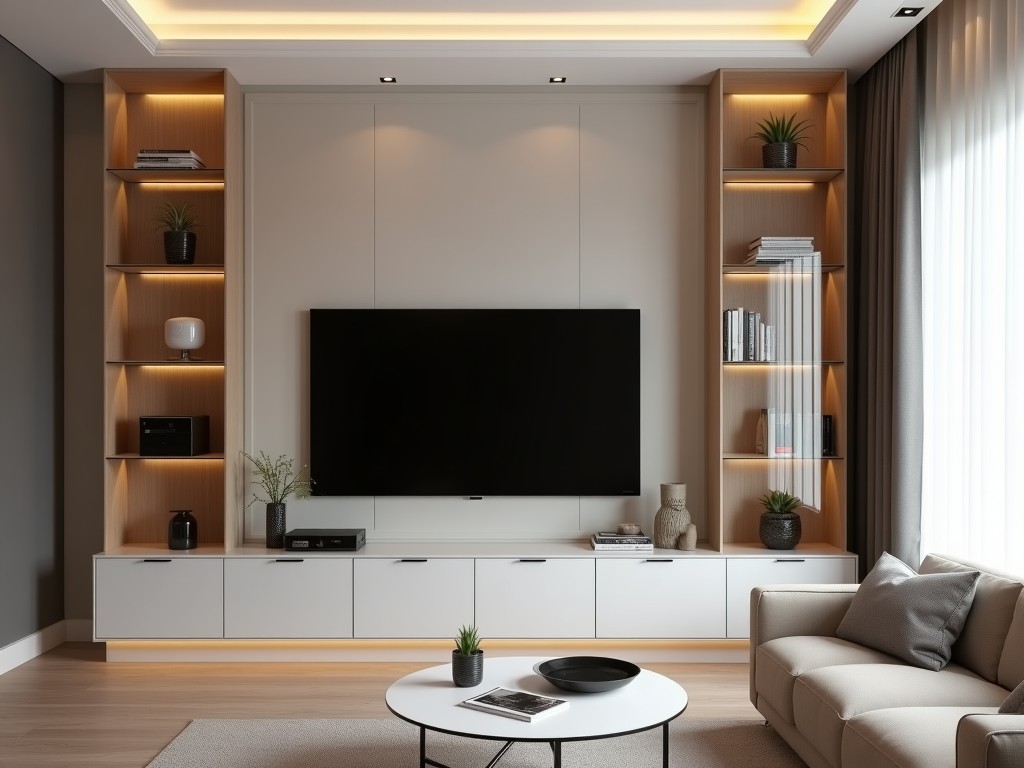
Tv Unit With Glass Display Cabinets
A TV unit with glass display cabinets integrates audiovisual equipment storage with protected display space for collectibles, models, or retail products. The design combines a lower media console for
- Category:
- TV Cabinet
TV Unit with Glass Display Cabinets
A TV unit with glass display cabinets integrates audiovisual equipment storage with protected display space for collectibles, models, or retail products. The design combines a lower media console for televisions, sound systems, and cabling with upper or side glass-fronted cabinets to showcase items while shielding them from dust, handling, and environmental factors. This configuration serves dual purposes in environments where both entertainment functionality and visual presentation are required.
Industrial and commercial buyers select these units for applications where equipment accessibility and product visibility must coexist without compromising safety or aesthetics. Common uses include control room lounges, corporate lobbies, trade show booths, museum information centers, and high-end retail environments. The glass cabinets provide a barrier against airborne particulates and accidental contact while maintaining clear visibility, which is essential for displaying sensitive or high-value items.
Structural Design and Load Considerations
The structural integrity of the unit depends on the materials used for the frame, shelving, and cabinet bodies. Frames are typically constructed from steel, aluminum extrusion, or engineered wood composites, each selected based on load requirements, environmental conditions, and finish preferences. Steel offers high tensile strength for heavy equipment loads, aluminum provides corrosion resistance in humid environments, and wood composites allow for seamless veneer matching with existing furnishings.
Shelving within the glass cabinets must support the weight of displayed items without deflection. Load capacity is determined by shelf thickness, material, and support spacing. Tempered glass shelves, when used, distribute weight evenly and resist impact, while wooden or metal shelves may require intermediate brackets for spans exceeding 600mm. Vertical uprights and horizontal rails are engineered to prevent racking under asymmetrical loads, such as when heavy equipment is concentrated on one side of the media console.
Glass Specification and Safety Standards
The glass used in display cabinets is almost always tempered or laminated to meet safety requirements in public and commercial spaces. Tempered glass, heat-treated to increase strength, fractures into small granular chunks rather than sharp shards upon breakage, reducing injury risk. Laminated glass consists of two or more glass layers bonded with a polyvinyl butyral (PVB) interlayer, which holds fragments in place if broken, providing both safety and sound dampening benefits.
Thickness selection depends on panel size and expected loads. For cabinet doors and shelves under 900mm in width, 6mm tempered glass is typically sufficient. Larger panels or those subject to higher impact risk may use 8mm or 10mm thickness. Edge finishing—such as seamed, polished, or beveled—affects both safety and aesthetics; polished edges are standard for display applications to eliminate sharpness while maintaining clarity. All glass components comply with relevant regional standards, such as ANSI Z97.1 or EN 12600, depending on the market.
Ventilation and Cable Management
Enclosed media consoles require adequate ventilation to prevent overheating of audiovisual equipment. Passive cooling is achieved through strategically placed vents, perforated panels, or gaps at the rear and top of the unit. Active cooling options, such as low-noise fans with thermal sensors, are available for high-power installations. Ventilation design balances airflow needs with dust ingress protection, particularly in environments with airborne particulates.
Cable management is integrated into the unit’s structure to maintain a clean appearance and prevent strain on connections. Rear access panels, grommets, and internal routing channels allow power, HDMI, Ethernet, and audio cables to be organized and secured. Some designs include removable back panels for easier installation and maintenance. Cable entry points are often positioned to align with wall-mounted equipment or floor outlets, reducing visible runs and tripping hazards.
The effectiveness of ventilation and cable management directly impacts equipment reliability and serviceability. Poor airflow can lead to thermal throttling or premature component failure, while disorganized cabling complicates troubleshooting and increases the risk of accidental disconnection. Industrial buyers evaluate these features based on the specific equipment load, enclosure volume, and accessibility requirements for maintenance.
Material Options and Surface Finishes
The choice of substrate material influences durability, appearance, and compatibility with the installation environment. Common options include:
- Medium-density fiberboard (MDF) with veneer or laminate finish – cost-effective, stable, suitable for painted or wood-grain surfaces
- Plywood – higher impact resistance, better screw holding, preferred for humid or variable environments
- Metal frame with infill panels – industrial aesthetic, high strength, easy to clean
- Solid wood – premium appearance, natural grain, requires sealing against moisture
Surface finishes are selected based on wear expectations, cleaning protocols, and visual requirements. Options include:
- Melamine laminate – resistant to scratches, moisture, and stains; ideal for high-traffic areas
- Wood veneer – natural appearance, can be stained or coated to match existing furnishings
- Powder-coated metal – durable, corrosion-resistant, available in custom colors
- High-gloss or matte lacquer – premium look, requires careful maintenance to avoid showing fingerprints
For environments requiring frequent cleaning, such as healthcare or food service areas, non-porous, seamless finishes are preferred. In contrast, corporate or retail settings may prioritize aesthetic match with interior design schemes. All finishes are evaluated for off-gassing, UV stability, and compatibility with cleaning agents used in the target environment.
Customization and Integration Flexibility
TV units with glass display cabinets are frequently customized to meet specific dimensional, functional, and branding requirements. Standard modifications include:
- Adjustable shelf positions within glass cabinets to accommodate varying item heights
- Integrated LED lighting with adjustable color temperature and brightness
- Lockable doors or tempered glass panels for security
- Remote-controlled lift mechanisms for televisions
- Speaker grilles or acoustic fabric panels for sound transparency
Dimensional customization ensures the unit fits precisely within allocated spaces, whether recessed into a wall, freestanding, or mounted as a console. Depth, height, and width are adjusted based on equipment size, viewing distance, and circulation paths. For OEM projects, the unit may be designed to match specific equipment footprints or to integrate with modular wall systems.
Branding elements such as laser-etched logos, backlit panels, or custom color matching can be incorporated into the glass or frame. These features are particularly relevant in corporate showrooms, retail flagship stores, or exhibition stands where brand consistency is critical. Customization is typically managed through engineering drawings and material approvals before production begins.
Typical Configuration Values
| Parameter | Typical Range | Notes |
|---|---|---|
| Overall Height | 1200–1800 mm | Depends on TV size and display cabinet vertical placement |
| Overall Width | 1600–2400 mm | Scales with screen size and flanking cabinet requirements |
| Overall Depth | 400–600 mm | Includes TV clearance and cabinet door swing |
| Glass Thickness (Doors/Shelves) | 6–10 mm | Tempered or laminated; based on panel size and load |
| Shelf Load Capacity | 10–30 kg per shelf | Dependent on material, thickness, and support spacing |
| Media Console Load | 50–100 kg | For TV, soundbar, and associated equipment |
Values are typical; actual dimensions and loads are customized according to project requirements.
Quality Control and Manufacturing Process
Manufacturing begins with detailed shop drawings that specify all dimensions, material grades, hardware, and finishing processes. CNC cutting ensures panel accuracy, while edge banding is applied to all exposed substrates to prevent moisture ingress and improve durability. Assembly uses mechanical fasteners, cam locks, and adhesives selected for long-term stability under load and vibration.
Glass components are inspected for edge quality, flatness, and compliance with safety standards before installation. Tempered glass undergoes fragmentation testing to verify breakage characteristics. Hardware such as hinges, handles, and locks is cycle-tested for durability. Lighting systems, if included, are checked for electrical safety, uniformity, and dimming functionality.
Final inspection includes dimensional verification, alignment of doors and drawers, surface finish consistency, and functional testing of all moving parts. Packaging is designed to protect edges, corners, and glass surfaces during transit, using corner protectors, foam inserts, and rigid outer cartons. Units are typically shipped flat-pack or pre-assembled based on complexity and destination handling capabilities.
For technical inquiries, customization requests, or quotation details, please contact our engineering team.
Contact Us


