Tv Cabinet With Fireplace Manufacturer
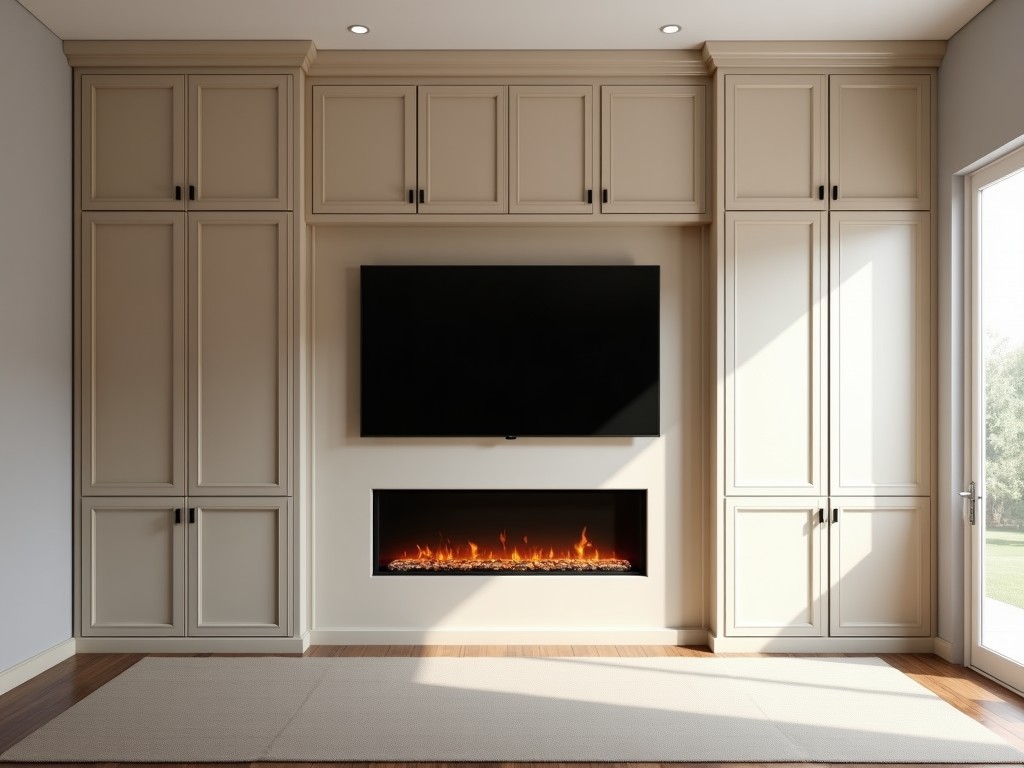
Tv Cabinet With Fireplace Manufacturer
Manufacturing a TV cabinet with integrated fireplace requires precise coordination of thermal management, structural integrity, and aesthetic integration. The design must safely contain heat output
- Category:
- TV Cabinet
TV Cabinet with Fireplace Manufacturer
Manufacturing a TV cabinet with integrated fireplace requires precise coordination of thermal management, structural integrity, and aesthetic integration. The design must safely contain heat output from electric or ethanol fireplace inserts while providing stable support for display equipment weighing up to 50 kg. Material selection, joint engineering, and ventilation pathways directly influence long-term performance and safety compliance in residential and commercial installations.
Thermal Management System Design
Effective heat dissipation prevents overheating of internal components and surrounding materials. The cabinet incorporates passive ventilation channels calculated using computational fluid dynamics to maintain surface temperatures below 60°C at maximum fireplace output. Airflow paths are engineered to create natural convection without fans, reducing failure points and operational noise. Thermal barriers between the fireplace insert and cabinet structure use calcium silicate boards with thermal conductivity of 0.12 W/m·K, tested to withstand prolonged exposure to 200°C surface temperatures.
Clearance requirements follow IEC 60335-2-89 standards for electric fireplaces, specifying minimum 50 mm top clearance and 20 mm side clearance for proper air circulation. These dimensions are integrated into the cabinet’s internal geometry during the CAD design phase, ensuring compliance before prototype fabrication. Temperature sensors embedded in wall panels during production validate thermal performance under continuous operation.
Structural Load Distribution
The cabinet frame must support dynamic loads from television mounting and static loads from fireplace components without deflection. Primary load paths use 18 mm thick plywood or MDF panels with edge banding, joined via cam locks and confirmat screws providing 800 N withdrawal resistance per joint. Rear panels incorporate 12 mm thick hardwood strips to prevent racking under asymmetric loads from wall-mounted displays.
Finite element analysis validates stress distribution under combined loads: 30 kg TV at 500 mm cantilever, 15 kg fireplace insert, and 10 kg media components. Maximum von Mises stress remains below 8 MPa in critical joints, well under the 25 MPa yield strength of reinforced particleboard. Deflection at the TV mounting plane is limited to 0.8 mm under full load, ensuring screen alignment stability.
Material Specification and Finishing
Surface materials are selected for resistance to heat discoloration, moisture, and daily wear. Veneer options include oak, walnut, and thermally treated ash with UV-stabilized finishes rated for 500 hours of UV exposure without >5 ΔE color change. Interior surfaces facing the fireplace use melamine-coated panels with abrasion resistance of 150 cycles (Taber test) and flame spread index of 25 per ASTM E84.
Edge sealing employs 2 mm PVC or ABS bands applied via hot-melt adhesive with peel strength of 8 N/mm, preventing moisture ingress into substrate layers. All adhesives meet CARB Phase 2 and TSCA Title VI formaldehyde emission limits (<0.05 ppm). Finish options include matte, satin, and low-gloss polyurethanes with Shore D hardness of 75-85, providing scratch resistance comparable to 2H pencil grade.
Customization and Integration Flexibility
Manufacturing accommodates project-specific dimensions through modular panel systems. Standard width ranges from 1200 mm to 2200 mm in 100 mm increments, height from 500 mm to 800 mm, depth from 400 mm to 500 mm. Cable management systems include removable rear access panels with brush grommets and internal channels sized for HDMI 2.1 and power cords up to 12 mm diameter.
Fireplace insert compatibility covers common electric models (300 mm to 500 mm wide) and ventless ethanol units (burner lengths 300 mm to 700 mm). Mounting brackets are adjustable vertically ±25 mm and horizontally ±15 mm to align with varying insert flange positions. Optional features include motorized lift mechanisms for TVs (load capacity 40 kg, speed 25 mm/s) and integrated LED lighting with CRI >90 and dimmable 2700K-6500K range.
Quality Control and Testing Protocol
Each unit undergoes three-stage inspection: incoming material verification, in-process checks, and final performance testing. Material checks include moisture content testing (target 8% ±2% for wood composites), density validation, and finish adhesion tests (cross-hatch per ASTM D3359). In-process inspections verify joint tightness, squareness (<0.5 mm deviation over 1000 mm), and edge band continuity.
Final testing includes 4-hour thermal soak at maximum fireplace output, load testing to 125% of rated capacity, and functional verification of all moving parts. Units are packaged with corner protectors, edge guards, and 6 mm polyethylene foam wrapping. Shipping simulations follow ISTA 3A protocol to ensure damage rates below 2% for LTL freight.
| Parameter | Typical Value | Test Standard |
|---|---|---|
| Maximum Fireplace Output | 1.5 kW (electric) / 3.5 kW (ethanol) | Manufacturer Rating |
| TV Load Capacity | 30-50 kg | Static Load Test |
| Surface Temperature Rise | ≤30°C above ambient | IEC 60335-2-89 |
| Deflection at TV Mount | ≤0.8 mm | Finite Element Validation |
| Formaldehyde Emission | <0.05 ppm | ASTM D5116 |
| Finish Hardness | Shore D 75-85 | ASTM D2240 |
Manufacturers seeking a TV cabinet with fireplace solution benefit from engineering-driven design that prioritizes safety, durability, and adaptability. The combination of thermal modeling, structural analysis, and material science ensures products meet real-world demands without compromising aesthetics. Customization options allow seamless integration into diverse architectural contexts while maintaining compliance with international safety standards.
For technical consultations, customization requests, or quotation inquiries regarding TV cabinet with fireplace manufacturing, contact our engineering team to discuss project-specific requirements.



