Tv Cabinet Wall Units Living Room
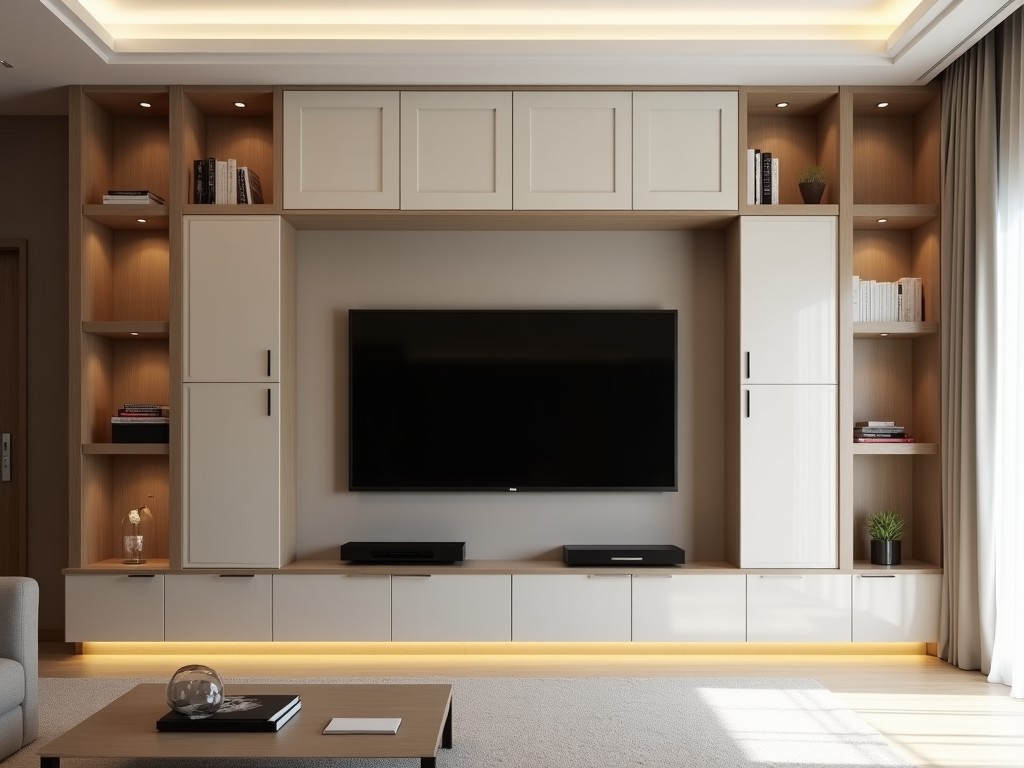
Tv Cabinet Wall Units Living Room
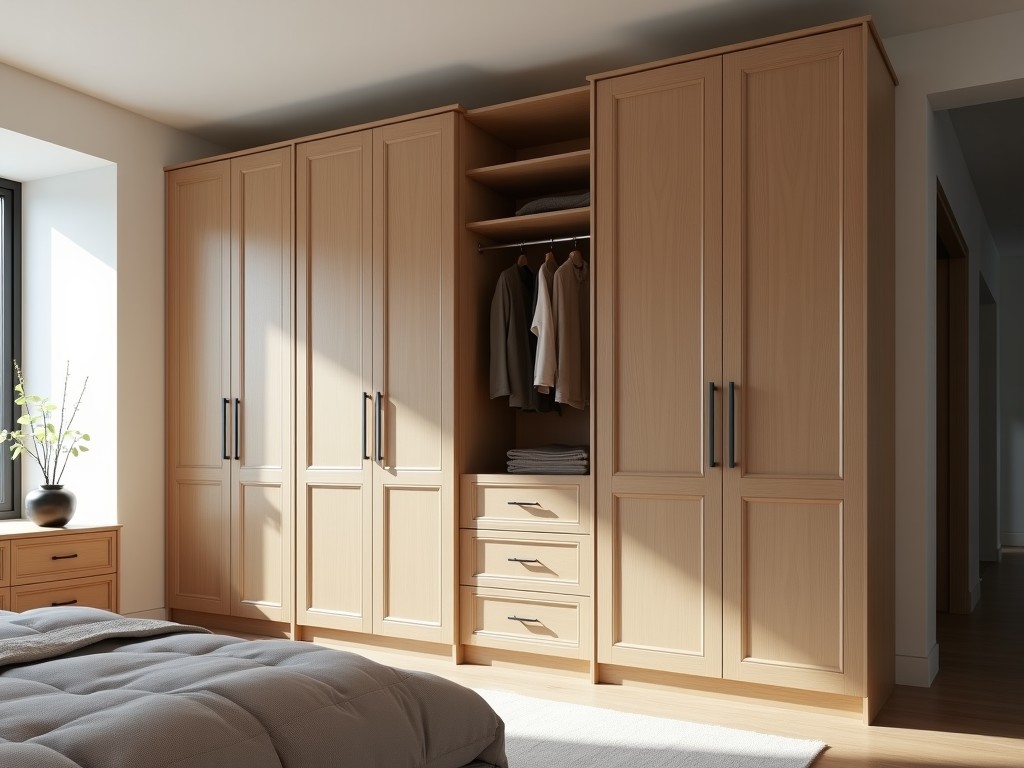
TV cabinet wall units for living rooms are engineered systems designed to integrate display equipment, storage, and cable management into a single structural assembly. Unlike freestanding furniture,
- Category:
- TV Cabinet
TV Cabinet Wall Units Living Room
TV cabinet wall units for living rooms are engineered systems designed to integrate display equipment, storage, and cable management into a single structural assembly. Unlike freestanding furniture, these units are typically wall-mounted or floor-anchored to optimize floor space and provide load-bearing stability for modern flat-panel displays weighing up to 50 kg or more. The primary engineering challenge lies in balancing aesthetic integration with structural integrity, thermal management, and accessibility for maintenance.
Material selection directly impacts long-term performance and environmental resistance. Common substrates include 18 mm melamine-faced particleboard for cost-sensitive installations, 25 mm MDF with PVC edging for improved screw retention and surface durability, and 12–18 mm plywood cores for high-humidity environments where dimensional stability is critical. Surface finishes range from low-VOC laminates to water-based polyurethane coatings, selected based on abrasion resistance (Taber Test >500 cycles) and UV stability to prevent yellowing under indirect sunlight exposure.
Load-Bearing Capacity and Mounting Systems
Structural design begins with calculating dynamic and static loads. A 65-inch OLED TV typically exerts 25–35 kg downward force, but seismic or vibration events (e.g., from nearby HVAC or foot traffic) can induce transient loads up to 1.5x static weight. Mounting systems must therefore accommodate both vertical shear and lateral movement. French cleat systems with 45° interlocking angles distribute load across multiple wall studs, while Z-bracket designs allow for micro-adjustment (±5 mm horizontal, ±3 mm vertical) during installation without compromising load path integrity.
Wall anchoring is non-negotiable for safety. Units intended for plasterboard walls require reinforcement via spreader anchors or toggle bolts rated for ≥50 kg shear per point, with minimum three-point attachment per 600 mm of unit width. For concrete or masonry substrates, chemical anchors (epoxy or polyester-based) provide superior creep resistance compared to mechanical expansion bolts. All mounting hardware should be galvanized or zinc-nickel plated to resist corrosion in environments with >60% relative humidity.
Thermal Management and Ventilation Design
Modern TVs generate 100–200W of waste heat during operation, which must be dissipated to prevent overheating and reduce failure rates of internal components. Passive ventilation relies on strategic airflow paths: top vents (minimum 50 mm² open area per 100W) combined with bottom or rear intake grilles create natural convection. Computational fluid dynamics (CFD) modeling shows that obstructed rear clearance (<50 mm) can increase internal cabinet temperature by 15–25°C above ambient, significantly reducing LED backlight lifespan.
Active cooling options include low-noise DC fans (12V, <20 dBA) triggered by thermal sensors at 45°C internal temperature. These are typically reserved for enclosed cabinets housing AV receivers or gaming consoles with sustained power draw >100W. Material choice affects thermal conductivity—melamine surfaces act as insulators, while metal edging or aluminum inserts can act as heat sinks when thermally coupled to internal components. All designs must maintain ≥25 mm clearance around TV vents as specified by manufacturers like Samsung and LG.
Cable Management and Serviceability
Effective cable management reduces electromagnetic interference (EMI) and prevents strain on connectors. Internal raceways with minimum 25 mm diameter accommodate HDMI 2.1 (up to 48 Gbps), optical audio, and power cables while maintaining bend radius >10x cable diameter to avoid signal degradation. Separation of low-voltage (signal) and high-voltage (power) conduits by ≥50 mm minimizes inductive coupling, a critical consideration for 4K/120Hz gaming and HDR content delivery.
Service access is facilitated through removable back panels secured with cam locks or quarter-turn fasteners, allowing tool-free entry for firmware updates or cable reconfiguration. Drawer and door systems use soft-close hinges with 30,000-cycle ratings and adjustable concealed hinges (±2 mm depth, ±1.5 mm lateral) to maintain alignment after years of use. Shelves are typically adjustable in 32 mm increments using metal shelf pins rated for ≥15 kg point load, with anti-lift mechanisms to prevent accidental disengagement.
| Parameter | Typical Value | Customizable Range |
|---|---|---|
| Overall Width | 1800–2400 mm | 1200–3000 mm (per section) |
| Max TV Size Supported | 75–85 inch | Up to 100 inch (with reinforced frame) |
| Shelf Adjustment Pitch | 32 mm | 16 mm or 64 mm (upon request) |
| Cable Port Diameter | 25 mm | 20–50 mm (multiple sizes) |
| Surface Finish Abrasion Resistance | >500 Taber cycles | >1000 cycles (high-wear coating) |
Applications in Commercial and Residential Settings
In residential living rooms, these units address the trend toward larger screens and multi-device ecosystems (soundbars, streaming boxes, gaming consoles). By centralizing AV equipment, they reduce visual clutter and simplify remote control line-of-sight. In commercial environments such as hotel lobbies, waiting areas, or corporate lounges, the same units serve as information displays or digital signage platforms, where 24/7 operation demands enhanced thermal dissipation and vandal-resistant surfaces (e.g., anti-graffiti coatings or 3mm acrylic overlays).
Healthcare facilities utilize modified versions with antimicrobial surfaces and sealed cable ports to meet infection control standards. Educational institutions prioritize tamper-proof fasteners and rounded edges to comply with safety regulations. The modular nature of these systems allows for sector-specific adaptations without redesigning the core structural framework—width, height, and internal partitioning can be scaled while maintaining load path consistency and mounting compatibility.
Customization extends beyond dimensions to include integrated lighting (LED strips with CRI >90, 2700–6500K tunable), wireless charging pads (Qi-compatible, 15W output), and motorized lift mechanisms for TVs (linear actuators with 100mm stroke, 200N force). These features are specified during the design phase to ensure power routing, structural reinforcement, and control wiring are incorporated without compromising the unit’s integrity.
For project-specific requirements, technical consultation is recommended to validate load calculations, material suitability, and compliance with local building codes. Provide wall type, intended TV weight and dimensions, environmental conditions (humidity, temperature range), and desired accessories to initiate a feasibility review.
Request Technical Specifications