Oem Odm Tv Entertainment Unit
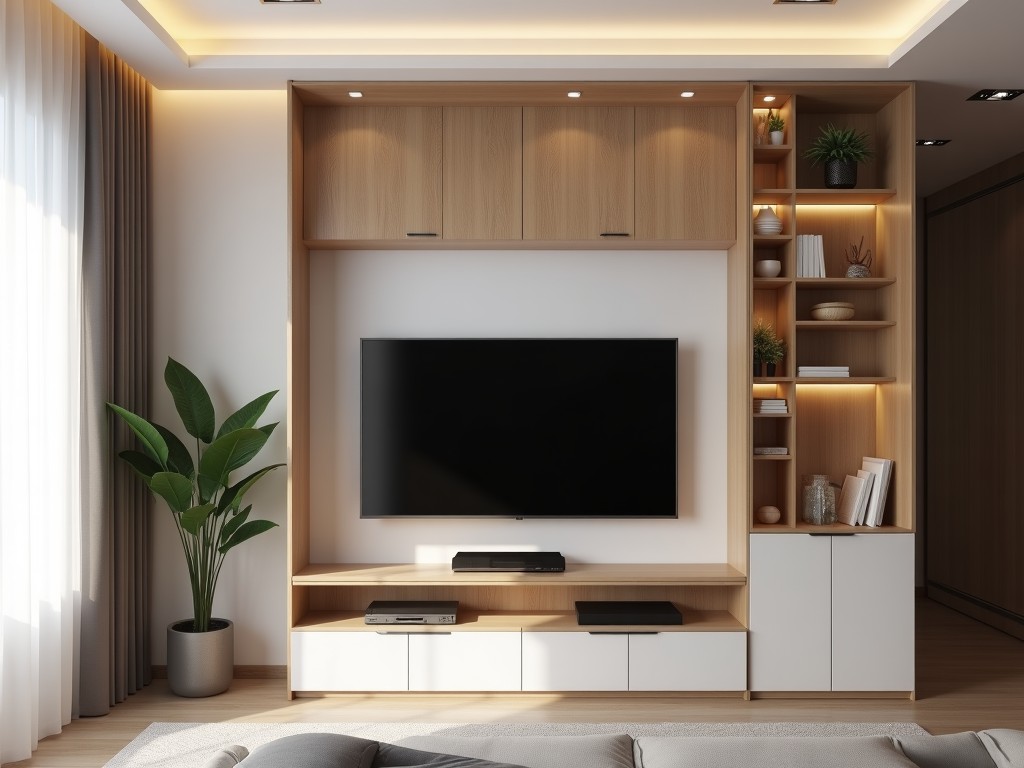
Oem Odm Tv Entertainment Unit
When sourcing custom TV entertainment units for commercial, hospitality, or residential projects, understanding the distinction between OEM and ODM manufacturing models is critical for aligning
- Category:
- TV Cabinet
OEM/ODM TV Entertainment Unit Manufacturing
When sourcing custom TV entertainment units for commercial, hospitality, or residential projects, understanding the distinction between OEM and ODM manufacturing models is critical for aligning production capabilities with design intent, supply chain constraints, and intellectual property considerations. This page explains the technical and procedural differences between OEM (Original Equipment Manufacturing) and ODM (Original Design Manufacturing) approaches as they apply to TV entertainment units, helping procurement teams evaluate which model best fits their project requirements.
OEM Manufacturing: Client-Design Production
In an OEM arrangement, the client provides complete design specifications, including 3D CAD models, detailed engineering drawings, material callouts, finish requirements, and assembly instructions. The manufacturer’s role is strictly to produce the unit according to these documents, assuming no design responsibility. This model is suitable when the client owns the intellectual property and requires precise replication of a proprietary design, such as a branded hotel furniture line or a retail chain’s standardized millwork package.
Key technical requirements for OEM production include: tolerance stack-up analysis to ensure manufacturability, material certification traceability (e.g., FSC wood, CARB2 plywood, flame-retardant fabrics), and fixture design validation for repeatable assembly. Manufacturers typically conduct a Design for Manufacturability (DFM) review to identify potential issues like undercuts, thin walls, or incompatible joint types before tooling or production begins.
ODM Manufacturing: Manufacturer-Led Design
Under an ODM model, the manufacturer develops the TV entertainment unit design based on the client’s functional requirements, aesthetic preferences, and performance criteria—such as load capacity, cable management, ventilation, and integration with audiovisual equipment. The client selects from existing design platforms or collaborates on modifications to a baseline concept. This approach reduces client-side engineering burden and accelerates time-to-market, particularly for projects where design uniqueness is secondary to cost, schedule, and scalability.
ODM projects typically begin with a technical brief outlining: maximum TV weight (e.g., 50–150 kg), required shelf depth for AV components, cable egress points, finish durability (e.g., scratch resistance, UV stability), and environmental conditions (e.g., humidity levels in tropical climates). The manufacturer then generates concept sketches, structural simulations (e.g., shelf deflection under load), and material proposals for client review.
Material Selection and Structural Considerations
TV entertainment units must support significant dynamic and static loads while resisting warping, sagging, and impact damage. Common substrate materials include industrial-grade particleboard (600–800 kg/m³ density), MDF (700–800 kg/m³), plywood (birch or poplar core, 5–18mm thickness), and solid wood (oak, walnut, or rubberwood) for high-end applications. Each material has distinct implications for screw retention, edge finishing, and long-term dimensional stability.
For example, 18mm birch plywood offers superior screw pull-out resistance (>1,200 N) compared to MDF (~600 N) but requires edge banding to prevent moisture ingress. In humid environments, marine-grade plywood or PVC-coated MDF may be specified to mitigate swelling. Reinforcement strategies—such as stiffener rails, corner brackets, or double-thick shelving—are engineered based on finite analysis of expected load distributions, particularly for units supporting large-format OLED TVs (>65 inches).
Customization and Integration Features
Beyond basic shelving, modern TV units integrate functional elements that directly impact usability and installation efficiency. These include: ventilated back panels with calculated airflow rates (e.g., 50 CFM per amplifier), removable access plates for wiring, IR-transparent acrylic windows for remote control functionality, and integrated power distribution units with surge protection. Cable management is not merely aesthetic—it prevents signal interference and reduces thermal buildup in enclosed compartments.
Customization options are defined by the manufacturing model: in OEM, features are strictly per client drawings; in ODM, they are selected from a configurable library—such as adjustable shelf pins (5mm increments), soft-close hinges (20,000-cycle rating), or motorized lift mechanisms (max load 100 kg, speed 25mm/s). Surface finishes range from melamine laminate (abrasion resistance 150–300 cycles) to PU paint (60+ gloss, UV-stable) or wood veneer (0.6mm thickness, book-matched) depending on wear expectations and budget.
Quality Control and Validation
Quality assurance in TV entertainment unit manufacturing goes beyond visual inspection. Critical control points include: dimensional verification (±0.5mm on critical interfaces), load testing (e.g., 150% of rated shelf weight for 24 hours), finish adhesion testing** (ASTM D3359 cross-hatch), and edge integrity checks** (impact resistance per SEFA 8M). For ODM projects, validation often includes mock-up assembly to confirm fit with client-specified TV models and AV components.
Documentation packages typically include: material safety data sheets (MSDS), flame spread ratings** (ASTM E84 Class A or B where required), carton drop test reports** (ISTA 3A), and assembly instruction validation** through third-party user testing. Traceability is maintained via batch-linked labels on subassemblies, enabling root-cause analysis if field performance issues arise.
Production Lead Times and Scalability
Lead times vary significantly between OEM and ODM due to differing levels of pre-production work. OEM projects typically require 4–6 weeks for DFM review, sample approval, and tooling preparation before mass production begins. ODM programs, leveraging existing design platforms, can reduce this to 2–4 weeks for standard configurations. Mass production rates depend on automation levels: manual assembly lines achieve 20–30 units/day per station, while CNC-cutting and edge-banding cells enable 100+ units/day for panel-based designs.
Scalability is influenced by material availability and process bottlenecks. For example, solid wood components may extend lead times due to drying cycles, whereas laminate-coated particleboard allows just-in-time manufacturing. Clients requiring phased delivery (e.g., for hotel rollouts) should discuss buffer stock agreements or staggered production schedules during quoting to avoid supply chain disruption.
| Aspect | OEM Model | ODM Model |
|---|---|---|
| Design Responsibility | Client-owned | Manufacturer-developed |
| IP Ownership | Client retains full rights | Manufacturer may retain design rights |
| Tooling & NRE Costs | Typically higher (client-funded) | Lower or amortized across projects |
| Lead Time (First Article) | 4–6 weeks | 2–4 weeks |
| Design Flexibility | Limited to client drawings | Configurable within platform |
| Best Suited For | Proprietary designs, brand consistency | Speed-to-market, cost optimization |
Selecting between OEM and ODM is not merely a contractual decision—it reflects a strategic alignment of design control, risk allocation, and project timelines. For clients with established product IP and strict aesthetic control, OEM ensures fidelity to the original vision. For those prioritizing speed, cost predictability, and access to established engineering resources, ODM offers a viable path to functional, code-compliant TV entertainment units without the overhead of in-house design development.