Oem Flat Panel Media Wall
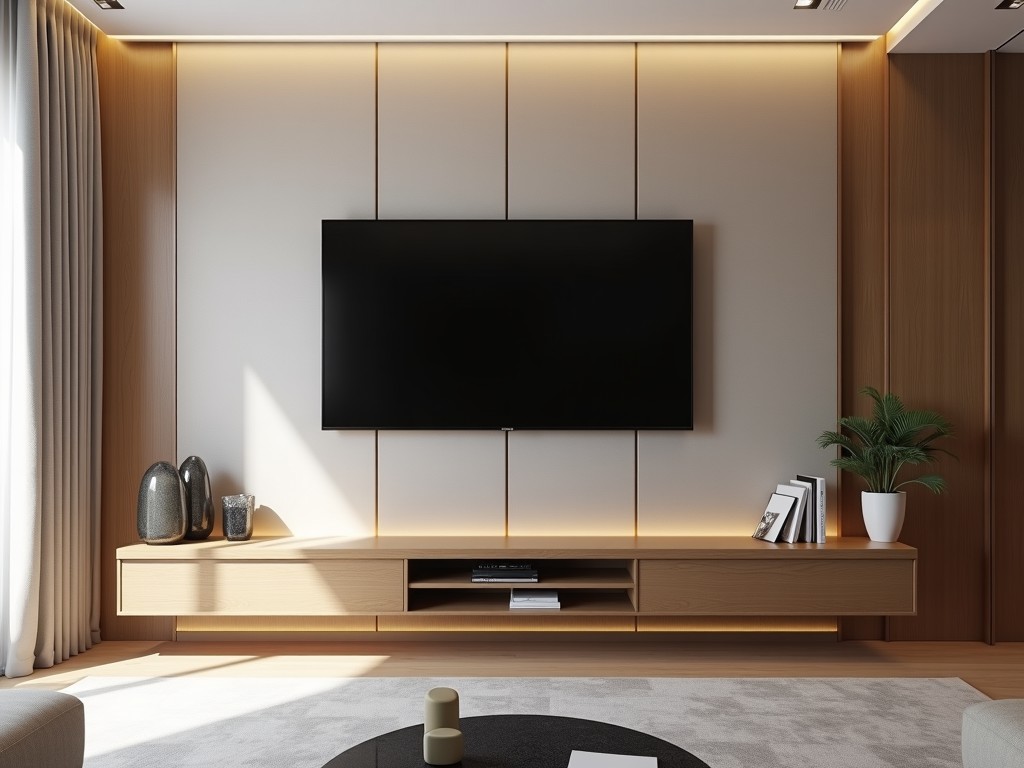
Oem Flat Panel Media Wall
An OEM flat panel media wall is a structural assembly designed to support and integrate multiple flat-panel displays into a single, unified viewing surface for industrial, commercial, or
- Category:
- TV Cabinet
OEM Flat Panel Media Wall
An OEM flat panel media wall is a structural assembly designed to support and integrate multiple flat-panel displays into a single, unified viewing surface for industrial, commercial, or institutional environments. Unlike consumer-grade mounts, these systems are engineered for continuous operation, precise alignment, and long-term stability under varying load conditions. The design prioritizes mechanical integrity, serviceability, and environmental resilience over aesthetic convenience.
Each unit is fabricated to exact project specifications, accommodating display sizes ranging from 32-inch to 86-inch panels with VESA patterns from 75x75mm to 800x400mm. Load capacity per mounting point typically ranges from 25kg to 60kg, depending on panel weight and wall substrate. The frame utilizes extruded aluminum 6063-T5 or cold-rolled steel with powder-coated finish, selected based on environmental exposure and required rigidity.
Installation requires assessment of the substrate—whether concrete, steel stud, or composite panel—to determine anchoring methodology. Load distribution is calculated per ANSI/UL 2442 or equivalent standards, with safety factors applied for dynamic loads such as vibration from HVAC or foot traffic. Adjustment mechanisms allow for ±5mm horizontal and vertical micro-alignment post-installation to compensate for wall imperfections.
Key Design Considerations
Thermal management is critical in enclosed installations. The system incorporates passive airflow channels behind panels to dissipate heat generated by displays and media players, preventing thermal throttling and extending component lifespan. Clearance minimums of 50mm rear and 25mm top/bottom are recommended for forced-air or convection cooling.
Cable management is integrated via internal raceways or external conduits, maintaining bend radius compliance for HDMI, power, and control cables (typically >25mm for HDMI 2.1). Strain relief points are positioned at entry/exit zones to prevent connector fatigue. All routing paths are accessible via removable panels for service without disassembling the display array.
Surface finish options include matte black, white, or custom RAL powder coating to match architectural surroundings. Anti-glare coatings are not applied to the frame itself, as glare reduction is handled by the display’s intrinsic properties or external filters. Corrosion resistance is achieved through pre-treatment and coating thickness ≥80μm for indoor use; ≥120μm for humid or semi-outdoor environments.
Typical Configurations
| Configuration | Panel Layout | Max Dimensions (WxH) | Total Load Capacity |
|---|---|---|---|
| 2x2 Array | Four panels in grid | Up to 3800x2200mm | Up to 240kg |
| 1x4 Array | Four panels in row | Up to 7600x1100mm | Up to 240kg |
| 3x3 Array | Nine panels in grid | Up to 5700x3300mm | Up to 540kg |
| Custom Layout | Asymmetrical or mixed sizes | Project-dependent | Calculated per load |
Values in the table represent typical maximums for steel-frame constructions with 600mm stud spacing on concrete substrates. Aluminum variants reduce total load capacity by approximately 30% but offer superior corrosion resistance and lower dead load. Actual capacities are validated via finite element analysis (FEA) per project, with physical load testing available upon request.
Material and Finish Options
- Frame: Extruded aluminum 6063-T5 (yield strength ≥170MPa) or cold-rolled steel SPCC (yield strength ≥275MPa)
- Fasteners: Grade 8.8 zinc-plated steel or A2 stainless steel for corrosive environments
- Coating: Powder polyester, 80–120μm thickness, RAL color matching available
- Adjustment hardware: Polymer-injected steel cam locks with nylon wear pads
- Gaskets: EPDM or silicone for vibration damping and environmental sealing
Material selection is driven by three factors: environmental exposure (humidity, temperature cycling, particulate load), required stiffness-to-weight ratio, and compatibility with existing building systems. For example, aluminum is preferred in marine-adjacent installations due to its inherent oxide layer, while steel is selected for high-vibration zones like transit hubs where rigidity outweighs weight concerns.
Quality Assurance and Testing
Each assembly undergoes dimensional verification using laser tracking systems with ±0.1mm tolerance. Load testing is conducted at 125% of rated capacity for 24 hours to validate creep resistance and joint integrity. Surface adhesion of coatings is tested per ASTM D3359 Method B, with minimum 4B rating required for acceptance.
Functional validation includes tilt, swivel, and depth adjustment range verification under load, ensuring smooth operation without binding or backlash. Electrical continuity checks are performed on integrated grounding paths to meet IEC 60950-1 requirements for equipment grounding. All test records are retained for traceability and supplied with documentation packages.
Packaging for shipment includes corner protectors, edge guards, and moisture-barrier wrapping. Units are palletized with ISPM-15 compliant wood or engineered composite bases. Shock indicators are applied externally to detect mishandling during transit. Installation hardware is segregated and labeled per assembly to prevent field confusion.
Applications in Industrial and Commercial Environments
In transportation hubs such as airports and train stations, these media walls support real-time passenger information systems where display alignment must remain within 1mm tolerance over years of operation despite constant vibration and temperature shifts. The modular design allows phased upgrades—replacing individual panels without dismantling the entire array—reducing lifecycle downtime.
Control rooms in power generation or process manufacturing rely on these walls for SCADA and monitoring displays. Here, the absence of frame flex is critical to prevent image distortion across adjacent screens, which could mislead operators during fault diagnosis. The system’s stiffness ensures pixel-level alignment is maintained even when supporting 50kg+ panels per point.
Retail and hospitality environments use these installations for immersive branding or wayfinding. In these cases, the value lies not in load capacity but in the ability to maintain perfect planarity across curved or irregular architectural surfaces—achieved through adjustable mounting brackets that compensate for wall deviations up to 15mm over 2-meter spans.