Oem Curved Tv Feature Wall
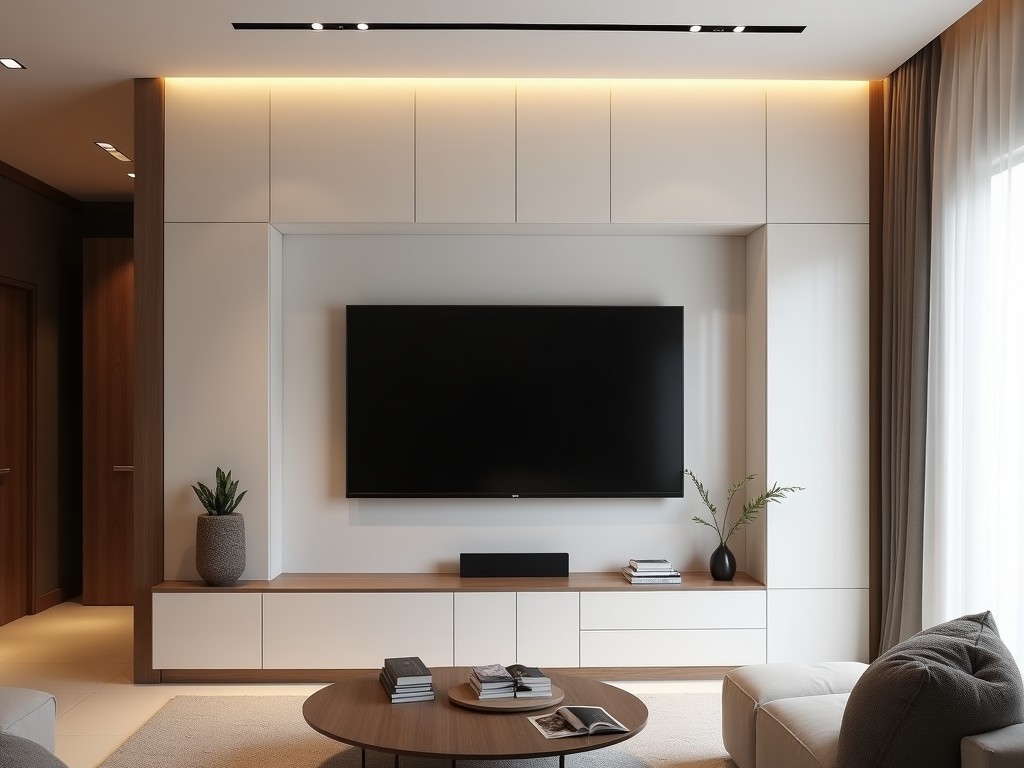
Oem Curved Tv Feature Wall
An OEM curved TV feature wall is a custom-engineered structural system designed to support and display curved televisions in commercial, residential, and hospitality environments. Unlike standard
- Category:
- TV Cabinet
OEM Curved TV Feature Wall
An OEM curved TV feature wall is a custom-engineered structural system designed to support and display curved televisions in commercial, residential, and hospitality environments. Unlike standard flat-panel mounts, these systems accommodate the unique geometry of curved screens by integrating precise radius-matching brackets, load-distributing frames, and alignment mechanisms that maintain screen integrity and viewing aesthetics. The primary function is to provide secure, vibration-damped mounting while preserving the intended curvature of the display for optimal visual performance.
Curved TVs require specialized support because their non-planar geometry creates uneven load distribution across conventional mounting points. Standard VESA-compliant brackets assume a flat rear surface, which can induce stress concentrations at the edges of a curved panel, potentially leading to frame warping or image distortion over time. OEM solutions address this by using contoured interface plates that conform to the manufacturer’s specified curvature radius—typically ranging from 1500R to 4000R—ensuring uniform pressure transfer and minimizing mechanical strain on the display assembly.
Material selection is critical for long-term stability and corrosion resistance. Structural components are commonly fabricated from extruded aluminum alloys (6061-T6 or 6063-T5) for their high strength-to-weight ratio and natural oxidation resistance, or cold-rolled steel (SPCC or SECC) with powder-coated finishes for applications requiring higher load capacity. Mounting interfaces often incorporate stainless steel fasteners (A2-70 or A4-80) to prevent galling and ensure consistent torque retention in high-vibration environments such as airports, transit hubs, or digital signage installations.
Key Design Considerations
The design process begins with verifying the exact curvature specification from the TV manufacturer, as radii are not standardized across brands or models. Engineers use laser-scanned profiles or CAD data provided by the OEM to develop mating surfaces that match the screen’s backplane within ±0.5mm tolerance. This precision prevents point-loading and ensures the display remains flush against the mounting surface without gaps or binding.
Load calculations must account for both static weight and dynamic forces. While a 65-inch curved TV typically weighs 18–25 kg, seismic or wind-load scenarios in public spaces may require designs to withstand 3–5x the static load. Structural analysis includes moment resistance at the mounting plane, deflection limits (usually Thermal management is another often-overlooked factor. Curved TVs generate heat non-uniformly due to concentrated LED backlighting along the edges. The feature wall must allow adequate airflow—typically 25–50 mm clearance behind the panel—to prevent thermal buildup that could shorten LED lifespan or cause color shift. Ventilation channels or passive convective designs are integrated into the frame geometry without compromising structural rigidity. OEM curved TV feature walls are inherently project-specific, with customization driven by display dimensions, installation environment, and architectural integration needs. Clients provide the TV model number, VESA pattern, curvature radius, and wall substrate details (e.g., concrete, steel stud, gypsum) to initiate the design phase. Adjustments to tilt, swivel, and height are engineered as modular sub-assemblies rather than aftermarket additions to maintain load-path integrity. Finish options are tailored to match interior design specifications. Powder-coated aluminum can be matched to RAL or Pantone codes for seamless integration with surrounding millwork or wall cladding. For high-end retail or hospitality, brushed anodized or wood-grain laminate overlays are available on non-structural facings. All surface treatments undergo ASTM D3359 adhesion testing and salt spray resistance (ASTM B117) validation when required for exterior or high-humidity zones. Cable management is incorporated during design, not added later. Internal raceways, magnetic covers, or split-flex channels are routed through structural members to conceal power and signal cables while maintaining bend radius compliance for HDMI 2.1 and fiber optic lines. Access panels are positioned for serviceability without requiring full disassembly, using cam-lock or tool-free fasteners rated for minimum 500 cycles. Values in the table represent typical configurations; actual specifications are determined per project based on TV model, site conditions, and load requirements. Custom radii outside the 1500R–4000R range are feasible with engineering review. Load ratings assume proper installation into suitable substrates per manufacturer guidelines. In luxury hospitality suites, curved TV feature walls are installed behind bed headwalls to create immersive viewing environments where the screen’s curvature enhances depth perception without requiring optimal center seating. The mounting system must resist micro-vibrations from HVAC systems and door closures while maintaining alignment over years of thermal cycling. Aluminum frames are preferred here for their low thermal expansion coefficient, reducing stress on gypsum or wood substrates. Retail environments use these systems for curved video walls in brand experience centers, where multiple units are tiled to form seamless concave displays. Structural continuity between modules is critical—any misalignment exceeding 0.3mm breaks the visual illusion. Steel frames with machined interface plates are often selected for their dimensional stability under constant load, and grounding straps are integrated to prevent static buildup that could interfere with IR sensors. Corporate lobbies and control rooms deploy curved TV walls for situational awareness displays, where the geometry reduces edge distortion in wide-angle viewing scenarios. Here, the focus shifts to service access: modular designs allow individual panel removal without disturbing adjacent units, using guided rail systems and captive fasteners. Cable ingress points are sealed to IP40 standards to deter dust accumulation in raised-floor environments.Customization Options
Typical Specifications
Parameter
Typical Value / Range
Supported TV Size
40" – 85" diagonal
Curvature Radius Compatibility
1500R – 4000R (OEM-specific)
Maximum Load Capacity
50 kg (static), 150 kg (dynamic/seismic)
Material (Frame)
6061-T6 Aluminum or SPCC Steel
Finish Options
Powder coat, Anodized, Laminate (customizable)
Wall Clearance Behind TV
25 – 50 mm (ventilated)
Adjustment Range (Tilt)
-5° to +15° (engineered, not universal)
Applications