Oem Backdrop Tv Wall Panel
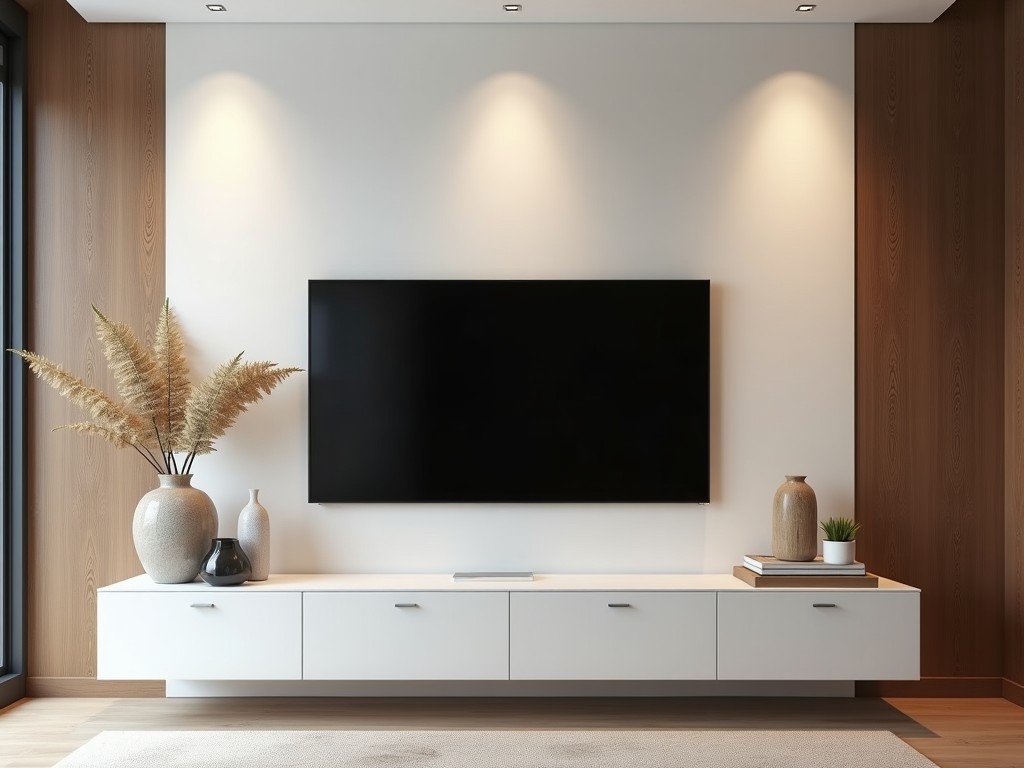
Oem Backdrop Tv Wall Panel
An OEM backdrop TV wall panel is a structural and aesthetic component designed for mounting flat-panel displays in commercial and residential environments. It serves as a load-bearing substrate that
- Category:
- TV Cabinet
OEM Backdrop TV Wall Panel
An OEM backdrop TV wall panel is a structural and aesthetic component designed for mounting flat-panel displays in commercial and residential environments. It serves as a load-bearing substrate that integrates mounting hardware, cable management pathways, and surface finishes while meeting fire safety, acoustic, and dimensional stability requirements.
These panels are engineered to support dynamic loads from TVs ranging from 32 to 85 inches, with weight capacities typically rated between 50 kg and 150 kg depending on substrate thickness and fastening method. Unlike generic drywall or plywood solutions, OEM backdrop panels are manufactured to precise tolerances to ensure seamless integration with surrounding millwork, cabinetry, or architectural elements.
The primary value proposition lies in reducing on-site labor, eliminating field modifications, and providing a predictable, code-compliant mounting surface that maintains dimensional stability over time—critical in environments subject to humidity fluctuations or mechanical vibration.
Material Composition and Structural Performance
Backdrop panels are commonly constructed from medium-density fiberboard (MDF), particleboard, or calcium silicate board, selected based on fire rating, moisture resistance, and weight constraints. MDF variants typically range from 12 mm to 18 mm in thickness, offering a uniform surface for veneer or laminate application while providing sufficient screw retention strength for VESA mounts (minimum 80 N pull-out force per fastener).
For high-moisture areas such as bathrooms or coastal installations, moisture-resistant (MR) MDF or cementitious boards are used, exhibiting less than 5% thickness swelling after 24 hours of water immersion per ASTM D1037. Calcium silicate boards, while heavier (average density 0.8–1.0 g/cm³), provide Class A fire resistance (ASTM E84) and are preferred in hospitality or healthcare settings where code compliance mandates non-combustible substrates.
Reinforcement strategies include internal steel stiffeners or wood blocking at mount points to prevent local deformation under concentrated loads. Finite element analysis (FEA) is routinely used during design validation to ensure deflection remains under L/360 under maximum rated load, preventing visible sag or misalignment over the panel’s service life.
Surface Finish and Integration Capabilities
The visible surface of the backdrop panel is finished to match interior design specifications, with options including wood veneer, high-pressure laminate (HPL), melamine, or paint-grade MDF. Veneer thicknesses typically range from 0.6 mm to 1.2 mm, applied using hot-press bonding to ensure adhesion strength exceeding 1.0 MPa, preventing delamination under cyclic temperature changes.
Edge treatments are critical for durability and aesthetics—common options include PVC edge banding (0.5–2.0 mm thick), solid wood lipping, or laser-edged finishes that eliminate visible seams. These treatments protect against moisture ingress and impact damage, particularly in high-traffic zones such as lobbies or conference rooms.
Integration features are engineered during the design phase: precut openings for power conduits, low-voltage channels for HDMI/USB/Ethernet routing, and recessed zones for soundbars or center-channel speakers. These features are positioned based on standardized VESA patterns (75x75 mm, 100x100 mm, 200x100 mm, 200x200 mm, 400x200 mm, 400x400 mm, 600x400 mm) and aligned with common TV stand dimensions to avoid field drilling.
Customization and Manufacturing Considerations
OEM backdrop panels are produced to project-specific dimensions, with typical panel sizes ranging from 600 mm x 800 mm to 2400 mm x 1200 mm, though custom formats up to 3000 mm x 1800 mm are feasible depending on material handling capabilities. Tolerances are maintained to ±0.5 mm on length and width, and ±0.2 mm on thickness, ensuring tight joints when butted against adjacent panels or trim.
Mounting hardware integration includes pre-installed T-nuts, threaded inserts, or metal brackets at specified VESA locations, eliminating the need for wall anchors or stud finding during installation. Cable management systems consist of routed channels (typically 20 mm x 10 mm cross-section) or removable access panels, designed to accommodate bend radii minimums of 10 mm for HDMI and 25 mm for power cords to prevent signal degradation or overheating.
Production lead times vary based on material selection and finish complexity: standard MDF with melamine finish typically ships in 10–15 business days, while custom veneer or fire-rated calcium silicate variants may require 20–25 days. Tooling costs are generally avoided for profiles under 3000 mm length, as CNC routing allows for flexible geometry without hard tooling.
Quality Control and Testing Protocols
Each panel undergoes dimensional verification using laser scanning or coordinate measuring machines (CMM) to confirm flatness within 0.3 mm over a 1000 mm span—critical for preventing light gaps or shadow lines when installed against walls. Surface finish adhesion is tested via cross-hatch tape testing (ASTM D3359), with acceptable results requiring no more than 5% coating removal.
Load testing is performed on sample units using incremental weight application until failure, with a minimum safety factor of 4:1 applied to rated capacity. For example, a panel rated for 100 kg must withstand 400 kg static load without permanent deformation or fastener pull-through. Fire performance is validated through third-party testing when required, with reports available for calcium silicate or treated MDF variants upon request.
Packaging for shipment includes edge protectors, corner guards, and moisture-barrier wrapping to prevent damage during transit. Panels are stacked flat on pallets with interstitial separators to avoid surface abrasion, and unit weights are clearly marked to facilitate safe handling—typically ranging from 8 kg for a 600x800x12 mm MDF panel to over 40 kg for a 2400x1200x18 mm calcium silicate variant.
| Parameter | Typical Range | Notes |
|---|---|---|
| Substrate Thickness | 12 mm – 18 mm | MDF/particleboard; calcium silicate up to 20 mm |
| Weight Capacity (per mount point) | 50 kg – 150 kg | Depends on fastener type and substrate reinforcement |
| Surface Flatness Tolerance | ±0.3 mm over 1000 mm | Measured via laser scanning or straightedge |
| Fire Rating (where applicable) | Class A (ASTM E84) | Calcium silicate or fire-retardant treated MDF |
| Edge Sealing Options | PVC, wood veneer, laser edge | Selected based on exposure and abrasion risk |
| Lead Time (standard finish) | 10–15 business days | MDF with melamine or HPL finish |
Applications in Commercial and Residential Settings
In hospitality environments such as hotel guest rooms or lobby lounges, OEM backdrop panels provide a seamless, code-compliant mounting surface that supports large-format TVs while integrating with headwalls, nightstands, or built-in cabinetry. The ability to precut openings for data and power reduces installation time by up to 40% compared to field-fabricated solutions, minimizing room downtime during renovations.
In corporate offices and conference rooms, these panels accommodate video conferencing setups by integrating soundbar mounts, camera recesses, and cable pathways for PTZ cameras and control systems. The dimensional stability of the substrate ensures that alignment between display and peripherals remains consistent over time, reducing the need for recalibration after building settlement or HVAC cycling.
For high-end residential installations, particularly in media rooms or open-plan living areas, backdrop panels enable architects and interior designers to achieve flush-mounted TV appearances without visible gaps or trade lines. The use of matched veneer or laminate finishes allows the panel to appear as an extension of surrounding millwork, maintaining design continuity while concealing structural mounts and wiring.
In healthcare facilities such as patient rooms or waiting areas, panels constructed from antimicrobial-coated or easy-to-clean surfaces (e.g., HPL or sealed MDF) support infection control protocols. The smooth, non-porous finish allows for routine disinfection without degradation, and the absence of seams or gaps reduces pathogen harborage points compared to traditional stud-and-drywall assemblies.
Environmental and Lifecycle Considerations
Material selection impacts the environmental footprint of the panel over its lifecycle. MDF and particleboard variants often incorporate recycled wood fibers, with typical post-consumer content ranging from 10% to 30% depending on supplier and regional regulations. Calcium silicate boards, while energy-intensive to produce, offer extended service life in humid or chemically exposed environments, reducing replacement frequency.
Finishes such as water-based UV coatings or low-VOC melamines are available to meet indoor air quality standards like CDPH/EHLB/Standard Method V1.1 or BIFMA level® certification. These options reduce off-gassing of formaldehyde and other volatiles, contributing to healthier indoor environments—particularly important in schools, hospitals, and tightly sealed commercial buildings.
End-of-life considerations include recyclability: wood-based panels can be processed into particleboard or used as biomass fuel in controlled facilities, while calcium silicate is inert and suitable for landfill disposal. Manufacturers increasingly offer take-back programs or recycling guidance upon request, particularly for large-scale commercial projects pursuing LEED or WELL certification.
For project-specific inquiries regarding material certifications, custom dimensions, finish options, or packaging requirements, contact our technical team to discuss your application needs. We provide detailed submittals, shop drawings, and test reports to support specification and approval processes.
Request Technical Specification or Quote


