Minimalist Floating Tv Cabinet Console
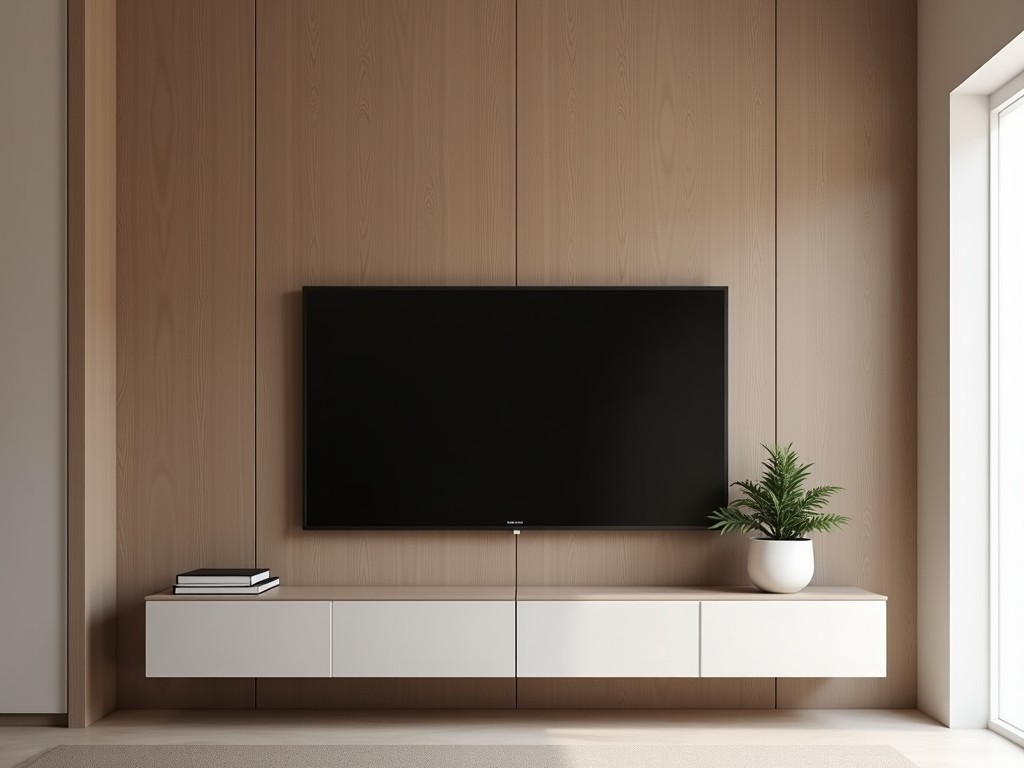
Minimalist Floating Tv Cabinet Console
A minimalist floating TV cabinet console is a wall-mounted media storage solution designed to support televisions and associated equipment while minimizing visual bulk. Unlike traditional
- Category:
- TV Cabinet
Minimalist Floating TV Cabinet Console
A minimalist floating TV cabinet console is a wall-mounted media storage solution designed to support televisions and associated equipment while minimizing visual bulk. Unlike traditional freestanding units, it attaches directly to structural wall studs or reinforced backing, creating a suspended appearance that enhances spatial perception in residential and commercial interiors. The design emphasizes clean lines, concealed hardware, and integrated cable management to maintain an uncluttered aesthetic.
Engineered for precision installation, these consoles rely on load-bearing brackets rated for specific weight capacities, typically ranging from 50 kg to 150 kg depending on substrate and fastening method. Material selection focuses on dimensional stability and surface finish consistency, with common substrates including engineered wood composites, solid hardwoods, or metal frames with veneer overlays. Edge detailing and joint tolerances are controlled to within ±0.5 mm to ensure seamless alignment during assembly.
The floating configuration reduces floor footprint, facilitating easier cleaning and improved airflow around electronic components. By elevating the center of gravity above the floor plane, it also mitigates vibration transmission from foot traffic or adjacent machinery in mixed-use environments. This makes it suitable for installations where floor space is constrained or where a minimalist architectural language is required.
Core Design Principles
The structural integrity of a floating TV cabinet depends on the interplay between wall anchoring, load distribution, and material stiffness. Brackets are typically fabricated from cold-rolled steel with a minimum thickness of 2.5 mm, featuring multiple fastening points to spread shear forces across a wider wall area. Deflection under load is limited to less than 1.5 mm at the front edge to prevent perceptible sagging over time.
Surface materials are selected based on resistance to warping, moisture absorption, and UV degradation. For wood-based options, moisture content is stabilized to 8% ±2% prior to lamination or veneering to minimize seasonal movement. Edge banding uses PVC or ABS with a thickness of 1.0–1.5 mm, applied via hot-air bonding to achieve peel resistance exceeding 50 N/mm.
Cable management is integrated through rear-access channels or removable panels, with internal diameters sized to accommodate HDMI, power, and low-voltage conduits (typically 20–30 mm). Ventilation gaps of 10–15 mm are maintained behind the unit to allow passive cooling of AV equipment, reducing reliance on active fans and extending component lifespan.
Material and Finish Options
| Material Type | Typical Density | Surface Finish Options | Stability Characteristics |
|---|---|---|---|
| Engineered Wood Composite (MDF/Particleboard) | 600–800 kg/m³ | Melamine, PVC laminate, wood veneer | Low shrinkage; requires edge sealing |
| Solid Hardwood (Oak, Walnut, Ash) | 650–750 kg/m³ | Oil, wax, polyurethane, matte lacquer | Moderate movement; acclimatization required |
| Metal Frame with Veneer Overlay | Frame: 7800 kg/m³; Veneer: 500–700 kg/m³ | Powder coat, anodized aluminum, natural veneer | High stiffness; minimal thermal expansion |
| Laminated Bamboo Plywood | 600–650 kg/m³ | Clear coat, carbonized finish, stained | High strength-to-weight ratio; low VOC |
Material selection influences both long-term performance and installation requirements. Heavier substrates like solid hardwood necessitate stronger wall anchors and additional blocking, while lighter composites allow for simpler mounting but may require reinforcement at stress points. Finish compatibility with cleaning agents and humidity levels should be evaluated based on the installation environment.
Load Capacity and Installation Requirements
Load capacity is determined by the weakest link in the system: wall substrate, fastener type, bracket design, and cabinet construction. For standard drywall installations with wood studs spaced at 400 mm or 600 mm intervals, a minimum of four #10 wood screws (minimum 50 mm embedment) per bracket is recommended to achieve a safe working load of 100 kg. In concrete or masonry walls, mechanical anchors with minimum embedment depth of 40 mm and torque specification of 15 Nm are used.
The cabinet’s internal frame must resist torsional loading caused by off-center weight distribution (e.g., soundbar placed to one side). This is addressed through the use of vertical stiffeners or a perimeter frame with a minimum section modulus of 500 mm³. Deflection testing is conducted using a center-point load equivalent to 1.5× the rated capacity, with permanent set limited to 0.2 mm after unloading.
Clearance requirements include a minimum 50 mm gap above the unit for ceiling-mounted projectors or lighting, and 100 mm below for floor-standing speakers or media players. Wall surface preparation must ensure flatness within 3 mm over a 1-meter span to prevent twisting during installation. Shimming is permitted only with non-compressible materials (e.g., HDPE shims) to avoid long-term settling.
Applications in Commercial and Residential Settings
In residential environments, minimalist floating TV consoles are frequently specified in open-plan living areas where visual continuity between zones is prioritized. By eliminating floor-bound furniture, they allow flooring materials (e.g., hardwood, polished concrete) to extend uninterrupted beneath the unit, reinforcing spatial flow. This is particularly effective in rooms with low ceilings, where vertical space is leveraged to avoid a cluttered appearance.
In commercial applications such as boutique hotels, corporate lobbies, or healthcare waiting areas, these units support digital signage or guest entertainment systems while maintaining a clean, unobtrusive profile. The elevated position reduces the risk of accidental impact from cleaning equipment or foot traffic, and the concealed cabling minimizes tampering or tripping hazards. Installation is often coordinated with millwork or acoustic paneling to ensure seamless integration with surrounding finishes.
The design also adapts well to retrofits where structural modifications are limited. Since the load is transferred to the wall rather than the floor, it avoids the need for additional joisting or foundation work. This makes it a viable option in upper-floor installations, historic buildings with load restrictions, or spaces where access for heavy equipment is constrained.
Customization and Integration Flexibility
Standard configurations are available in widths ranging from 1200 mm to 2400 mm, heights of 300 mm to 500 mm, and depths of 250 mm to 400 mm, though these dimensions are frequently adjusted to match specific TV models or room proportions. Custom lengths are achieved through modular panel joining, with alignment tolerances maintained via concealed cam locks or precision dowel systems. End panels can be tapered or angled to accommodate wall protrusions or architectural features.
Internal layouts are configurable to house media consoles, gaming systems, or streaming devices, with adjustable shelving or vented compartments. Rear access panels are sized to allow service without removing the unit, typically featuring push-to-open or magnetic closures. Cable egress points are reinforced with grommets to prevent abrasion and are positioned to align with common AV outlet locations.
Finish matching to adjacent millwork, wall panels, or flooring is achievable through custom staining, laminating, or veneer splicing. For projects requiring fire-rated components, substrates can be substituted with FR-grade MDF or metal cores with intumescent coatings, subject to local building codes. All customizations are reviewed for structural implications before production release.
Quality Control and Manufacturing Considerations
Dimensional accuracy is verified at multiple stages: raw material inspection, post-machining, and final assembly. Critical dimensions such as bracket hole spacing, panel squareness, and edge straightness are measured using calibrated gauges with a tolerance of ±0.3 mm. Surface flatness is assessed via feeler gauge or optical methods to ensure no warping exceeds 0.5 mm/m.
Adhesion tests are conducted on laminated surfaces using cross-hatch and tape methods per ASTM D3359, with a minimum rating of 4B required for acceptable bond strength. Edge banding is tested for peel resistance and impact durability using a 1 kg falling ball test from 100 mm height. Finish uniformity is evaluated under standardized lighting (D65, 500 lux) to detect color variation or gloss inconsistency.
Packaging is designed to protect against edge impact and surface abrasion during transit. Units are wrapped in recycled polyethylene foam, corner-protected with molded pulp inserts, and secured in double-wall corrugated cartons with a minimum burst strength of 275 kPa. Each package includes a detailed installation template, load-rated hardware kit, and step-by-step instructions with torque specifications for fasteners.
For project-specific inquiries regarding dimensions, material options, load ratings, or installation guidance, contact our technical team to discuss your requirements.
Request Technical Consultation