French Vintage Tv Unit Manufacturer
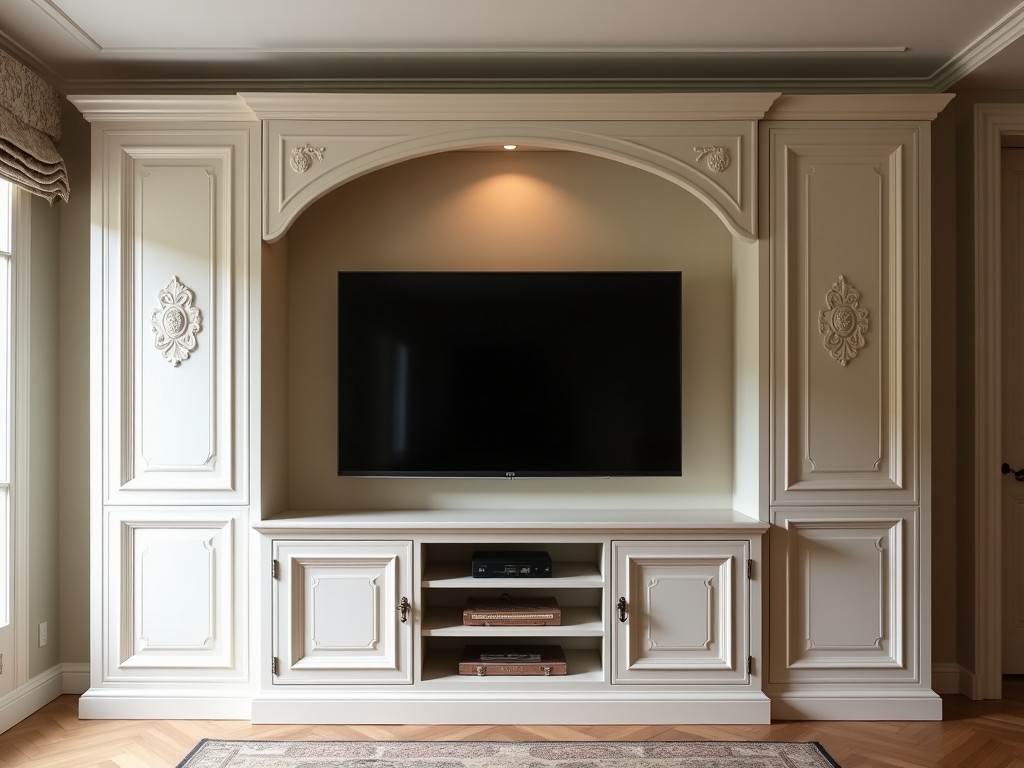
French Vintage Tv Unit Manufacturer
French vintage TV units are specialized furniture pieces designed to house mid-20th century television sets while reflecting the aesthetic principles of postwar French design. These units combine
- Category:
- TV Cabinet
French Vintage TV Unit Manufacturer
French vintage TV units are specialized furniture pieces designed to house mid-20th century television sets while reflecting the aesthetic principles of postwar French design. These units combine functional storage with stylistic elements characteristic of the 1950s–1970s French modernist movement, including tapered legs, subtle wood grain patterns, and restrained ornamentation. Unlike mass-produced reproductions, authentic French vintage units are typically crafted from solid hardwoods such as oak, walnut, or elm, using traditional joinery techniques like mortise-and-tenon or dovetail joints. Manufacturers specializing in this niche focus on historical accuracy in proportions, finish application, and hardware selection to ensure compatibility with both original-era televisions and contemporary media equipment. Understanding these technical and stylistic nuances is essential for buyers seeking furniture that meets both functional and contextual authenticity requirements.
Material Selection and Construction Methods
The durability and visual integrity of a French vintage TV unit depend heavily on material choice and joinery precision. Solid walnut is frequently selected for its rich, straight grain and stability under fluctuating humidity, while European oak provides a more pronounced texture and higher resistance to surface wear. Frame components are typically constructed using 18–25 mm thick solid stock, with panels joined via blind mortise-and-tenon for structural rigidity and dovetail joints in drawers to resist tensile stress during use. Surfaces are hand-sanded to a P180–P220 finish before applying multiple thin coats of oil-based lacquer or wax-oil blend, allowing wood movement while enhancing depth. Edge profiling follows period-correct radii—typically 3–5 mm on front edges and 1–2 mm on interior corners—to avoid the sharp, machine-made appearance common in modern reproductions.
Dimensional Standards and Ergonomic Considerations
French vintage TV units adhere to specific dimensional ranges derived from historical production norms and ergonomic studies of mid-century viewing habits. Typical overall height ranges from 450 to 550 mm, aligning with seated eye level when paired with period-appropriate sofas measuring 400–450 mm in seat depth. Width varies between 1200 and 1800 mm to accommodate common television screen widths of the era (14–21 inches diagonal), while depth is maintained at 400–450 mm to allow clearance for rear-panel ventilation and cable routing without protruding into walkways. Interior shelf spacing is generally 250–300 mm vertically to support analog components like turntables or tape decks, with rear access panels measuring 80–100 mm in height for service access. These proportions are not arbitrary; they reflect the spatial constraints and usage patterns of 1950s–1960s French living rooms, where furniture was designed to integrate with architectural elements like window heights and radiator placements.
Finish Authenticity and Surface Treatment
Achieving an authentic French vintage finish requires more than applying a stain—it involves replicating the aging characteristics of wood treated with period-appropriate materials. Original finishes from the 1950s–1960s often used shellac-based sealers followed by wax polish or early nitrocellulose lacquers, which developed a soft patina through light exposure and handling. Modern reproductions use water-based dyes to penetrate the wood evenly, avoiding the blotching common with alcohol-based stains on porous woods like elm. A topcoat of blended tung oil and beeswax (typically 70:30 ratio) is applied in 3–4 thin layers, each cured for 24 hours, to produce a satin sheen (15–25 gloss units at 60° angle) that resists fingerprints while allowing tactile warmth. UV stabilizers are added in minimal concentrations (0.5–1.0%) to prevent uneven fading without creating a plasticky appearance, preserving the material’s ability to develop character over time.
Hardware and Functional Details
Functional elements such as handles, hinges, and shelf supports are critical to both usability and historical accuracy. Pull handles are typically fabricated from solid brass or brushed nickel, with diameters of 8–10 mm and center-to-center spacing of 96 mm or 128 mm, matching period standards from French manufacturers like Disderot or Steiner. Hinges are concealed or semi-concealed butt types with knuckle diameters of 6 mm, allowing doors to open to 110° without binding. Adjustable shelf pins use 5 mm diameter steel with nylon collars to prevent marring, spaced at 32 mm intervals for flexibility. Cable management is addressed through rear access cutouts (typically 40×60 mm) lined with nylon grommets to prevent abrasion, and ventilation slots (12–15 mm wide, spaced 80 mm apart) are routed into the top and rear panels to dissipate heat from modern electronics without compromising the unit’s sealed appearance.
Quality Control and Inspection Protocols
Consistency in vintage reproduction relies on standardized inspection checkpoints throughout production. Each unit undergoes three-stage evaluation: initial raw material assessment for grain orientation and moisture content (target: 8–10% MC), mid-process joint integrity verification using torque testing on mortise-and-tenon connections (minimum 15 Nm resistance), and final surface evaluation under 5000K daylight simulation to detect finish inconsistencies or sanding marks. Dimensional tolerances are held to ±1.5 mm on overall dimensions and ±0.5 mm on joinery features like dado depths or pin hole alignment. Finish thickness is measured via dry film gauge, targeting 35–45 microns for oil-wax systems. Units failing any criterion are reworked or segregated; no unit proceeds to packaging without documented pass/fail records for each inspection point. This traceability ensures that批次 variations remain within acceptable aesthetic and functional bounds.
Packaging and Logistics Considerations
Shipping French vintage TV units requires protection against impact, moisture, and surface abrasion during transit. Units are first wrapped in 0.05 mm polyethylene film to prevent moisture ingress, then covered with 3 mm corrugated cardboard edge protectors on all vertical corners. The main body is enclosed in double-wall corrugated carton (200 g/m² flute) with internal bracing formed from die-cut kraft board to immobilize the unit along all axes. Interior compartments such as drawers and shelves are secured with biodegradable foam spacers to prevent shifting. Each package includes a humidity indicator card (cobalt chloride-based, 20–80% RH range) and is sealed with pressure-sensitive tape featuring tensile strength of 60 N/cm. Palletized shipments use 1000×1200 mm heat-treated pallets with max stack height of 2 units, secured via polyester strapping (12 mm width, 550 N break strength) and corner boards to prevent diagonal distortion. These methods reduce damage rates to under 2% in international LTL shipments.
Customization Workflow and Project Requirements
Customization begins with a technical brief that defines the unit’s intended use, spatial constraints, and stylistic references. Clients must provide: (1) exact dimensions of the installation space (width, height, depth), (2) specifications of media equipment to be housed (dimensions, weight, ventilation needs), (3) preferred wood species and finish reference (e.g., “walnut, medium oil finish, 1960s French patina”), and (4) hardware preferences or period references (e.g., “Brass handles, Disderot model 1958”). Based on this, manufacturers generate CAD-approved shop drawings showing joint locations, hardware placement, and finish zones. Lead times typically range from 6–10 weeks for standard configurations, extending to 10–14 weeks for complex variations involving curved elements or custom inlay. Prototyping is available for high-volume orders, with sample units produced at 50% scale to validate proportions and ergonomics before full-scale production. All custom work includes a design for manufacturability (DFM) review to ensure joint accessibility and finish uniformity.
| Parameter | Typical Range | Notes |
|---|---|---|
| Overall Height | 450–550 mm | Aligned with seated eye level |
| Overall Width | 1200–1800 mm | Scales with screen width of era |
| Overall Depth | 400–450 mm | Allows rear ventilation and cable access |
| Shelf Thickness | 18–22 mm | Solid wood, no sag under 15 kg load |
| Handle Diameter | 8–10 mm | Brass or brushed nickel |
| Finish Gloss (60°) | 15–25 GU | Satin appearance, oil-wax blend |
| Moisture Content (Wood) | 8–10% | Kiln-dried, stabilized |
| Lead Time (Standard) | 6–10 weeks | Excludes shipping, varies by complexity |
For engineers, procurement specialists, and designers seeking authentic French vintage TV units that meet both aesthetic and functional specifications, technical clarity reduces risk in sourcing. Understanding the interplay between material stability, joinery integrity, finish chemistry, and dimensional conformity enables informed evaluation beyond superficial appearance. Manufacturers in this sector prioritize documentation of processes, material traceability, and compliance with historical proportions—not as marketing claims, but as engineering prerequisites for producing furniture that performs reliably in residential and contract environments. To initiate a technical consultation or request project-specific drawings, material samples, or lead time estimates, contact our technical team directly.