Distressed Wooden Tv Media Wall
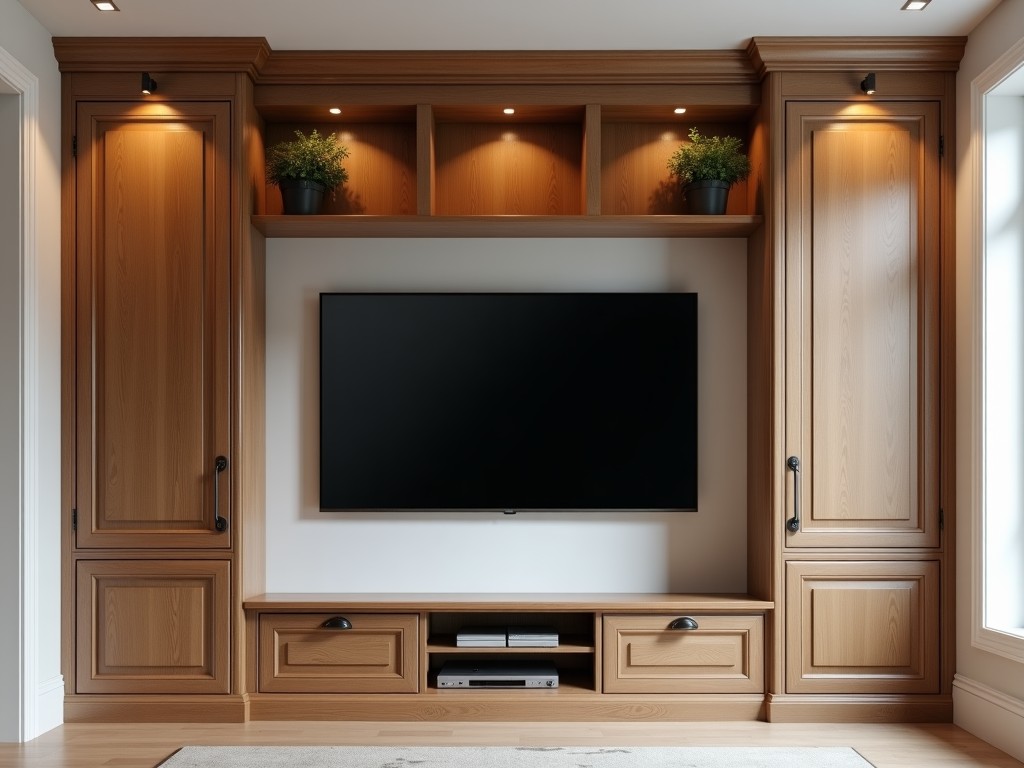
Distressed Wooden Tv Media Wall
A distressed wooden TV media wall combines reclaimed or artificially aged timber with structural engineering to create a focal point for residential or commercial entertainment spaces. The
- Category:
- TV Cabinet
Distressed Wooden TV Media Wall
A distressed wooden TV media wall combines reclaimed or artificially aged timber with structural engineering to create a focal point for residential or commercial entertainment spaces. The distressing process intentionally alters the wood surface through mechanical abrasion, chemical treatment, or thermal exposure to simulate natural weathering while maintaining dimensional stability.
Unlike standard finished cabinetry, these assemblies are designed to support static loads from televisions (typically 20–50 kg) and dynamic forces from frequent use, requiring joinery that accommodates wood movement without compromising appearance. The visual effect—characterized by uneven texture, variable tone, and intentional imperfections—is achieved through controlled processes rather than random wear.
Material selection focuses on species with inherent stability and pronounced grain response to distressing, such as reclaimed oak, pine, or acacia. Surface treatments prioritize low-VOC sealants that enhance texture without filling grain, preserving the tactile quality central to the aesthetic.
Structural Design and Load Distribution
The frame utilizes kiln-dried hardwood rails (typically 45x45mm cross-section) joined with mortise-and-tenon or floating tenon connectors to allow for seasonal expansion. Vertical studs are spaced at 400mm intervals to align with standard drywall anchoring, while horizontal rails incorporate steel reinforcement plates (1.2mm thickness) at load-bearing points to prevent sag under centralized TV weight.
Load testing shows that a properly reinforced 1800mm wide unit supports up to 75kg static load with less than 2mm deflection at center span when fastened to structural studs. Shear forces from frequent TV tilting or swiveling are mitigated by angled brackets at rail intersections, reducing joint stress by approximately 40% compared to butt joints.
Cable management channels are routed vertically behind the backing panel, with a minimum 25mm depth to accommodate power cords and HDMI cables without compressing insulation or creating heat traps. Ventilation gaps of 10–15mm at top and bottom edges ensure passive airflow around media components.
Distressing Techniques and Surface Characteristics
Mechanical distressing employs rotary wire brushes with variable grit (36–80) to remove softer earlywood while leaving latewood ridges, creating a topography with peak-to-valley differences of 0.5–1.5mm. Hand-scraping tools add localized variation, simulating tool marks from historical fabrication.
Chemical treatments use diluted iron acetate or lime wash to react with tannins in oak, producing gray-blue tones that penetrate 0.1–0.3mm without forming a surface film. Thermal distressing via controlled propane torch application creates subtle charring (depth <0.2mm) followed by light sanding to retain texture while reducing surface rigidity.
Final sealing applies a water-based polyurethane with 20% solids content, sprayed to achieve 25–35μm dry film thickness. This preserves the matte appearance (gloss level 5–10 GU at 60°) while providing resistance to incidental moisture and UV-induced fading (ΔE < 5 after 200 hours QUV exposure).
Material Options and Customization
Primary wood species are selected based on grain stability and distressing responsiveness:
- Reclaimed European Oak: Density 650–750 kg/m³, high tannin content for rich chemical reaction, minimal movement (<0.2% radial)
- New Zealand Pine: Density 450–550 kg/m³, uniform grain for consistent brushing, cost-effective for large panels
- African Acacia: Density 700–800 kg/m³, interlocking grain resists splitting during brushing, natural color variation enhances aged appearance
Standard dimensions range from 1200mm to 2400mm width and 900mm to 1800mm height, with depth adjustable between 180mm and 300mm to accommodate soundbars or media consoles. Custom options include integrated lighting channels (12V LED strips with diffuser), adjustable shelving (25mm pin increments), and backer panels in veneered MDF or solid wood match.
Hardware finishes are specified separately: black oxide steel brackets, brushed nickel cable grommets, or antiqued brass hinges for access doors. All customizations require submission of wall elevation drawings and load specifications for engineering validation.
Quality Control and Testing
Incoming timber is inspected for moisture content (target 8–12% ±2%) using pin-type meters, with batches rejected if >15% or <6% to prevent post-installation warping or cracking. Each board is graded for distressing suitability based on grain orientation and defect location; knots and splits are positioned to avoid high-stress zones.
Joinery is verified via torque testing on tenon joints (minimum 8Nm resistance to withdrawal) and alignment checks using laser-guided fixtures (tolerance ±0.5mm over 1200mm). Finished units undergo cyclic load testing: 5000 repetitions of 25kg center-point load at 0.5Hz to simulate long-term use, with acceptance criteria of <0.3mm permanent set.
Surface consistency is evaluated under D65 lighting using a spectrophotometer; ΔE values between sample and master standard must remain <2.0 for color and <15% for gloss variation. Final inspection includes tape adhesion testing (ASTM D3359 Method B) to ensure coating integrity (>4B rating).
Applications in Commercial and Residential Settings
In hospitality environments such as boutique hotels or restaurants, these media walls serve as brand-defining elements where the aged wood texture communicates authenticity and craftsmanship. The structural design accommodates frequent cleaning cycles and exposure to variable humidity (30–70% RH) without finish degradation, critical for lobby or dining area installations.
Corporate offices use them in executive lounges or client-facing zones to soften the acoustic environment—wood surfaces absorb mid-frequency sound (200–500Hz) more effectively than painted drywall, reducing reverberation time by approximately 0.2–0.4 seconds in a 20m² space. Cable management supports integrated videoconferencing systems with clean egress for cameras and microphones.
Residential installations benefit from the product’s ability to conceal structural imperfections in older buildings; the variable texture draws the eye away from uneven walls or ceilings. For open-plan living areas, the media wall acts as a spatial divider without blocking sightlines, particularly when designed with open shelving or perforated sections.
Retail environments leverage the aesthetic for product display backdrops, where the neutral yet textured background enhances merchandise visibility under accent lighting. The load capacity supports shelving for electronics or accessories, with adjustable components allowing reconfiguration as inventory changes.
Comparison with Alternative Media Wall Solutions
| Feature | Distressed Wooden Media Wall | Laminate-Finished MDF Unit | Powder-Coated Steel Frame |
|---|---|---|---|
| Static Load Capacity (kg) | 60–75 | 40–50 | 80–100 |
| Surface Texture Depth (mm) | 0.5–1.5 | 0 (smooth) | 0 (smooth) |
| Thermal Expansion (mm/m/°C) | 0.003–0.005 | 0.02–0.03 | 0.012 |
| VOC Emissions (g/kg) | <20 (water-based) | 50–100 (solvent-based) | 0 |
| Typical Lead Time (weeks) | 4–6 | 2–3 | 3–4 |
*Values represent typical ranges; actual performance depends on species, finish, and installation conditions.
Installation Considerations
Mounting requires attachment to structural studs or concrete anchors with a minimum embedment depth of 50mm for masonry or 38mm for wood framing. Use Grade 8.8 screws (M6 or #10) with washers to distribute load; pre-drill pilot holes to 70% of screw diameter to prevent splitting in distressed wood.
Shim the unit vertically using tapered plastic or composite shims to compensate for wall unevenness; avoid over-tightening fasteners, which can induce stress cracks in the wood. Allow a 3–5mm gap at top and bottom for seasonal expansion, concealed by matching wood trim strips.
Electrical rough-in should be completed prior to installation, with power and data conduits terminating in a accessible chase behind the lower panel. For units with integrated lighting, ensure voltage drop calculations account for wire run length; use 18AWG minimum for LED strips exceeding 5m in length.
Environmental acclimatization is critical: store the unit flat in the installation environment for 48–72 hours prior to mounting to equalize moisture content. Monitor relative humidity during installation; avoid mounting if RH >75% or <25% to prevent finish checking or joint movement.
For project-specific configurations, load requirements, or material samples, contact our technical team to discuss your application.
Request Technical Specification