China Tv Wall Unit With Hidden Storage
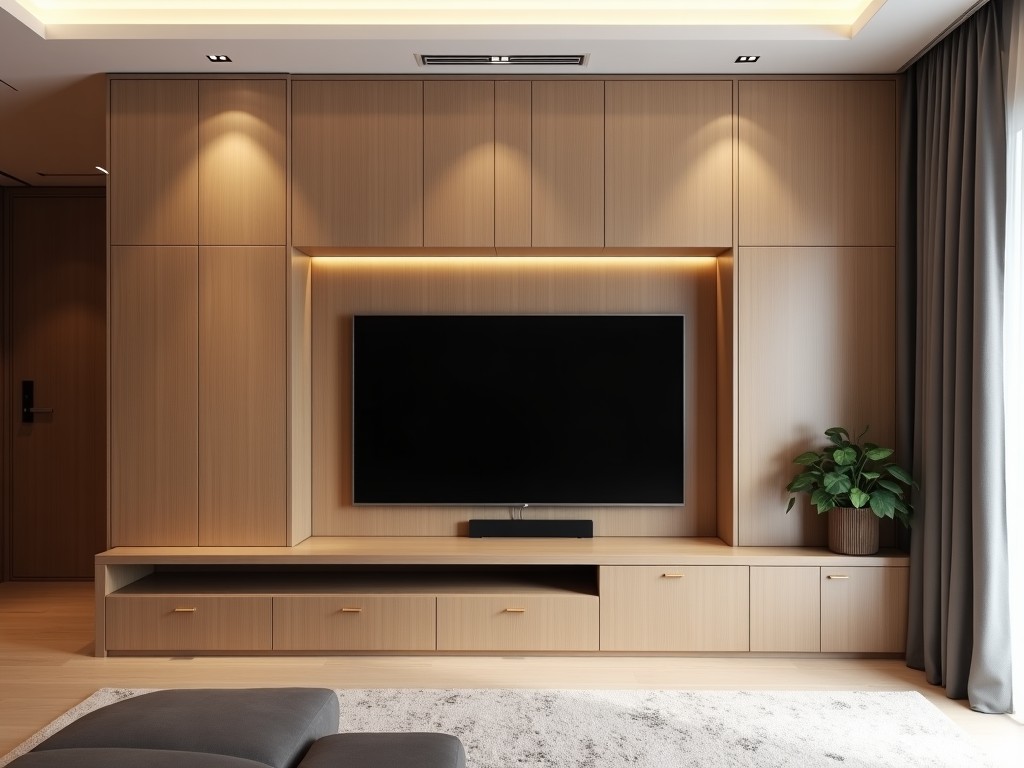
China Tv Wall Unit With Hidden Storage
A China TV wall unit with hidden storage is a purpose-built furniture system designed to integrate display equipment, cable management, and concealed compartments within a single structural assembly.
- Category:
- TV Cabinet
China TV Wall Unit with Hidden Storage
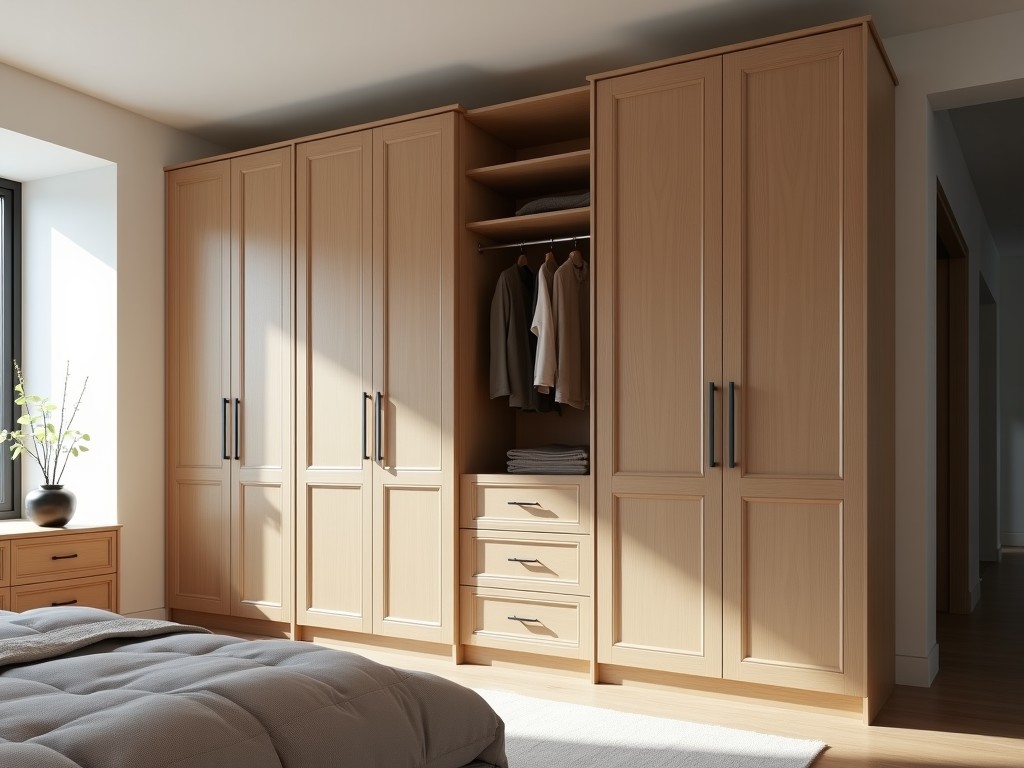
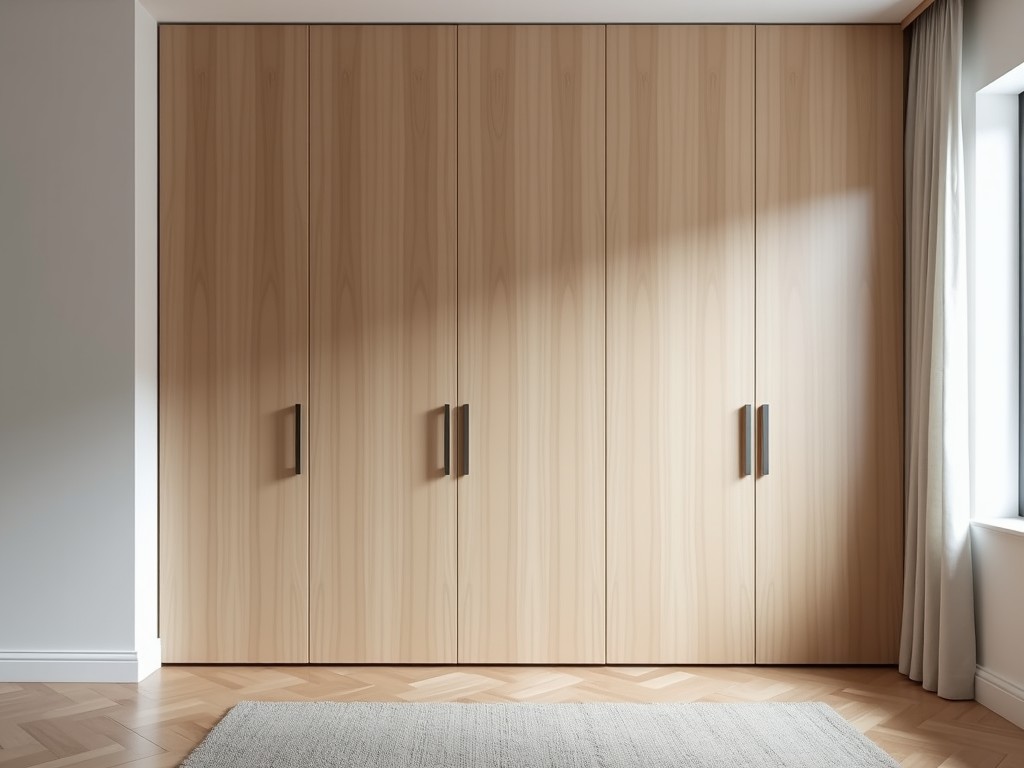
A China TV wall unit with hidden storage is a purpose-built furniture system designed to integrate display equipment, cable management, and concealed compartments within a single structural assembly. These units are commonly specified for residential, hospitality, and commercial interiors where space optimization and aesthetic continuity are critical. Unlike freestanding media consoles, wall-mounted variants distribute load across structural studs or reinforced backing panels, minimizing floor footprint while maximizing vertical utility. The hidden storage component typically incorporates flush-mounted doors, lift mechanisms, or sliding panels that maintain a seamless visual plane when closed. Material selection—often engineered wood composites, laminated panels, or metal-reinforced frames—is driven by load-bearing requirements, environmental stability, and finish compatibility with surrounding architecture. Understanding the mechanical and dimensional constraints of these units is essential for specifiers evaluating long-term performance in high-traffic or variable-humidity environments.
Structural Design and Load Distribution
The structural integrity of a TV wall unit with hidden storage depends on how effectively it transfers dynamic and static loads to the building substrate. Wall-mounted systems typically employ a French cleat, Z-clip, or direct-stud fastening method to distribute weight across multiple anchor points, reducing shear stress on any single fastener. For units exceeding 50 kg in total mass (including TV, stored items, and hardware), supplemental support via a load-bearing back panel or intermediate stretcher is often required to prevent sagging over time. The hidden storage compartments—whether drawer-based, lift-up, or hinged—introduce asymmetric loading patterns that must be counteracted through internal bracing or reinforced carcass construction. Deflection limits are generally kept under L/200 for shelving surfaces and L/150 for door assemblies to ensure smooth operation and prevent binding. Finite analysis of joint stiffness and screw withdrawal resistance in substrate materials (e.g., gypsum, concrete, wood stud) informs fastener selection and spacing.
Material thickness and panel joinery directly influence resistance to racking and torsional forces. Carcass panels made from 18mm melamine-faced chipboard (MFC) or medium-density fiberboard (MDF) provide adequate stiffness for spans up to 900mm without intermediate support, while longer spans may require vertical dividers or horizontal rails. Edge banding thickness (typically 0.5–1.0mm PVC or ABS) affects impact resistance at exposed corners, particularly in high-traffic zones. Cam-lock, confirmat, or dowel-and-glue joints are common in flat-pack manufactured units, with torque specifications critical to joint longevity. In custom fabrications, dado, rabbet, or mortise-and-tenon joints may be used for enhanced rigidity, though they increase production complexity. The choice of joinery method affects both assembly tolerances and long-term creep resistance under sustained load.
Hidden Storage Mechanisms and Operational Ergonomics
Hidden storage in TV wall units is achieved through mechanisms designed to conceal functionality while maintaining accessible operation. Common implementations include push-to-open hinged doors, soft-close lift systems, and electronically actuated sliding panels. Push-to-open hardware relies on magnetic catches or spring-loaded plungers that release with minimal finger pressure, eliminating the need for visible handles and preserving a monolithic surface. Soft-close lift mechanisms—often gas-strut or torsion-bar based—control the descent of flap doors storing media consoles or soundbars, preventing slippage and reducing impact noise. For deeper storage, vertical sliding panels guided by low-friction nylon rollers or ball-bearing tracks allow full access while retracting flush against the wall plane when closed. Each mechanism introduces specific clearance requirements: lift-up doors need minimum 100mm vertical travel space above the unit, while sliding panels require horizontal runout equal to door width plus 10–15% for overlap.
Ergonomic considerations dictate the height and accessibility of storage zones relative to user interaction points. Frequently accessed items (e.g., remote controls, streaming devices) are typically stored in zones between 800mm and 1200mm from the finished floor, aligning with average standing reach. Less frequently used components (e.g., spare cables, seasonal decor) may occupy higher or lower compartments, though accessibility diminishes beyond 1500mm or below 400mm without assistive hardware. Door opening angles are generally limited to 90° for hinged units to avoid wall interference, while lift mechanisms often require 110–120° of rotation for full clearance. Soft-close dampers are calibrated to achieve closure speeds of 0.2–0.4 m/s, balancing safety with usability. Load ratings for lift mechanisms commonly range from 15kg to 30kg per pair, sufficient for soundbars, gaming consoles, or folded linens but inadequate for dense equipment like amplifiers or server racks without reinforcement.
Material Selection and Environmental Stability
The performance of a TV wall unit with hidden storage in real-world conditions is heavily influenced by substrate material choice and surface finish. Engineered wood products like MFC and MDF are prevalent due to their dimensional stability, cost-effectiveness, and compatibility with CNC routing for precise panel cutting and joinery. MFC typically exhibits a moisture content of 4–8% at equilibrium and shows minimal expansion (<0.2%) under 50% RH changes, making it suitable for climate-controlled interiors. MDF offers superior screw holding strength and smoother finish for painted surfaces but is more susceptible to edge swelling if exposed to prolonged humidity >70%. For high-moisture areas (e.g., bathrooms, coastal properties), marine-grade plywood or PVC-laminated composite panels may be specified, though they increase material cost and weight. Surface finishes—melamine, laminate, veneer, or lacquer—affect abrasion resistance, UV stability, and cleanability, with AC4-rated laminates recommended for high-touch surfaces.
Metal components—such as steel brackets, aluminum extrusions, or zinc-alloy hardware—are selected based on corrosion resistance and load capacity. Cold-rolled steel brackets with zinc plating or powder coating provide adequate protection for indoor use, while stainless steel (Grade 304) is preferred in humid or chemically exposed environments. Aluminum extrusions used in sliding panel guides offer a favorable strength-to-weight ratio and natural corrosion resistance, though they require nylon or PTFE inserts to prevent galling and ensure smooth motion. Fastener selection (e.g., #8 or #10 wood screws, M4–M6 machine screws) must account for substrate type: coarse-thread screws for wood studs, fine-thread or self-tapping for metal framing, and anchor bolts for masonry. Differential thermal expansion between materials (e.g., aluminum vs. MDF) is generally negligible in indoor applications but should be considered in units exceeding 2m in length where seasonal temperature swings may induce stress at joints.
Cable Management and Integration Features
Effective cable management is a defining feature of a well-engineered TV wall unit with hidden storage, directly impacting safety, serviceability, and aesthetics. Integrated solutions typically include molded channels, snap-in grommets, or removable access panels that route power, HDMI, Ethernet, and AV cables from the TV mount down to storage compartments or floor outlets. Vertical raceways, often fabricated from extruded PVC or ABS, are mounted internally along the carcass to conceal bundles while allowing future modifications. These channels maintain a minimum bend radius of 25mm to prevent signal degradation in high-bandwidth cables (e.g., HDMI 2.1, fiber optic). Removable front or rear panels—secured with cam locks or thumb screws—provide tool-free access for troubleshooting or upgrades, a critical consideration in commercial installations where downtime must be minimized. Some units incorporate passive ventilation slots (typically 5–10mm gaps at top/bottom edges) to dissipate heat from enclosed electronics without compromising the hidden storage aesthetic.
Power distribution within the unit is frequently addressed through pre-installed power strips or recessed outlets mounted inside storage bays. These are typically rated for 10A–16A and include surge protection (e.g., 200–400J) to safeguard connected devices. Cable entry points are often fitted with brush seals or rubber grommets to prevent dust ingress and abrasion at sharp panel edges. For network infrastructure, CAT6 or CAT6A passthroughs with keystone jack compatibility allow direct termination inside the unit, eliminating the need for exposed wall plates. Labeling conduits or using color-coded ties improves traceability during maintenance. In hospitality or multi-unit developments, centralized cable chases may connect multiple units to a central AV rack, requiring careful coordination of conduit sizing (typically 25–32mm diameter) and fire-stopping compliance with local building codes.
Customization Options and Dimensional Flexibility
Customization of a China TV wall unit with hidden storage extends beyond finish selection to include structural adaptation for specific equipment, spatial constraints, and integration requirements. Width adjustments are commonly made in 50mm increments to accommodate standard TV sizes (55–85 inch) and flanking storage needs, with typical overall widths ranging from 1200mm to 2400mm. Height is often determined by viewing ergonomics—targeting the screen center at 1000–1200mm from floor—and may be segmented into zones: lower base (300–400mm), mid-level TV mount (400–600mm), and upper storage or display (600–1000mm). Depth varies based on storage function: 200–250mm for slim media consoles, 300–350mm for AV receivers or gaming systems, and 400mm+ for deep drawers or linen storage. Custom depths require corresponding adjustments to wall clearance and bracket length to prevent wall interference or excessive moment arm.
Internal layout customization allows for tailored storage configurations: fixed shelves, adjustable shelving (in 32mm increments), pull-out drawers, tilt-down trays, or vertical dividers for optical media. Shelf load capacity is typically rated at 20–30kg UDL for 18mm MFC with center support, increasing to 40–50kg with intermediate stiffeners. Drawer systems may use side-mount (30kg dynamic load) or undermount (40kg) slides with soft-close options, requiring precise cabinet squareness to prevent binding. Door styles—hinged, lift-up, sliding, or pocket—can be mixed within a single unit to optimize access patterns. For example, a lift-up flap may conceal a soundbar, while side-hinged doors store remotes and cables, and a vertical sliding panel hides a tablet control interface. Integration with smart home systems may include pre-wired conduits for IR repeaters, Bluetooth extenders, or wireless charging pads, all designed to remain invisible when storage is closed.
Quality Control and Manufacturing Considerations
Manufacturing consistency in TV wall units with hidden storage is achieved through standardized material tolerances, precision machining, and functional testing. Panel dimensions are typically held to ±0.5mm for length and width, and ±0.2mm for thickness, ensuring proper alignment during assembly. Edge banding application is monitored for adhesion strength (>1.0 N/mm width) and uniformity to prevent delamination under thermal cycling. Hardware installation—such as hinge placement, lift mechanism alignment, and slider positioning—is verified using jigs to maintain repeatability within ±1mm. Functional tests include door operation cycles (5,000–10,000 repetitions), load testing of shelves and drawers (150% of rated capacity for 24 hours), and cable pull force validation (>50N retention in grommets). Finish quality is assessed for gloss uniformity, color matching (ΔE < 2.0 under D65 lighting), and resistance to common household cleaners (isopropyl alcohol, mild detergents).
Packaging for export or bulk shipment is designed to protect against impact, vibration, and moisture during transit. Units are typically disassembled into flat-pack components or sub-assemblies (e.g., carcass, doors, shelves) to optimize space and reduce risk of racking damage. Corner protectors, edge guards, and polyethylene foam inserts are used at high-stress points, while the entire package is wrapped in polyethylene film and placed in double-wall corrugated cartons (minimum 200 lb burst strength). Desiccant packs are included for shipments to humid climates. Labeling includes handling symbols (e.g., “This Side Up,” “Fragile”), weight limits, and SKU-specific barcodes for warehouse tracking. Assembly instructions are provided with exploded diagrams, torque specifications for cam locks (typically 12–18 Nm), and hardware lists to minimize field errors. Lead times for standard configurations range from 15–25 days, with custom orders adding 7–14 days for design approval and tooling setup.
Quality assurance protocols often include incoming material verification (e.g., MFC density >650 kg/m³, formaldehyde emission ≤ E1 standard), in-process checks (squareness, hole alignment), and final audits (functionality, appearance, packaging completeness). Traceability is maintained via batch numbers linked to material certificates and machine logs. For OEM or contract manufacturing, third-party inspections may be conducted to verify compliance with buyer specifications, including load performance, dimensional accuracy, and safety standards (e.g., EN 14749 for domestic furniture). While specific certifications vary by market, adherence to ISO 9001 principles in process control is commonly referenced as a baseline for consistent output. Continuous improvement is driven by field feedback—such as reports of door misalignment or hardware fatigue—which informs design revisions in subsequent production runs.
For technical inquiries, customization requests, or project-specific quotations, please contact our engineering team to discuss load requirements, material options, and integration details.
Request Technical Consultation