Apartment Tv Cabinet Bulk Supply
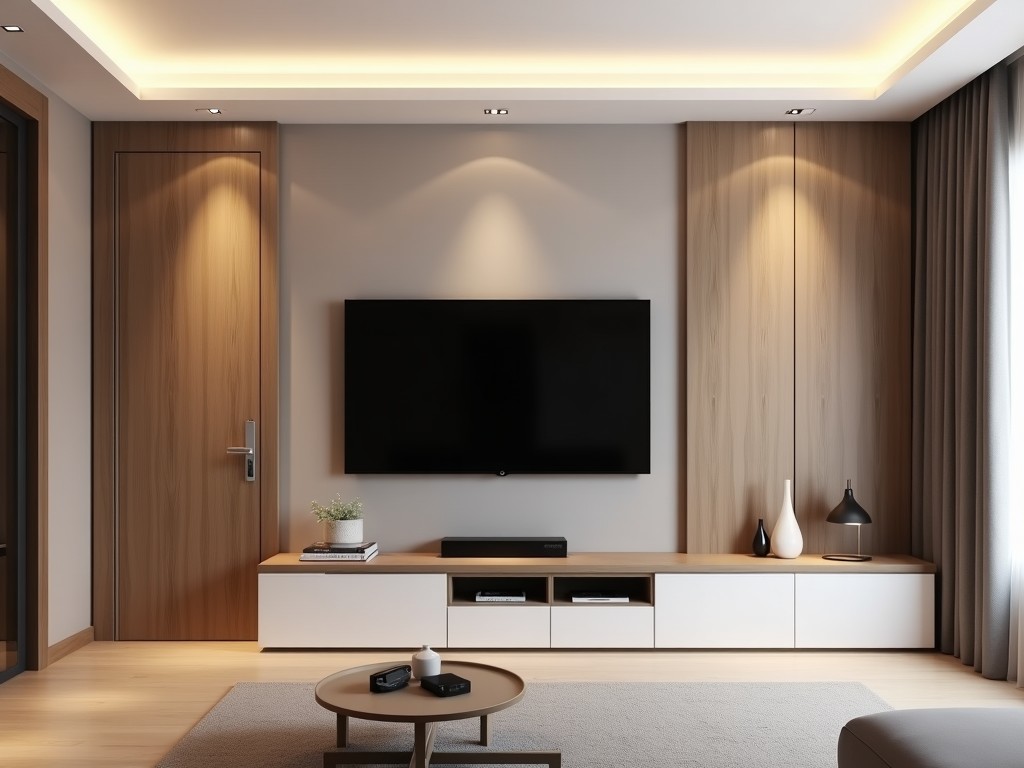
Apartment Tv Cabinet Bulk Supply
Procuring TV cabinets for multi-unit residential developments requires balancing dimensional consistency, material durability, and cost efficiency at scale. This guide outlines the technical
- Category:
- TV Cabinet
Apartment TV Cabinet Bulk Supply
Procuring TV cabinets for multi-unit residential developments requires balancing dimensional consistency, material durability, and cost efficiency at scale. This guide outlines the technical considerations for specifying and sourcing apartment TV cabinets in bulk, focusing on engineered solutions that meet residential construction timelines and long-term usability demands.
Standard Dimensions and Modular Design
Apartment TV cabinets are typically designed to accommodate common television sizes while fitting within constrained living room layouts. Standard widths range from 1200mm to 1800mm, depths from 350mm to 450mm, and heights from 400mm to 600mm, allowing clearance for baseboards and wall-mounted units. Modular designs often include interchangeable shelves or drawers, enabling adaptation to varying unit types within a single development without redesigning the core cabinet structure.
Internal shelving is usually spaced at 300mm intervals to support media components, with vertical dividers optional for cable management. Edge detailing—such as 2mm PVC or 3mm wood veneer bands—is specified to resist chipping during handling and installation, particularly in high-volume shipments where units are stacked and moved frequently.
Material Selection for Residential Use
Bulk-supplied apartment TV cabinets commonly use engineered wood substrates to ensure dimensional stability and cost predictability. Particleboard with melamine laminate is standard for interior surfaces, offering resistance to moisture and staining in environments with fluctuating humidity. Exterior faces may feature PVC foil, wood veneer, or low-pressure laminate (LPL), each selected based on wear expectations and aesthetic requirements.
For higher-traffic or premium segments, medium-density fiberboard (MDF) with a painted finish or thermoplastic laminate provides improved edge integrity and surface uniformity. Back panels are typically 3mm HDF or cardboard honeycomb, chosen to reduce weight while maintaining racking resistance—critical when cabinets are transported flat-pack and assembled on-site.
Load Capacity and Structural Integrity
TV cabinets must safely support the weight of modern displays and associated equipment. Design loads typically assume a maximum of 50kg distributed across the top surface, with dynamic factors applied for vibration and occasional impact. Shelf loading is rated at 20kg per shelf for particleboard cores, increasing to 30kg for MDF or reinforced configurations.
Structural validation includes checking for sag under long-term load (creep resistance) and joint strength under lateral forces. Cam-lock fasteners, confirmat screws, or plastic dowels are commonly used in flat-pack designs, with torque specifications defined to prevent over-tightening and substrate splitting. Reinforcement brackets at corners or mid-span may be specified for units exceeding 1500mm in width.
Finish and Surface Performance
Surface finishes are evaluated for resistance to abrasion, staining, and UV degradation—particularly important in units exposed to direct sunlight. Melamine laminate typically achieves 150–200 cycles on the Taber abrasion tester (CS-10 wheels, 500g load), while PVC foil offers superior scratch resistance and ease of cleaning. Edge sealing is critical; unsealed edges can absorb moisture, leading to swelling and delamination over time.
Textured or matte finishes are preferred in residential applications to minimize glare and fingerprint visibility. Gloss levels below 20 GU (gloss units) at 60° angle are standard for living room furniture. Color consistency across batches is controlled via ΔE < 1.5 in CIELAB space to ensure visual uniformity when multiple cabinets are installed in adjacent units.
Packaging and Logistics for Bulk Orders
Bulk shipments prioritize damage prevention and handling efficiency. Cabinets are typically packed in 5mm or 7mm triple-wall corrugated cartons with internal corner protectors and edge boards. Each unit is wrapped in 50–80μm polyethylene film to guard against moisture and surface scratches during transit. Palletization uses 1100mm × 1100mm or 1200mm × 1000mm formats, with interlayer slip sheets and strapping to prevent shifting.
Flat-pack designs reduce volume by 60–70% compared to assembled units, significantly lowering freight costs. Assembly hardware (screws, cam locks, dowels) is segregated in labeled polybags attached to the inside of panels. Instructions are printed on recycled paper or included as QR-linked PDFs to reduce paper waste while maintaining accessibility.
Quality Control and Inspection Criteria
Incoming quality checks focus on dimensional accuracy, surface defects, and packaging integrity. Critical dimensions (width, height, depth) are verified to ±2mm using calibrated gauges. Surface inspection occurs under 500 lux lighting at 600mm distance, with defects classified as: Class A (visible from >2m), Class B (visible at 0.5–2m), and Class C (only visible under close scrutiny). Acceptance limits typically allow zero Class A defects, ≤2 Class B, and ≤5 Class C per unit.
Joint tightness is tested by applying 10Nm torque to cam locks and checking for movement. Adhesion of edge bands is verified via peel resistance (minimum 1.5N/mm). Random samples undergo 24-hour humidity cycling (25°C/85% RH) to assess swelling and delamination risk. Test reports are available upon request for project-specific validation.
Customization Options for Project Requirements
While standard configurations suit most apartment layouts, bulk orders often require adjustments to align with interior design schemes or structural constraints. Common customizations include:
- Width adjustments in 50mm increments to fit niche walls or accommodate wider TVs
- Integrated cable routing channels or power cutouts in the rear panel
- Soft-close hinges or drawer slides for improved user experience
- Alternative leg heights or plinth designs to match flooring transitions
- Custom drill holes for wall mounting brackets or anti-tip straps
Material substitutions—such as upgrading to E0-grade low-formaldehyde board or adding moisture-resistant (MR) core—are feasible for projects with specific environmental or durability requirements. Lead times for modified designs typically increase by 7–14 days due to tooling or programming adjustments.
Typical Specifications Table
| Parameter | Typical Value | Notes |
|---|---|---|
| Overall Width | 1200–1800 mm | Customizable in 50mm increments |
| Overall Depth | 350–450 mm | Includes protrusions for handles or vents |
| Overall Height | 400–600 mm | Excludes legs or plinth if applicable |
| Top Surface Load | 50 kg (UDL) | Static load; dynamic factor applied |
| Shelf Load (Particleboard) | 20 kg | Per shelf; increases with MDF core |
| Panel Thickness | 16 mm (sides, top, bottom) | 18 mm available for reinforced designs |
| Back Panel Thickness | 3 mm | HDF or cardboard honeycomb |
| Edge Band Thickness | 2 mm (PVC) or 3 mm (veneer) | Applied to all exposed edges |
| Surface Finish | Melamine, PVC foil, LPL, or paint | Gloss <20 GU for matte preference |
| Packaging Type | Flat-pack in corrugated carton | With corner protectors and film wrap |
Applications in Multi-Unit Residential Developments
Apartment TV cabinets are specified in build-to-rent, condominium, and social housing projects where standardization reduces procurement complexity and installation time. Their role extends beyond mere storage—they define the media wall layout, influence furniture placement, and contribute to the perceived quality of the living space. In high-rise developments, lightweight yet rigid designs minimize structural load and simplify vertical transportation via elevators.
For refurbishment projects, cabinets are often selected to match existing kitchen or bedroom finishes, ensuring visual continuity across units. In student housing or co-living spaces, impact-resistant surfaces and tamper-proof fasteners may be prioritized to withstand higher usage intensity. The ability to supply consistent units across hundreds or thousands of apartments makes bulk sourcing a logistical necessity rather than a convenience.