Water Resistant Kitchen Cabinets
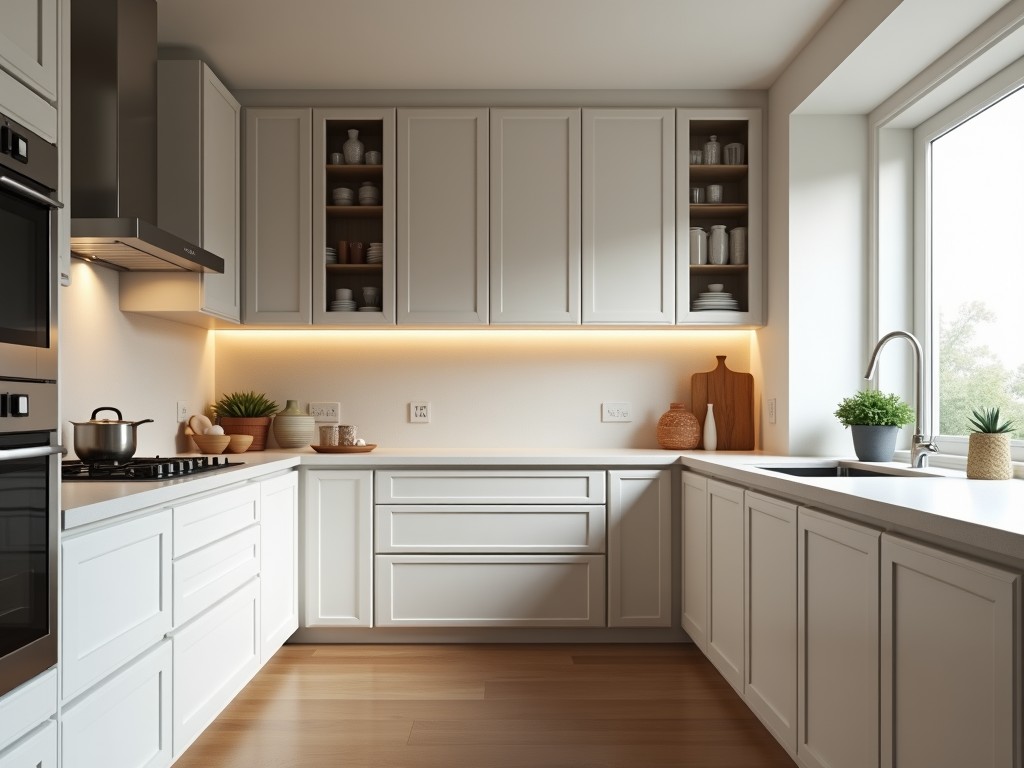
Water Resistant Kitchen Cabinets
Water resistant kitchen cabinets are engineered for environments where moisture exposure is frequent and prolonged, such as commercial kitchens, food processing areas, or high-humidity residential
- Category:
- Kitchen Cabinet
Water Resistant Kitchen Cabinets
Water resistant kitchen cabinets are engineered for environments where moisture exposure is frequent and prolonged, such as commercial kitchens, food processing areas, or high-humidity residential settings. Unlike standard cabinetry, these units use materials and construction methods specifically selected to resist swelling, delamination, and microbial growth under sustained wet conditions. The primary goal is dimensional stability and long-term structural integrity when subjected to splashes, steam cleaning, or periodic flooding.
Performance is defined by measurable criteria: water absorption rate (typically <5% by weight after 24-hour submersion per ASTM D570), swelling thickness (usually <0.8% edge swell), and bond strength retention (>80% of dry adhesion after 100-hour humidity cycling at 95% RH and 38°C). These values are not marketing claims but testable parameters validated through accelerated aging protocols. Buyers should request third-party test reports rather than relying on qualitative descriptions.
Material Composition and Selection Logic
The core substrate determines water resistance performance. Marine-grade plywood (typically 5-ply or greater, with exterior-grade phenolic resin bonding) achieves low water absorption due to cross-laminated veneers and waterproof adhesives. Alternatively, high-density polyethylene (HDPE) or polypropylene (PP) solid panels offer near-zero absorption but require specialized edge sealing and mechanical fastening systems. Fiber-reinforced polymer (FRP) composites provide a middle ground, combining resin-impregnated fibers with gelcoat surfaces for impact and chemical resistance.
Surface finishes are equally critical. Factory-applied thermoset coatings like polyurethane or epoxy provide a continuous barrier, while UV-cured acrylics offer fast curing and high hardness. Edge treatment must match substrate performance—unprotected edges are failure points. Common solutions include PVC edge banding (minimum 2mm thickness), co-extruded seals, or over-molding with compatible polymers. Avoid paper-based overlays or melamine finishes in wet zones; they lack sufficient hydrolysis resistance.
Construction Methods for Moisture Mitigation
Joint design prevents water ingress at vulnerable points. Dado and rabbet joints with silicone sealant beads outperform butt joints in wet environments. Pocket screws are acceptable only when holes are plugged with waterproof epoxy dowels; exposed metal fasteners risk corrosion and staining. Concealed European hinges with stainless steel pins (grade 304 or 316) are standard; avoid zinc-plated hardware which corrodes rapidly in chloride-rich atmospheres.
Interior shelf supports must resist both moisture and load. Aluminum or stainless steel brackets with nylon isolators prevent galvanic corrosion and accommodate thermal movement. Adjustable shelves use pin systems with polypropylene bushes—never wood dowels. Back panels, often overlooked, should be moisture-resistant board (e.g., exterior-grade MDF or HDPE) installed with a 3mm expansion gap to prevent buckling. Ventilation channels behind cabinets reduce trapped humidity.
Performance Comparison: Material Options
| Property | Marine Plywood | HDPE Solid Panel | FRP Composite |
|---|---|---|---|
| Water Absorption (24hr) | 3-5% | <0.01% | 0.5-1.5% |
| Edge Swell (Thickness) | 0.5-0.8% | 0% | 0.2-0.5% |
| Impact Resistance (Izod) | 8-12 J/m | 40-60 J/m | 50-80 J/m |
| Typical Use Temp Range | -20°C to 80°C | -40°C to 100°C | -30°C to 90°C |
| Surface Finish Compatibility | Paint, Veneer, Melamine | Co-extrusion, Welding | Gelcoat, Paint, Lamination |
Values represent typical ranges; actual performance depends on specific formulation, thickness, and edge treatment. Project-specific testing is recommended for critical applications.
Applications in Industrial and Commercial Settings
In food and beverage processing plants, these cabinets store cleaning chemicals, tools, and spare parts near wash-down zones where daily high-pressure cleaning occurs. Resistance to alkaline detergents and chlorine-based sanitizers is essential—materials must not degrade or leach contaminants. HDPE and polypropylene variants are preferred here due to chemical inertness and ease of cleaning.
Commercial kitchens in hospitals, hotels, and institutional facilities face cyclic humidity from steam cooking and dishwashing. Cabinets near sinks, steam tables, or dishwashers benefit from marine plywood with epoxy coatings, which balance cost, repairability, and performance. The ability to touch up scratches or recoat surfaces in situ extends service life compared to non-refinishable solids.
Marine and offshore galley installations require salt spray resistance. Here, 316 stainless steel frames with HDPE or FRP panels prevent crevice corrosion and maintain structural integrity over decades. Certification to standards like DNV GL or ABS may be required, influencing material selection and fastener choices. Weight considerations also favor composites over solid metals in floating structures.
Customization and Integration Considerations
Dimensions are fully customizable to match equipment layouts, wall contours, or access constraints. Standard depths range from 300mm to 600mm; heights are typically modular in 150mm increments to align with countertop and appliance grids. Custom depths beyond 600mm require intermediate supports to prevent shelf sag under load—deflection limits are usually set to L/200 for visible shelves.
Interior accessories must match environmental demands. Drawers use stainless steel slides with polymer rollers (not nylon) and drip trays to contain spills. Pull-out shelves for heavy items incorporate reinforced bases and side guides. Electrical provisions—such as conduit knockouts or grommet-sealed holes for data cables—are integrated during fabrication to avoid post-drilling that compromises moisture barriers.
Door styles affect both function and maintenance. Slab doors minimize crevices where moisture can accumulate; shaker or raised-panel designs require internal drainage channels or sealed profiles to prevent water trapping. Overlay types (full, partial, inset) influence gap consistency and seal effectiveness. Soft-close hinges reduce impact damage but must use corrosion-resistant dampers.
Quality Control and Validation Protocols
Incoming material verification includes moisture content testing (oven-dry method) and adhesive bond checks via delamination tests. For plywood, each batch is tested for boil resistance (4-hour boil followed by drying)—a key indicator of phenolic resin cure. HDPE sheets undergo melt flow index and density verification to ensure consistency. FRP laminates are checked for resin content and glass transition temperature via DSC.
Assembly quality focuses on joint integrity. Sealant continuity is inspected under UV light for skips or pinholes. Hardware torque is validated to prevent over-compression of gaskets or stripping of threads. Final assemblies undergo a 48-hour humidity soak at 90% RH and 35°C, followed by visual inspection for swelling, joint separation, or finish blushing. Weight change is recorded—acceptable gain is usually <2%.
Documentation includes material certificates, test reports, and assembly records. Traceability labels on each unit link to production batches and test data. For regulated industries (e.g., food pharma), cabinets may comply with ISO 14155 or NSF/ANSI 51 for food zone materials, though certification is application-specific and not inherent to the product class. Buyers should confirm which standards apply to their use case.
To discuss your specific requirements for water resistant kitchen cabinets—including material selection, dimensional customization, or compliance with industry standards—contact our technical team. Provide details on exposure conditions, cleaning protocols, load expectations, and regulatory constraints to receive a tailored engineering assessment.
Request Technical Consultation


