Trash Bin Kitchen Cabinet Manufacturer
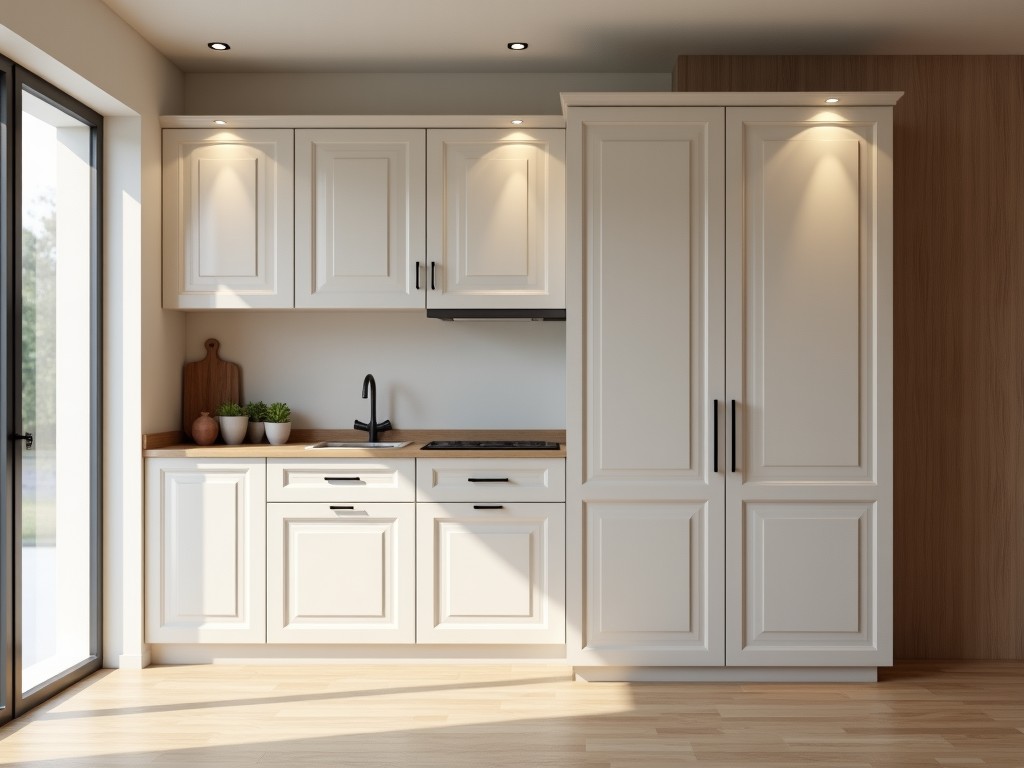
Trash Bin Kitchen Cabinet Manufacturer
Integrating waste disposal into kitchen cabinetry requires precise coordination between mechanical function, material durability, and spatial efficiency. Manufacturers specializing in trash bin
- Category:
- Kitchen Cabinet
Trash Bin Kitchen Cabinet Manufacturer: Engineering Solutions for Integrated Waste Management
Integrating waste disposal into kitchen cabinetry requires precise coordination between mechanical function, material durability, and spatial efficiency. Manufacturers specializing in trash bin kitchen cabinets address these challenges through engineered systems designed for seamless installation, long-term operation, and compatibility with standard cabinet dimensions. This page details the technical considerations, material options, and customization pathways that define reliable integrated waste solutions for residential and light commercial kitchens.
Core Design Principles for Integrated Trash Bin Systems
Effective trash bin cabinet systems begin with accurate dimensional planning. Standard base cabinets are typically 24 inches deep, with widths ranging from 12 to 24 inches for single or double bin configurations. The internal height must accommodate bin height plus lid clearance, usually requiring a minimum of 18–20 inches of vertical space. Manufacturers calculate bin volume based on household size and waste generation rates, commonly offering 35–50 liter capacities per bin for kitchen use.
Mechanisms play a critical role in user experience and longevity. Full-extension soft-close slides are standard, rated for 45–75 kg dynamic load to support full bins without sagging. These slides undergo cycle testing—typically 50,000+ open/close cycles—to ensure consistent performance over 15–20 years of residential use. Anti-tip brackets and bin stabilizers prevent lateral movement during operation, especially important in pull-out designs where the center of mass shifts significantly.
Material Selection and Structural Integrity
Cabinet carcasses are predominantly constructed from 16–18 mm melamine-faced particleboard or MDF, meeting E1 or CARB2 formaldehyde emission standards. Edge banding uses 0.5–1.0 mm PVC or ABS, applied via hot-air sealing to resist moisture ingress at cut surfaces—critical in environments prone to humidity and occasional spills. Interior surfaces may feature wipe-clean melamine or optional antimicrobial coatings for enhanced hygiene.
Hardware components are selected for corrosion resistance and load stability. Slides, hinges, and brackets are typically made from cold-rolled steel with zinc plating or stainless steel (A2 grade) for high-moisture zones. Bin bodies themselves are commonly injection-molded polypropylene (PP) or high-density polyethylene (HDPE), chosen for impact resistance, chemical stability against household waste, and ease of cleaning. These polymers operate effectively within –20°C to 80°C temperature ranges, accommodating kitchen environments.
Customization Options and Adaptation Logic
Manufacturers accommodate non-standard cabinet dimensions through modular framing systems. Adjustable side rails and depth extenders allow integration into cabinets ranging from 21 to 27 inches deep, while width adaptors enable fitting into 15, 18, 21, or 27 mm increments. Bin orientation—side-by-side, front-to-back, or stacked—is determined by cabinet geometry and user access patterns, with traffic flow analysis guiding optimal placement.
Lid mechanisms vary based on ergonomic and hygiene requirements. Options include swing-lids (manual or soft-close), lift-lifts with odor seals, and hands-free motion-sensor models powered by low-voltage DC systems. Bin liners are designed for specific shapes—rectangular, oval, or custom contours—to maximize bag retention and minimize overhang. Ventilation slots may be added to lid designs to reduce moisture buildup and anaerobic conditions.
Aesthetic integration is achieved through matching finishes. Cabinet doors can be drilled for direct bin access, with cutouts precisely aligned to bin height and width. Veneer, laminate, or paint finishes are applied to match surrounding cabinetry, using color-matching systems (NCS, RAL, or Pantone) to ensure visual continuity. Finger-resistant coatings and matte textures reduce visible wear in high-contact zones.
Quality Control and Validation Processes
Dimensional verification occurs at multiple stages: CNC-cut panels are checked against CAD tolerances (±0.5 mm), assembly jigs ensure squareness within 1° deviation, and slide alignment is validated using laser-guided fixtures. Load testing applies 1.5x rated weight (e.g., 110 kg for a 75 kg-rated slide) for 10 minutes to detect permanent deformation. Cycle tests are performed on randomized samples from each production batch.
Material consistency is monitored through incoming inspection. Particleboard density is verified (target: 600–680 kg/m³), melamine adhesion tested via cross-hatch tape test (ISO 2409), and edge bond strength measured (minimum 1.0 N/mm). Polymer bins undergo melt flow index (MFI) verification and UV stability screening if exposed to indirect sunlight. Final assembly includes functional checks: slide smoothness (measured in Newtons of pull force), lid sealing effectiveness, and bin removal/insertion ease.
Packaging and Logistics Considerations
Units are typically shipped knocked down (KD) to optimize freight density. Primary packaging includes double-wall corrugated cartons (EB flute) with internal corner protectors and polyethylene slip sheets. Hardware kits are segregated in labeled, anti-static bags. Assembly instructions include torque values for cam bolts (typically 8–12 Nm) and alignment diagrams to prevent racking during installation. Each package bears a QR code linking to digital installation guides and maintenance schedules.
For export shipments, packaging adheres to ISTA 3A standards for packaged-products subjected to parcel delivery shock. Moisture barriers (desiccant packs) are included in high-humidity routes. Palletized loads use angle boards and stretch wrap (80–120 µm gauge) to prevent shifting. Lead times are influenced by material availability—particularly melamine boards and specialized slides—but typically range from 15 to 25 working days for standard configurations, with custom orders adding 5–10 days for tooling or material sourcing.
Typical Specifications for Standard Configurations
| Parameter | Typical Value | Notes |
|---|---|---|
| Cabinet Width Compatibility | 12–24 inches | Single or double bin |
| Internal Height Required | 18–20 inches | Includes lid clearance |
| Bin Capacity (per unit) | 35–50 liters | Kitchen waste standard |
| Slide Load Rating | 45–75 kg dynamic | Full-extension, soft-close |
| Slide Cycle Life | 50,000+ cycles | Equivalent to 15–20 years use |
| Cabinet Material Thickness | 16–18 mm | Melamine-faced PB/MDF |
| Bin Material | PP or HDPE | Impact-resistant, chemical-stable |
| Finish Matching Tolerance | ±2 ΔE (CIELAB) | Visual continuity with cabinetry |
Selecting a trash bin kitchen cabinet manufacturer involves evaluating engineering rigor, material traceability, and adaptability to project-specific constraints. Buyers should request documentation on slide test reports, material safety data sheets (MSDS) for bin polymers, and finish adhesion certificates. Manufacturers that provide detailed installation manuals, load distribution diagrams, and replacement part availability demonstrate commitment to long-term product support. For technical inquiries, customization requests, or quotation preparation, contact our engineering team to discuss your cabinet dimensions, waste volume requirements, and integration timeline.



