Shaker Style Kitchen Cabinets Factory
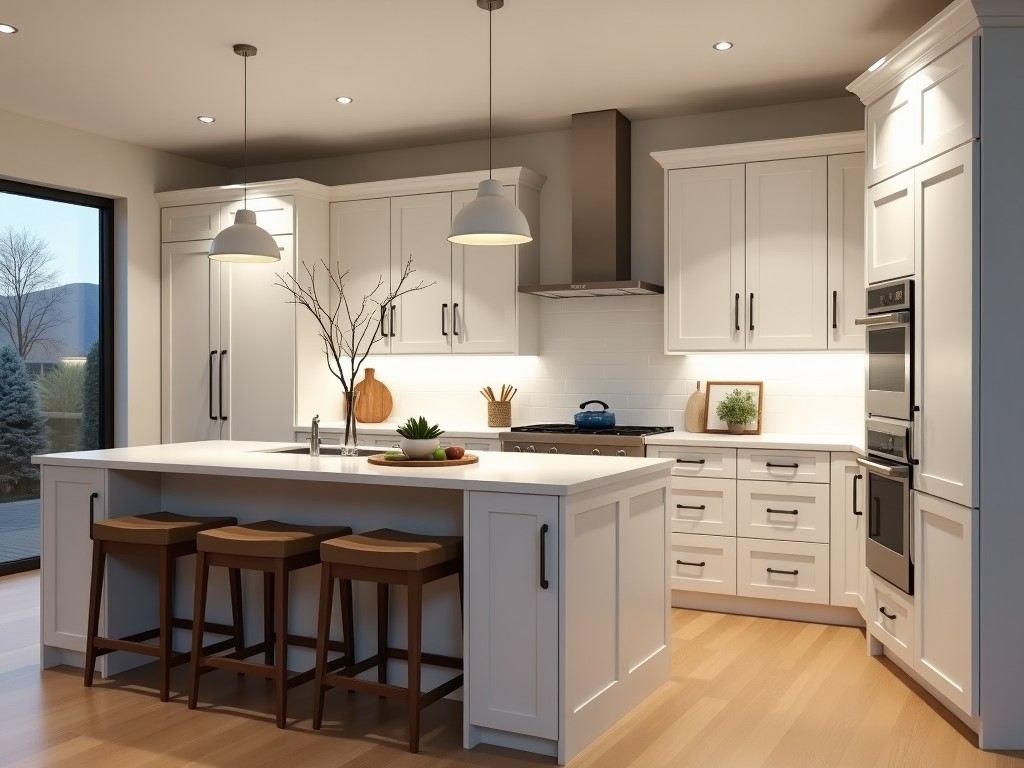
Shaker Style Kitchen Cabinets Factory
Industrial buyers evaluating shaker style kitchen cabinets require clarity on construction methods, material performance, and manufacturing scalability. This page details the technical
- Category:
- Kitchen Cabinet
Shaker Style Kitchen Cabinets Factory
Industrial buyers evaluating shaker style kitchen cabinets require clarity on construction methods, material performance, and manufacturing scalability. This page details the technical specifications, production capabilities, and quality controls inherent to factory-produced shaker cabinets, enabling informed procurement decisions based on engineering criteria rather than marketing claims.
Core Construction Methodology
Shaker style cabinets are defined by a five-piece door construction: a flat center panel framed by four solid wood stiles and rails. Unlike slab or raised-panel designs, the shaker joint relies on precise cope-and-stick or mortise-and-tenon joinery at the frame corners, ensuring long-term dimensional stability under cyclic humidity changes. The center panel is typically floated within a groove to allow for seasonal expansion and contraction without inducing stress on the frame.
Factory production enables consistent replication of these joints using CNC routers and automated glue application systems. Tolerances for stile-to-rail alignment are maintained within ±0.2mm, critical for preventing visible gaps or bind in assembled doors. Frame members are typically kiln-dried to 6-8% moisture content prior to machining, reducing post-assembly movement.
Material Specifications and Performance
Material selection directly impacts durability, finish adhesion, and lifecycle cost. Common substrates include hard maple, white oak, and poplar for frames, with center panels often using the same species or MDF for paint-grade applications. Hard maple offers a Janka hardness of 1450 lbf, providing resistance to denting in high-traffic zones, while white oak’s tyloses enhance moisture resistance compared to red oak.
For painted finishes, medium-density fiberboard (MDF) is frequently used for center panels due to its uniform density and minimal grain telegraphing. MDF panels typically range from 18-25mm thickness, with a density of 600-800 kg/m³, ensuring smooth surface preparation for primers and topcoats. Solid wood frames are avoided in paint-grade applications where grain visibility would compromise finish uniformity.
Manufacturing Process and Quality Control
Production begins with CNC nesting of frame and panel components from raw stock, optimizing material yield to exceed 85% in typical runs. Each stile and rail is machined with integrated coping and sticking profiles in a single pass, reducing handling and alignment errors. Glue is applied via programmable roller systems to ensure consistent bead width and coverage, minimizing squeeze-out and starved joints.
Assembled doors undergo clamp pressure of 150-200 psi for 30-45 minutes, monitored via hydraulic pressure sensors. Post-assembly, doors are sanded to 120-150 grit finish before priming. Quality checks include diagonal measurement verification (ensuring squareness within 1.5mm), surface flatness assessment (using dial indicators with 0.01mm resolution), and adhesion testing via tape pull (ASTM D3359) for primer systems.
Customization Parameters
Factory production accommodates dimensional flexibility within structural limits. Standard stile and rail widths range from 57mm to 89mm, with center panel thickness adjustable from 6mm (veneered MDF) to 19mm (solid wood). Door heights are typically produced in 25mm increments to align with standard cabinet box dimensions, though custom heights up to 2400mm are feasible with reinforced framing.
Overlay options include full overlay (door covers cabinet face frame), partial overlay, and inset, each requiring specific reveal calculations. For inset applications, stile and rail profiles are machined with a 1.5mm rabbet to accommodate door thickness within the frame opening. Hardware bore patterns are pre-drilled using CNC systems with ±0.1mm positional accuracy for hinge and drawer slide mounting.
Finish Systems and Performance Data
Finish systems are selected based on end-use environment. Catalyzed conversion varnish offers a dry film thickness of 2.0-3.0 mils, providing excellent chemical and abrasion resistance (ASTM D4060, Taber Abrader, <50mg loss per 1000 cycles). Water-based polyurethanes are available for low-VOC compliance, typically achieving 1.5-2.5 mils dry film with comparable hardness (ASTM D3363, 2H-3H pencil hardness).
For stained finishes, pigment penetration is controlled via pre-conditioning and wipe-stain techniques to minimize blotchiness, particularly in porous species like poplar. Color consistency is monitored using spectrophotometry (ΔE < 1.5 between batches). Edge sealing is applied to all raw edges of MDF panels to prevent moisture ingress, a critical factor in preventing swelling and delamination.
Packaging and Logistics Considerations
Finished doors are packaged to prevent damage during transit and handling. Each door is wrapped in polyethylene film, then placed between corrugated cardboard sheets with edge protectors. Units are stacked on pallets with interstitial layers of honeycomb board or foam to absorb shock. Standard pallet dimensions are 1200mm x 1000mm, with a maximum stack height of 1800mm to ensure stability.
For export shipments, moisture barrier bags and desiccant packs are included to maintain ambient humidity below 60% RH during transit. Packaging labels include QR codes linking to batch-specific quality documentation, including moisture content readings, finish thickness measurements, and inspection signatures. This traceability supports warranty claims and field performance analysis.
Applications in Industrial and Commercial Projects
Shaker cabinets are specified in multi-unit residential developments, healthcare facilities, and educational institutions where clean lines, durability, and ease of maintenance are prioritized. The absence of complex profiles reduces dust accumulation and simplifies cleaning protocols in hygienic environments. In high-volume projects, factory production ensures consistent appearance across hundreds of units, reducing field adjustment time and rework.
The design’s adaptability to both traditional and contemporary aesthetics allows seamless integration with varying architectural styles. In adaptive reuse projects, shaker cabinets can complement historic detailing while meeting modern performance expectations for hardware integration and load-bearing capacity (e.g., supporting 40kg dynamic load per shelf per ANSI/KCMA A161.1 standards).
Table: Typical Technical Specifications
| Parameter | Typical Value | Notes |
|---|---|---|
| Stile/Rail Width | 57-89 mm | Customizable per design |
| Center Panel Thickness | 6-19 mm | MDF or solid wood |
| Frame Moisture Content | 6-8% | Kiln-dried pre-machining |
| Clamp Pressure | 150-200 psi | For 30-45 min assembly |
| Finish Dry Film Thickness | 1.5-3.0 mils | Varies by chemistry |
| Squareness Tolerance | ≤1.5 mm | Diagonal measurement |
| Edge Sealing (MDF) | Applied | Prevents moisture ingress |
Procurement teams should verify that suppliers provide documented process controls for moisture management, joinery consistency, and finish adhesion. Requesting sample doors with accompanying quality records enables validation of factory capabilities prior to large-scale commitment. Technical data sheets and material safety data sheets (MSDS) for finish systems should be reviewed for compliance with project-specific environmental and safety requirements.
For detailed specifications, customization options, or to request a formal quotation based on your project’s dimensional and performance criteria, contact our technical sales team. We provide engineering support to align cabinet specifications with architectural drawings, hardware schedules, and environmental constraints.
Request Technical Specification Sheet


