Pet Film Plywood Kitchen Cabinets
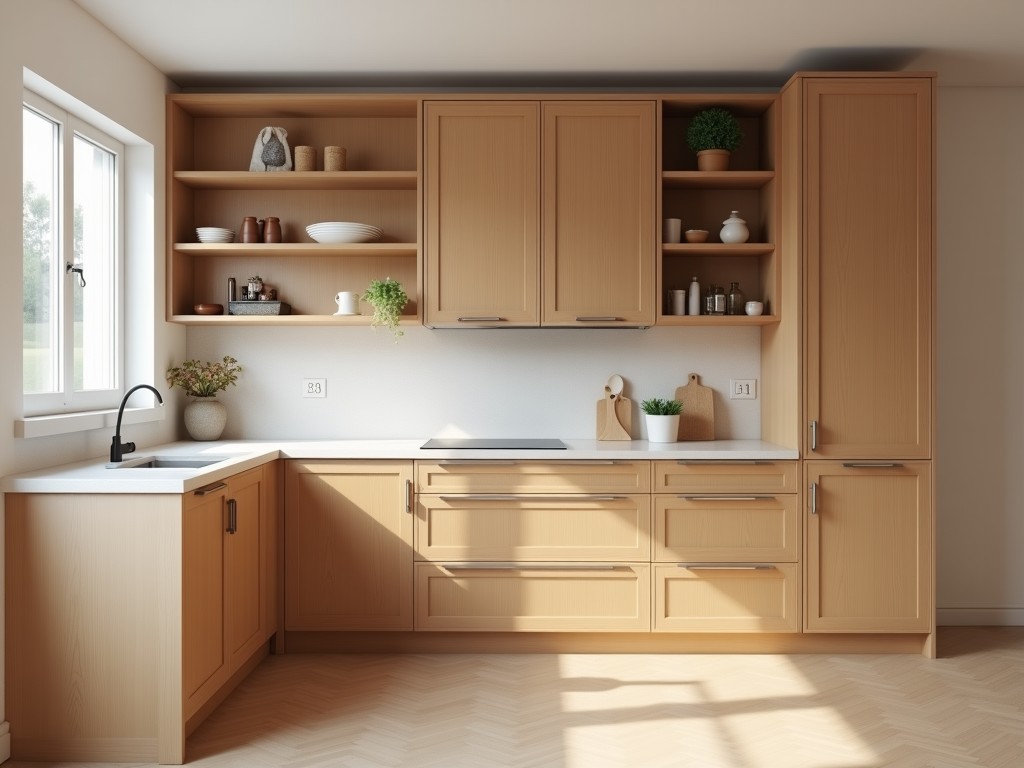
Pet Film Plywood Kitchen Cabinets
Pet film plywood kitchen cabinets combine engineered plywood substrates with a surface layer of polyethylene terephthalate (PET) film, creating a durable, moisture-resistant finish suitable for
- Category:
- Kitchen Cabinet
Pet Film Plywood Kitchen Cabinets
Pet film plywood kitchen cabinets combine engineered plywood substrates with a surface layer of polyethylene terephthalate (PET) film, creating a durable, moisture-resistant finish suitable for demanding kitchen environments. This construction method offers a balance of structural integrity from the plywood core and the chemical resistance, abrasion tolerance, and aesthetic versatility of PET film. Industrial buyers selecting these cabinets benefit from reduced maintenance needs, consistent appearance over time, and compatibility with high-humidity applications where traditional finishes may degrade. The following sections detail the material properties, manufacturing considerations, performance characteristics, and application suitability of this cabinet type for commercial and residential kitchen installations.
Material Composition and Structure
The core substrate typically consists of 3-ply or 5-ply hardwood plywood, with face veneers selected for dimensional stability and screw-holding strength. Common wood species include birch, poplar, or eucalyptus, chosen based on availability and mechanical properties required for cabinet load-bearing. The PET film layer, usually ranging from 0.1mm to 0.3mm in thickness, is bonded to the plywood surface using heat-activated adhesives or vacuum pressing techniques. This film provides a non-porous barrier that resists water vapor, grease, and common kitchen chemicals, while maintaining dimensional stability under fluctuating temperature conditions. Edge sealing is critical; exposed plywood edges are commonly capped with PVC, ABS, or matching PET edgebanding to prevent moisture ingress and ensure long-term durability.
Performance Characteristics
Pet film surfaced plywood cabinets demonstrate measurable resistance to common kitchen stressors. The PET film exhibits a water vapor transmission rate (WVTR) typically below 5 g/m²/24h at 38°C and 90% RH, significantly lower than untreated wood or paper-based laminates. Abrasion resistance, measured via Taber abrasion tester (CS-10 wheels, 500g load), shows weight loss under 10mg per 1000 cycles for standard grades, indicating suitability for high-contact surfaces like cabinet doors and drawers. Chemical resistance testing against household cleaners (alkaline, acidic, solvent-based) reveals no delamination, discoloration, or surface tackiness after 24-hour exposure. These properties collectively reduce the risk of swelling, blistering, or surface degradation in environments with frequent cleaning and humidity fluctuations.
Manufacturing Considerations
Production of pet film plywood cabinets requires precise control over adhesive activation temperature, pressing pressure, and cooling cycles to ensure uniform bond strength without film wrinkling or substrate warping. Typical hot-press conditions range from 120°C to 140°C at 10–15 bar pressure for 3–5 minutes, depending on film thickness and adhesive formulation. Post-pressing, panels are cooled under pressure to prevent spring-back. CNC routing for cabinet components must account for the film’s slight brittleness at low temperatures; using sharp carbide tools and reduced feed rates minimizes chipping. Edge banding application follows standard thermoplastic edgebanding processes, with temperature settings adjusted for PET-compatible adhesives to achieve a seamless, durable seal.
Applications in Kitchen Environments
These cabinets are particularly suited for installations where moisture exposure, chemical contact, and frequent cleaning are expected, such as in commercial kitchens, healthcare facilities, or high-end residential settings. Unlike melamine or vinyl-wrapped panels, PET film does not emit volatile organic compounds (VOCs) after curing, contributing to better indoor air quality. The surface maintains color consistency under UV exposure better than many PVC foils, reducing yellowing over time in sunlit areas. For modular kitchen systems, the dimensional stability of the plywood core minimizes joint gaps and door misalignment during seasonal humidity swings, supporting long-term functional reliability in framed and frameless cabinet designs.
Comparison with Alternative Surface Materials
| Property | Pet Film Plywood | Melamine Faced Plywood | PVC Laminate Plywood |
|---|---|---|---|
| Water Vapor Transmission Rate (g/m²/24h) | <5 | 10–20 | 3–8 |
| Abrasion Resistance (mg loss/1000 cycles) | <10 | 15–25 | 8–12 |
| Chemical Resistance (24h exposure) | No delamination | Surface whitening possible | Resistant to most |
| Thermal Stability (continuous) | Up to 60°C | Up to 50°C | Up to 55°C |
| UV Color Stability (ΔE after 500h) | <3 | 5–8 | <4 |
Values in the table represent typical performance ranges based on standardized test methods (ASTM, ISO, or equivalent). Actual results may vary based on specific film formulation, substrate quality, and manufacturing process. Pet film offers a favorable balance of moisture barrier performance, abrasion resistance, and thermal stability compared to melamine, while matching or exceeding PVC laminate in UV stability and chemical resistance without the plasticizer migration concerns associated with some PVC formulations.
Customization Options
Pet film plywood cabinets support extensive customization to meet project-specific requirements. Film thickness can be selected from 0.1mm (for cost-sensitive applications) to 0.3mm (for high-wear zones), with surface finishes ranging from matte to high-gloss, including textured options that mimic wood grain or stone. Core plywood can be specified as CARB Phase 2 or TSCA Title VI compliant for formaldehyde emissions, with FSC-certified veneers available upon request. Dimensions, hardware hole patterns, and edge profiles are fully customizable via CNC machining. Color matching to RAL, Pantone, or custom samples is achievable through pigmented PET films or printed films under clear protective layers, enabling integration with broader interior design schemes.
Quality Control and Testing
Industrial buyers should verify that suppliers implement incoming material inspection for plywood core flatness, moisture content (target 6–8%), and veneer grade consistency. In-process checks include bond strength testing via peel adhesion (ASTM D903) with minimum values of 1.5 N/mm for film-to-substrate interface. Final inspection covers surface defect assessment under standardized lighting (D65, 1000 lux), dimensional tolerance verification (±0.5mm on length/width, ±1mm on thickness), and edge banding adhesion. For projects requiring documentation, suppliers can provide test reports for abrasion, chemical resistance, and formaldehyde emissions. Packaging typically involves corner protectors, stretch wrapping, and horizontal stacking on pallets to prevent edge damage during transit.



