Oem Odm Kitchen Cabinets Manufacturer
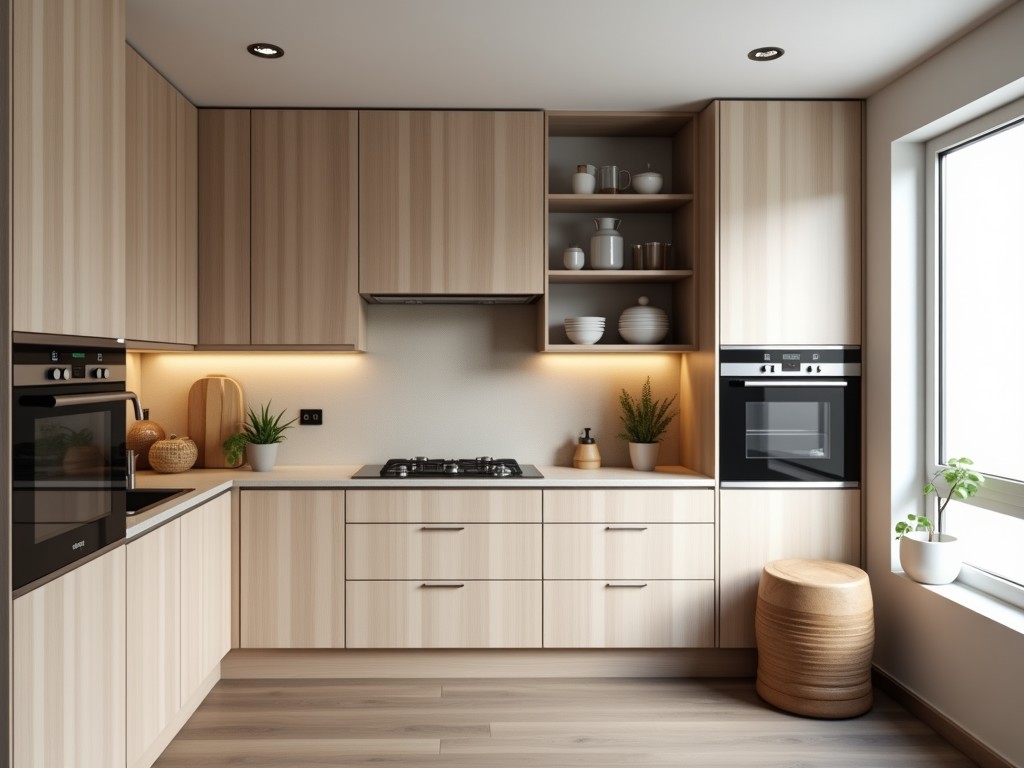
Oem Odm Kitchen Cabinets Manufacturer
Industrial kitchen cabinet manufacturing requires precision engineering, material science, and scalable production systems. OEM/ODM manufacturers serve as technical partners who translate design
- Category:
- Kitchen Cabinet
OEM/ODM Kitchen Cabinets Manufacturer
Industrial kitchen cabinet manufacturing requires precision engineering, material science, and scalable production systems. OEM/ODM manufacturers serve as technical partners who translate design specifications into functional, code-compliant cabinetry at volume. This page explains the engineering considerations, material options, customization workflows, and quality control processes that define professional cabinet manufacturing for commercial, residential, and institutional projects.
Unlike retail-focused suppliers, OEM/ODM manufacturers operate under strict tolerances, batch traceability, and documentation requirements. Buyers—including architects, general contractors, and property developers—rely on these capabilities to reduce project risk, ensure consistency across units, and meet schedule demands. The following sections detail how these capabilities are implemented in practice.
Core Manufacturing Capabilities
OEM/ODM kitchen cabinet production begins with design validation. Engineers review CAD files, BOMs, and finish specifications to identify manufacturability issues—such as impossible radii, incompatible hardware placements, or finish adhesion risks—before tooling is committed. This upfront analysis reduces rework and material waste.
Material selection follows functional requirements. For carcasses, 18mm E1-grade particleboard or MDF is standard for interior cabinets due to dimensional stability and cost efficiency. Exterior panels in high-moisture zones (e.g., near sinks) may use marine-grade plywood or PVC-laminated MDF to resist swelling. Door frames often employ solid wood or aluminum extrusions for structural rigidity, while panels use veneers, laminates, or thermofoils based on wear expectations.
Production lines integrate CNC routing, edge banding, drilling, and assembly stations. Tolerances are maintained to ±0.5mm for carcass squareness and ±0.2mm for door gap alignment—critical for seamless installation and hardware function. Automated clamping and pneumatic fastening ensure consistent joint strength across thousands of units.
Material Options and Performance Characteristics
| Component | Typical Material | Key Performance Property | Customization Range |
|---|---|---|---|
| Carcass (interior) | 18mm E1 particleboard | Density: 650–750 kg/m³; Formaldehyde: ≤0.124 mg/m³ | MDF, plywood, moisture-resistant grades |
| Door panels | MDF with PVC foil | Impact resistance: 1.8 J/mm (ISO 179); Surface hardness: 150–180 HG | Thermofoil, acrylic, wood veneer, HPL |
| Shelves | 18mm particleboard with edge band | Sag resistance: ≤1.5mm under 20kg load (600mm span) | Reinforced with aluminum stiffeners, thicker cores |
| Hardware mounting points | Reinforced with metal inserts or dowels | Pull-out strength: ≥800N per screw (ISO 3269) | Custom hole patterns, blind installations |
Customization Workflow
OEM/ODM engagement starts with technical documentation: 2D drawings, 3D models, material callouts, and hardware schedules. Manufacturers validate these against production capabilities—checking for undercuts, inaccessible fastener points, or finish incompatibilities. Feedback is returned within 48–72 hours for complex projects.
Once approved, prototype units are built for physical validation. These are tested for load capacity (e.g., 150kg dynamic load on wall cabinets), door cycle endurance (20,000 open/close cycles), and finish adhesion (cross-hatch test per ASTM D3359). Adjustments are made before tooling is released for full production.
Customization extends beyond geometry. Finish matching involves spectrophotometer analysis to ensure color consistency across batches. Hardware integration—such as soft-close hinges, pull-out mechanisms, or integrated lighting—is engineered during design phase to avoid field modifications. All changes are documented in a change control log tied to the project number.
Quality Control and Traceability
Quality assurance is embedded at each stage. Incoming materials are checked for moisture content (target: 6–8% for wood-based panels), thickness variance, and surface defects. During production, automated vision systems verify edge band alignment, hole placement, and panel squareness at 100% inspection rates.
Finished units undergo functional testing: door alignment (gap uniformity <1.5mm), shelf load capacity, and hardware operation. Random sampling includes destructive testing—such as joint shear strength—to validate batch consistency. Each cabinet receives a unique ID linking to material lot numbers, operator IDs, and test records.
Documentation packages include material safety data sheets (MSDS), finish compliance reports (e.g., CARB Phase 2, FSC), and installation guides. For export shipments, packing lists detail carton weights, dimensions, and handling instructions to prevent damage in transit.
Applications in Industrial and Commercial Projects
In multi-unit residential developments, OEM/ODM cabinets ensure visual consistency across hundreds of units while accommodating minor layout variations. Standardized carcass dimensions allow for rapid installation, while customizable door styles and finishes meet individual buyer preferences without disrupting production flow.
Commercial kitchens—such as those in hotels, hospitals, or schools—require cabinets that withstand high-frequency use, aggressive cleaning agents, and humidity fluctuations. Here, marine-grade plywood carcasses, stainless steel hardware, and chemical-resistant laminates are specified. Manufacturers provide load test certificates and chemical resistance data to support compliance with health and safety regulations.
Institutional projects (e.g., government housing, military barracks) demand traceability and audit readiness. OEM/ODM manufacturers maintain digital records of every production step, enabling recall readiness and warranty validation. Modular designs also facilitate reconfiguration or replacement without full unit removal.
Technical buyers seeking a manufacturing partner for kitchen cabinet projects should prepare detailed specifications including: material preferences, finish standards, hardware requirements, load expectations, and volume timelines. Providing CAD files, BOMs, and reference samples accelerates quotation and reduces interpretation risk.
To initiate a discussion about your specific requirements, including material options, customization workflows, or quality documentation, contact our engineering team. We respond to technical inquiries within one business day with preliminary feasibility assessments and lead time estimates.