Kitchen Cabinets Made In China
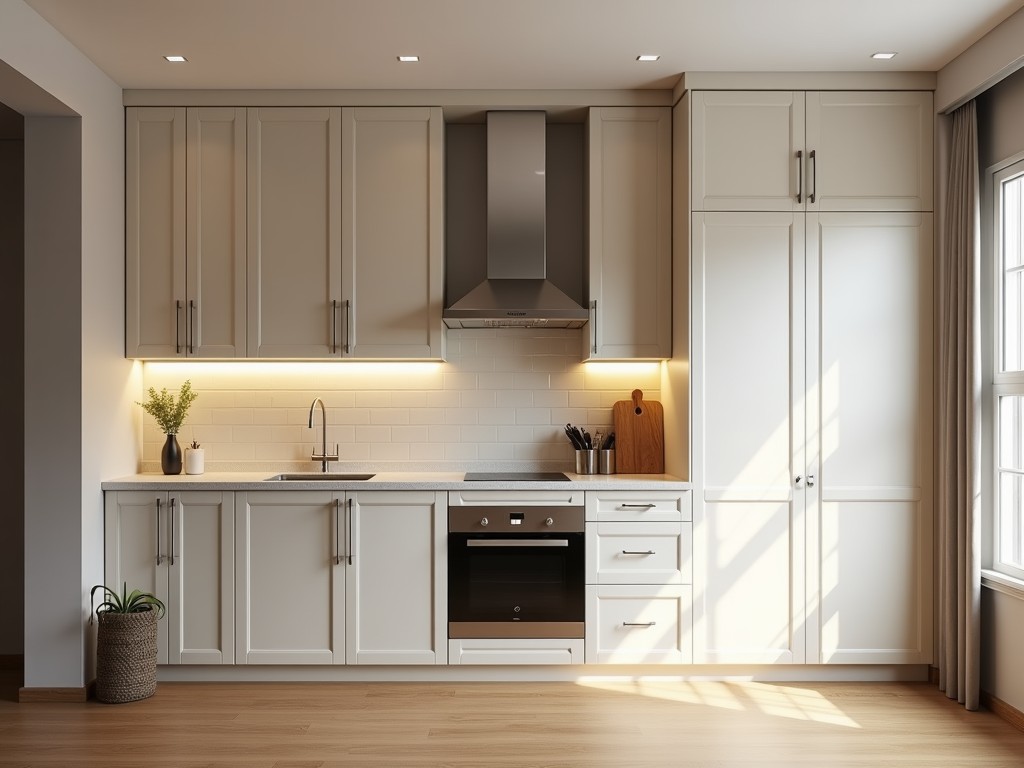
Kitchen Cabinets Made In China
Sourcing kitchen cabinets from manufacturers in China involves evaluating production capabilities, material specifications, and quality control systems that align with international project
- Category:
- Kitchen Cabinet
Kitchen Cabinets Made in China
Sourcing kitchen cabinets from manufacturers in China involves evaluating production capabilities, material specifications, and quality control systems that align with international project requirements. This page outlines the technical characteristics, manufacturing considerations, and procurement factors relevant to industrial buyers assessing cabinets for residential, commercial, or institutional applications.
Material Construction and Core Options
Cabinet carcasses are typically constructed from engineered wood panels selected based on load-bearing needs, moisture resistance, and finish compatibility. Common substrates include particleboard, MDF, and plywood, each with distinct mechanical properties influencing long-term performance in humid environments.
Particleboard cores offer cost-effective dimensional stability for dry interior applications, with typical density ranging from 600–800 kg/m³. MDF provides superior surface uniformity for painted finishes, exhibiting consistent thickness tolerance (±0.1mm) and screw holding strength averaging 80–120 N. Plywood cores, composed of cross-laminated veneers, deliver enhanced shear resistance and moisture tolerance, making them suitable for high-humidity zones like bathrooms or coastal installations.
Surface Finishes and Coating Systems
Finish selection impacts both aesthetic durability and maintenance requirements. Manufacturers in China commonly offer melamine foil, PVC laminate, UV-cured coatings, and water-based polyurethane systems, each defined by specific wear resistance, chemical exposure limits, and adhesion standards.
Melamine-faced panels feature a thermosaturated resin-impregnated paper layer bonded under heat and pressure, providing abrasion resistance rated at 150–200 cycles (Taber tester, CS-10 wheel, 500g load). PVC laminates deliver seamless edge sealing and water resistance, with typical thickness of 0.18–0.30mm and peel strength exceeding 1.8 N/mm. UV coatings achieve pencil hardness of 2H–3H and chemical resistance to common household cleaners, while water-based polyurethanes offer low-VOC compliance (<50 g/L) and flexibility for refinishing.
Hardware Integration and Functional Specifications
Functional performance depends on precise hardware integration, including hinges, drawer slides, and internal organizers. Specifications are defined by load capacity, cycle life, and adjustment range, directly affecting usability and service life.
Concealed hinges typically offer 3-way adjustment (depth, side, height) with a minimum 50,000-cycle endurance test (EN 15570). Full-extension drawer slides are rated for dynamic loads of 30–40 kg, featuring soft-close mechanisms with damping coefficients tuned for 0.4–0.6 second closure time. Internal accessories such as pull-out trays and carousel units are engineered for specific module widths (e.g., 300mm, 450mm, 600mm) and undergo tilt testing to ensure stability under uneven load distribution.
Manufacturing Tolerances and Quality Control
Dimensional accuracy and assembly consistency are critical for seamless installation and long-term alignment. Chinese manufacturers employ CNC cutting, edge banding, and automated drilling to maintain tight tolerances across production batches.
Panel cutting accuracy typically holds within ±0.5mm for straight edges and ±0.8mm for curved profiles. Hole placement for hardware follows a ±0.3mm positional tolerance using CNC boring systems. Edge banding adhesion is verified via peel tests (ASTM D903), with minimum values of 1.2 N/mm for hot-melt EVA and 1.8 N/mm for PUR-based systems. Final assembly checks include diagonal deviation (<2mm), squareness (<1.5mm per meter), and gap uniformity (1.5–2.5mm between doors and frames).
Packaging and Logistics Considerations
Export packaging is designed to prevent damage during transit, accounting for vibration, stacking pressure, and humidity fluctuations. Standard methods include corner protection, edge buffering, and moisture-barrier wrapping.
Cabinets are commonly packed in 5–7mm corrugated cartons with internal dividers and polyethylene foam corner guards (density 25–30 kg/m³). Flat-pack configurations optimize container utilization, with typical 40’HQ capacity ranging from 60–90 sets depending on module size. Shrink-wrapping or VCI (vapor corrosion inhibitor) bags may be applied for moisture-sensitive finishes. Palletizing follows ISPM 15 standards, with load distribution calculated to limit dynamic stress to <0.3g during transit.
| Specification | Typical Range or Standard | Test Method / Reference |
|---|---|---|
| Panel Density (Particleboard) | 600–800 kg/m³ | ISO 13006-1 |
| MDF Screw Holding Strength | 80–120 N | EN 320 |
| Melamine Abrasion Resistance | 150–200 cycles | Taber CS-10, 500g |
| Hinge Cycle Life | ≥50,000 cycles | EN 15570 |
| Drawer Slide Load Capacity | 30–40 kg dynamic | ANSI/BHMA A156.9 |
| Edge Banding Adhesion (PUR) | ≥1.8 N/mm | ASTM D903 |
| Packaging Corner Guard Density | 25–30 kg/m³ | Internal QC Standard |
Customization and Engineering Support
Manufacturers in China support customization through parametric design adjustments, material substitution, and hardware reconfiguration. Engineering teams review project specifications to validate structural adequacy, finish compatibility, and hardware load paths before tooling approval.
Common modifications include adjusting carcass depth (typically 500–600mm for base units, 300–350mm for wall units), altering door overlay types (full, half, inset), and integrating specialized components such as pull-out waste bins, spice racks, or appliance garages. Finish changes may involve switching from melamine to UV coating or applying textured laminates, requiring revalidation of adhesion and abrasion properties. All customizations are subject to design review for load distribution, deflection limits (
Kitchen cabinets supplied from China are specified in multi-unit residential developments, hospitality renovations, and institutional facilities where consistency, cost efficiency, and compliance with international standards are prioritized. The ability to produce standardized modules at scale supports repeatable installations across phased projects.
In high-volume housing, cabinets are designed for rapid installation using cam-lock or confirmat fasteners, reducing on-site labor time. For hospitality applications, enhanced edge sealing and impact-resistant cores are selected to withstand frequent use and cleaning cycles. Institutional projects often require compliance with fire-retardant standards (e.g., EN 13501-1) or antimicrobial surface treatments, which can be incorporated through material selection or post-coating additives. Each application informs substrate choice, hardware grade, and finish system to align with expected usage intensity and maintenance protocols.
Effective sourcing requires clear communication of technical requirements, including material grades, finish standards, hardware specifications, and packaging expectations. Manufacturers typically provide submittal packages containing material data sheets, finish samples, hardware certifications, and assembly instructions for review prior to production.
Key documents include panel certification (CARB2, FSC, or E1), finish test reports (abrasion, adhesion, chemical resistance), hardware load ratings, and packaging diagrams. Quotations are based on detailed BOMs (Bill of Materials) specifying panel thickness, edge treatment, hinge type, slide extension, and accessory inclusion. Lead times are influenced by material availability, finish complexity, and order volume, commonly ranging from 30–60 days after drawing approval and deposit receipt. Third-party inspection options are available upon request to verify conformity with agreed specifications.
Applications in Commercial and Residential Projects
Procurement Process and Technical Documentation



