Kitchen Cabinet Factory China
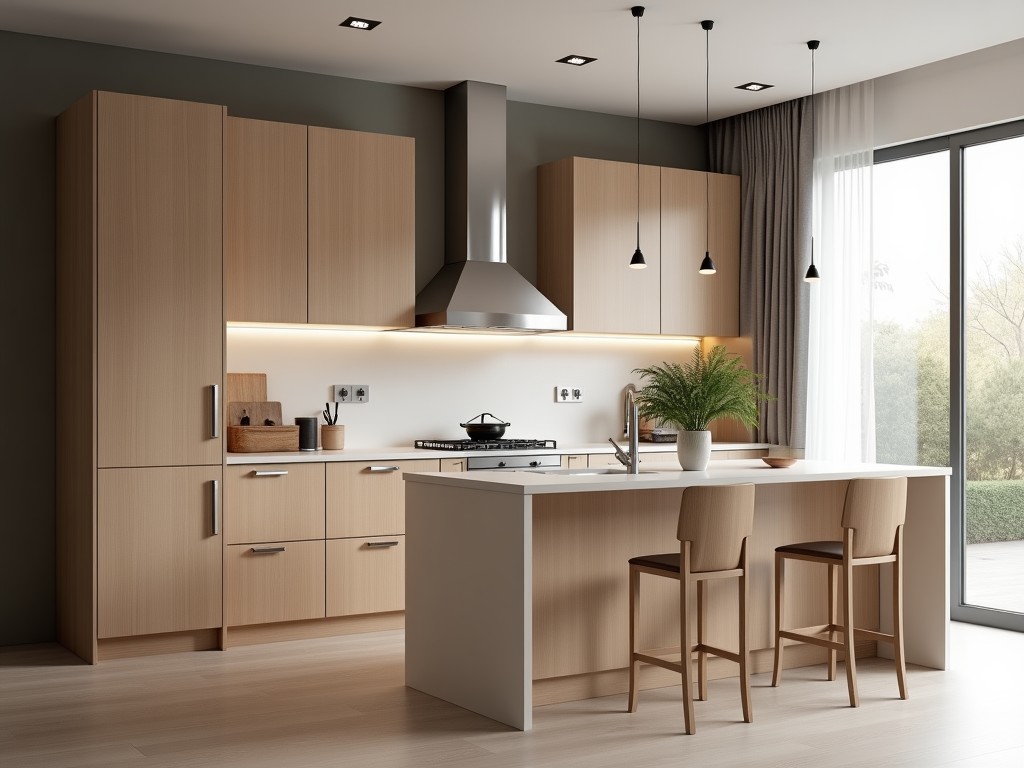
Kitchen Cabinet Factory China
For industrial buyers evaluating cabinet manufacturers in China, understanding production capabilities, material standards, and quality control processes is essential. This page outlines the
- Category:
- Kitchen Cabinet
Kitchen Cabinet Factory China: Manufacturing Specifications and Capabilities
For industrial buyers evaluating cabinet manufacturers in China, understanding production capabilities, material standards, and quality control processes is essential. This page outlines the technical specifications, manufacturing workflows, and customization options typically available from certified kitchen cabinet factories in China, focusing on measurable engineering characteristics rather than promotional claims.
Material Standards and Substrate Options
The structural integrity and longevity of kitchen cabinets depend on substrate selection and surface treatment. Factories in China commonly work with engineered wood products that meet international emission standards, with thickness tolerances controlled to ±0.2mm for panel flatness and joint alignment.
- CARB2/E0 compliant particleboard: Density 600–700 kg/m³, thickness tolerance ±0.15mm, screw withdrawal strength >800N
- MDF (medium-density fiberboard): Density 700–800 kg/m³, internal bond strength ≥0.8 MPa, thickness tolerance ±0.1mm
- Plywood core: 3–5 ply construction, cross-banded layers, moisture content 6–8% ±1%, face veneer thickness 0.6mm
- Solid wood frames: Finger-jointed hardwood (beech, oak, maple), moisture content 8% ±2%, joint strength tested per QB/T 2954
Surface finishes are applied in controlled environments with UV curing or catalytic systems to achieve consistent film thickness (25–35μm dry film) and adhesion ratings ≥3B per ASTM D3359.
Manufacturing Tolerances and Assembly Standards
Dimensional accuracy directly impacts installation efficiency and field performance. Factories implement CNC nesting and drilling systems with positional repeatability of ±0.1mm to ensure consistent cabinet geometry across production runs.
Key tolerance specifications include:
- Cabinet carcass squareness: Diagonal difference ≤2mm
- Door/drawer front alignment: Gap uniformity ±0.5mm reveal
- Hinge bore placement: Positional accuracy ±0.2mm from reference edge
- Shelf pin hole depth: Consistency ±0.15mm, spacing tolerance ±0.2mm
Assembly uses confirmat screws, cam locks, and dowel systems with torque-controlled fastening to prevent substrate splitting. Joint strength is validated through static load testing (e.g., shelf load capacity 150kg uniformly distributed).
Hardware Integration and Functional Specifications
Hardware selection affects operational lifespan and user experience. Factories typically integrate components from certified suppliers with documented cycle life ratings, allowing buyers to specify performance levels based on usage intensity.
| Hardware Type | Typical Specification | Performance Indicator |
|---|---|---|
| Soft-close hinges | 35mm cup, 110° opening angle | 50,000 cycles, closing speed 0.3–0.5s |
| Undermount drawer slides | Full extension, 35mm height | 40kg dynamic load, 80,000 cycles |
| Push-to-open mechanisms | Spring-assisted, magnetic latch | Activation force 8–12N, 30,000 cycles |
| Adjustable shelf pins | 5mm diameter, steel core | Load capacity 25kg per pin, corrosion resistance 240h salt spray |
All hardware is pre-installed in factory settings to verify alignment and function prior to packaging, reducing field adjustment time.
Quality Control and Inspection Protocol
Quality assurance follows a multi-stage inspection process aligned with ISO 9001 principles, focusing on measurable attributes rather than subjective evaluation. Factories typically document results for traceability and continuous improvement.
- Incoming material: Moisture content, formaldehyde emission, thickness variation
- Panel processing: CNC positioning accuracy, edge band adhesion, surface finish uniformity
- Assembly: Joint tightness, hardware function, diagonal squareness
- Final inspection: Door gap consistency, hinge alignment, load test sampling (1% of production)
- Packaging: Corner protection, strap tension, humidity indicator inclusion
Inspection criteria are defined in internal work instructions referencing GB/T standards, with non-conforming items segregated for rework or scrap based on defect severity classification.
Customization Workflow and Engineering Support
Custom cabinet production requires clear communication of design intent, material specifications, and functional requirements. Factories typically use a phased approval process to minimize misinterpretation and rework cycles.
The customization workflow includes:
- Technical drawing review: Validation of dimensions, hardware locations, and assembly sequences against CNC program output
- Material sample approval: Physical verification of substrate, finish color, texture, and gloss level (measured at 60° per ASTM D523)
- Pre-production prototype: One-unit build for fit, function, and finish validation
- Production release: CNC program locking, material lot traceability, inspection checkpoint definition
- Shipment verification: Packing list audit, container loading supervision, documentation completeness
Engineering teams provide DFM (design for manufacturability) feedback early in the process, identifying potential issues such as panel splitting risk, hardware interference, or finish variation due to grain direction.
Packaging and Logistics Preparation
Export-ready packaging is designed to protect cabinets against humidity shifts, impact, and compression during transit. Factories specify materials and methods based on destination climate and handling expectations.
- Primary protection: Edge guards (expanded polystyrene or cardboard), corner reinforcements, surface film (PE or PP)
- Secondary packaging: 5mm double-wall corrugated cartons, burst strength ≥275 kPa, or wooden frames for knockdown units
- Internal stabilization: Strapping (polypropylene or steel), dunnage bags, moisture absorbers (silica gel or calcium chloride)
- Containerization: Load planning software to maximize utilization while maintaining center of gravity constraints
Each package includes a packing list with SKU codes, quantities, and inspection certificates. Palletized shipments undergo ISPM 15-compliant heat treatment for wooden packaging components.
Production Lead Time and Capacity Planning
Lead times depend on material availability, finish complexity, and factory load. Understanding typical timelines helps buyers align procurement schedules with project milestones.
Factors influencing lead time include:
- Material sourcing: Standard substrates (1–2 weeks), specialty finishes or imported veneers (3–6 weeks)
- Finish complexity: Solid colors (5–7 days), wood grain matching or high-gloss (7–10 days), textured finishes (10–14 days)
- Order volume: Sample/prototype (1–2 weeks), small batch (<50 units: 3–4 weeks), production run (>50 units: 4–6 weeks)
- Factory capacity: Current load, shift patterns, equipment maintenance schedules
Factories typically provide a detailed schedule upon order confirmation, including material receipt, production start, inspection milestones, and estimated completion date. Expedited options may be available for critical path items, subject to overtime and resource allocation.



