Galley Kitchen Cabinets Factory
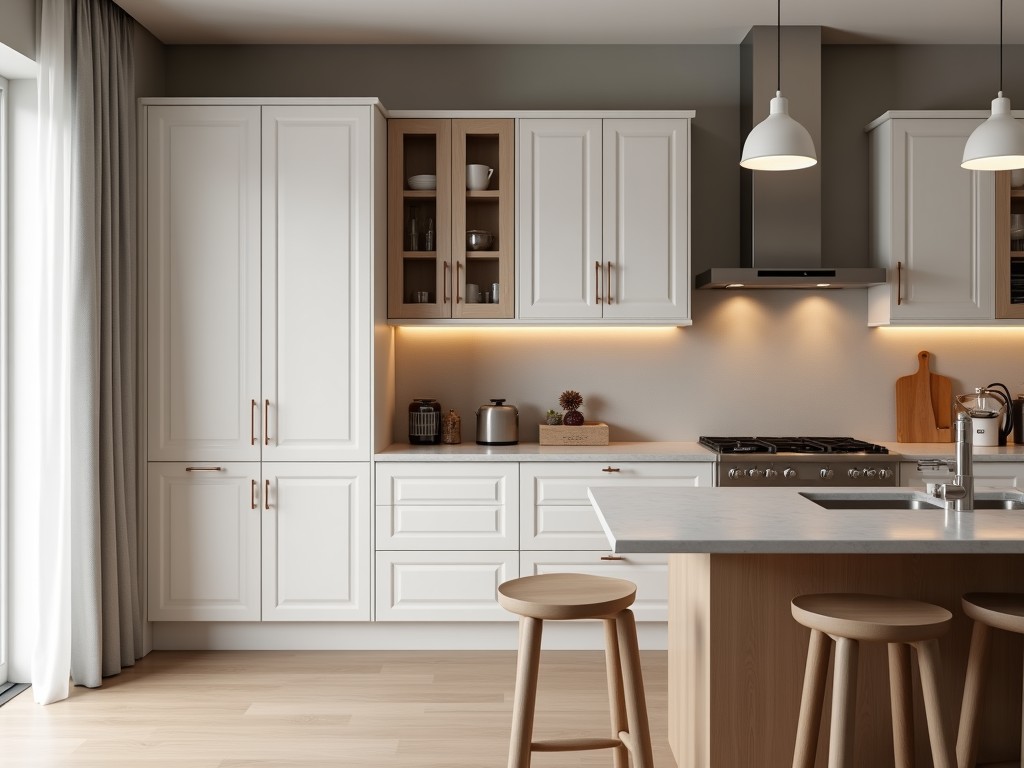
Galley Kitchen Cabinets Factory
Industrial galley kitchen cabinets are engineered for high-density commercial environments where space efficiency, durability, and hygiene are critical. Unlike residential cabinetry, these systems
- Category:
- Kitchen Cabinet
Galley Kitchen Cabinets Factory
Industrial galley kitchen cabinets are engineered for high-density commercial environments where space efficiency, durability, and hygiene are critical. Unlike residential cabinetry, these systems must withstand constant use, exposure to moisture, cleaning agents, and temperature fluctuations while maintaining structural integrity over extended service life.
Manufacturers specializing in this segment focus on material science, modular design, and precision fabrication to meet the demands of food service, healthcare, maritime, and institutional sectors. The following sections detail the technical considerations that define functional galley kitchen cabinetry from a factory production perspective.
Material Selection and Performance Characteristics
The substrate and surface finish of galley cabinets directly influence longevity, maintenance requirements, and compliance with food safety standards. Common materials include marine-grade plywood, stainless steel, and high-pressure laminate (HPL) over moisture-resistant cores, each selected based on environmental exposure and load expectations.
Marine-grade plywood, typically constructed with waterproof phenolic adhesives and void-free inner plies, resists delamination in humid conditions and provides a stable base for finishes. Stainless steel grades 304 and 316 are used where direct water contact or chemical cleaning is frequent, offering corrosion resistance and non-porous surfaces. HPL faces, when bonded to formaldehyde-free particleboard or MDF cores with edge sealing, deliver impact resistance and ease of cleaning at lower weight.
Surface finishes are evaluated for abrasion resistance (Taber tester), chemical exposure (per ASTM D1308), and microbial growth inhibition. Factories specify minimum performance thresholds rather than relying on subjective quality claims.
Modular Design and Space Optimization
Galley layouts impose strict dimensional constraints, making modularity essential for efficient installation and future reconfiguration. Cabinets are designed as standardized units with consistent depth, height, and interlocking mechanisms to align with appliance niches, utility chases, and workflow zones.
Typical module widths range from 300mm to 900mm in 150mm increments, allowing designers to fill linear runs without custom cutting. Height is commonly set at 850mm for ergonomic work surfaces, with base cabinets incorporating adjustable legs (±25mm) to compensate for uneven floors. Wall units are sized to avoid interference with overhead equipment while maximizing vertical storage.
Internal fittings—such as pull-out trays, adjustable shelving, and drawer dividers—are engineered for full extension and load capacity (typically 30–50kg per drawer), ensuring accessibility in confined spaces. These elements are specified during the design phase to match intended utensil, pan, or ingredient storage patterns.
Manufacturing Precision and Quality Control
Dimensional accuracy and joint integrity are critical in factory production to ensure field assembly accuracy and long-term stability. CNC machining, edge banding, and automated assembly lines minimize tolerances that could compound in multi-unit installations.
Panel cutting tolerances are maintained within ±0.5mm to guarantee flush alignment between adjacent units. Edge sealing—using PVC, ABS, or laser-bonded techniques—prevents moisture ingress at vulnerable points. Hinge and slide mounting holes are drilled with positional accuracy to ±0.2mm to ensure smooth operation and prevent sagging over time.
Quality control includes visual inspection for finish uniformity, functional testing of doors and drawers (open/close cycles), and adhesion testing of laminates (cross-hatch per ASTM D3359). Factories document these checks per batch to support traceability and warranty claims.
Customization for Sector-Specific Requirements
While standardization enables cost-effective production, galley cabinets often require adaptation to sector-specific operational needs. Factories manage variability through configurable options rather than fully bespoke designs, balancing flexibility with repeatability.
Common customization paths include:
- Integrated utility cutouts for plumbing, electrical conduits, or ventilation ducts
- Specialized interiors such as heated holding compartments, cooled drawers, or chemical-resistant linings
- Reinforced structures for high-load applications like pot storage or equipment bases
- Marine-specific features including vibration damping and salt-spray resistant fasteners
These options are defined during the engineering review phase, where factories validate feasibility against structural, material, and manufacturing constraints before quoting.
Packaging and Logistics for Industrial Delivery
Protecting finished cabinets during transit is essential to preserve surface quality and dimensional stability. Factories employ multi-layer packaging systems designed for long-haul transport, handling equipment, and variable storage conditions.
Standard packaging includes:
- Corner protectors and edge guards made from recycled polypropylene
- Wrap layers of polyethylene film to resist moisture and dust
- Stackable corrugated cartons or wooden crates with ISPM 15 certification for international shipments
- Internal bracing and foam inserts to prevent shifting and impact damage
Labeling includes QR codes linking to installation diagrams, material safety data sheets, and QC records. Unit weights and dimensions are marked externally to facilitate handling planning. Lead times typically range from 4–8 weeks after drawing approval, depending on material availability and order complexity.
Typical Specifications by Application Sector
| Application Sector | Common Materials | Key Performance Requirements | Typical Enhancements |
|---|---|---|---|
| Commercial Food Service | HPL over moisture-resistant core, 304 stainless steel | Daily cleaning cycles, heat exposure, impact resistance | Seamless edges, integrated drip edges, antimicrobial surfaces |
| Healthcare & Laboratories | Seamless welded stainless steel, chemical-grade laminate | Chemical resistance, sterilization compatibility, particle shedding control | Flush-mounted hinges, sealed seams, passive ventilation |
| Marine & Offshore | Marine plywood, 316 stainless steel, UV-stabilized finishes | Salt spray resistance, vibration tolerance, weight minimization | Latching systems, flexible mounting, corrosion-inhibiting fasteners |
| Institutional (Education, Military) | High-density HPL, reinforced particleboard | Heavy use, abuse resistance, long-term dimensional stability | Reinforced corners, vandal-resistant hardware, accessible hardware placement |
Values represent typical configurations; actual specifications are customized according to project requirements, regulatory standards, and environmental conditions.
For technical consultation, material samples, or project-specific quotations, contact our engineering team to discuss your galley kitchen cabinetry requirements.
Request Technical Specification Sheet


