Distressed Antique Kitchen Cabinets
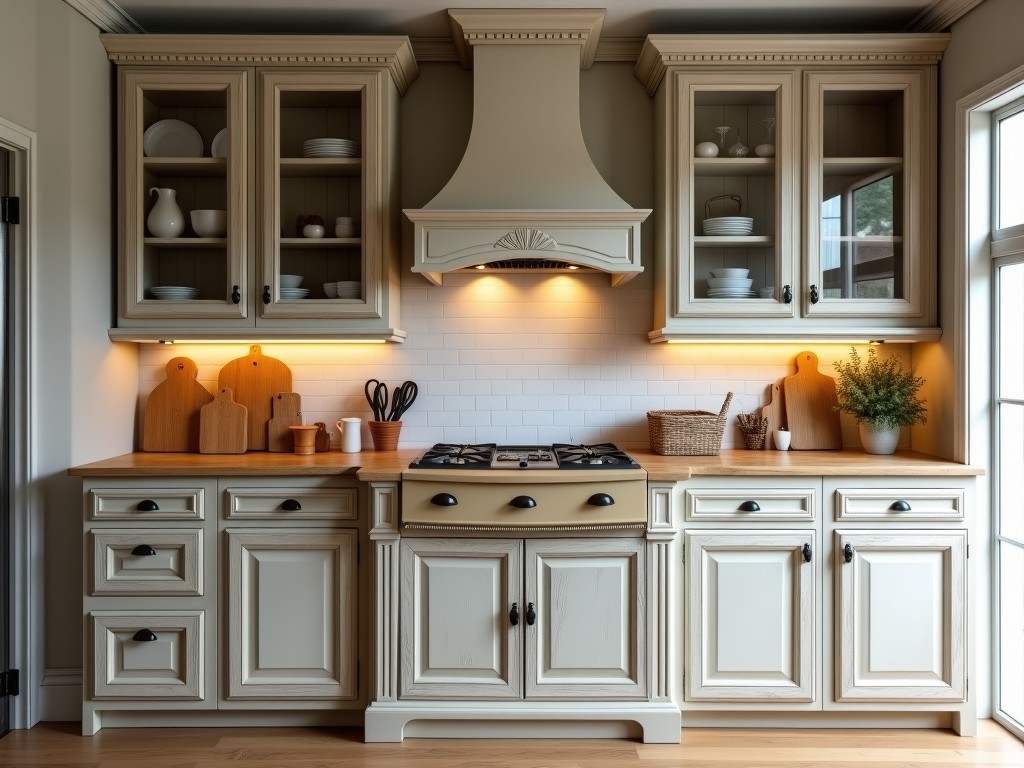
Distressed Antique Kitchen Cabinets
Distressed antique kitchen cabinets are fabricated to replicate the visual and tactile characteristics of aged wood through controlled surface treatment processes. These units are not restored
- Category:
- Kitchen Cabinet
Distressed Antique Kitchen Cabinets
Distressed antique kitchen cabinets are fabricated to replicate the visual and tactile characteristics of aged wood through controlled surface treatment processes. These units are not restored historical pieces but newly manufactured components engineered to deliver consistent appearance, dimensional stability, and functional performance in modern kitchen environments while evoking the aesthetic of century-old joinery and finish wear.
Material Selection and Substrate Engineering
Substrates are typically constructed from kiln-dried hardwoods such as white oak, maple, or poplar, selected for their grain structure and resistance to warping under cyclic humidity changes. Panel cores may utilize multi-ply plywood with formaldehyde-free adhesives to meet indoor air quality standards, while face frames and doors employ solid wood stiles and rails joined with mortise-and-tenon or dowel-and-glue techniques to ensure long-term joint integrity under daily operational loads.
Surface distressing is applied after primer sealing but before topcoat application, using a combination of hand tools, chain impact, and abrasive media to simulate natural wear patterns—such as edge rounding, knob-induced abrasion, and minor gouging—without compromising structural thickness. The depth of distress is calibrated to remain within 0.5–1.5 mm to avoid weakening load-bearing edges or creating moisture ingress points that could lead to delamination over time.
Finish System and Wear Simulation
The finishing process begins with a sanding sealer to equalize porosity, followed by a base coat of water-based or catalyzed lacquer tinted to match historical pigment profiles—commonly featuring undertones of umber, sienna, or black oxide to simulate decades of grime accumulation. Glazes are then wiped selectively into recesses and profiles to enhance depth, while dry-brushing techniques raise highlights on edges and contours to mimic light reflection from uneven surfaces.
A final topcoat of 2K polyurethane or conversion varnish is applied to achieve a surface hardness of 2H–3H on the pencil scale, providing resistance to scratching from utensils and cleaning agents. The topcoat is formulated to retain flexibility under temperature fluctuations, preventing cracking in the distressed zones where stress concentrations naturally occur. Gloss levels are typically maintained between 10–25% to avoid the plasticky appearance associated with high-gloss modern finishes.
Dimensional Standards and Installation Considerations
Standard cabinet boxes are manufactured to 34.5″ height, 24″ depth for base units, and 12″ or 15″ depth for wall units, with face frame overlays ranging from 1/2″ to 1-1/4″ depending on door style. All dimensions are held to ±1/16″ tolerance to ensure proper alignment during ganged installation, particularly important when integrating with appliances or countertops requiring precise reveal lines.
Hinge selection prioritizes concealed, soft-close mechanisms with 6-way adjustability to compensate for minor wall irregularities common in retrofit installations. Drawer boxes utilize dovetail joints with captive panel construction and are fitted with full-extension, ball-bearing slides rated for 75–100 lb dynamic load, ensuring smooth operation even when loaded with heavy cookware—a critical factor in maintaining the illusion of authenticity without functional compromise.
Quality Control and Process Validation
Each unit undergoes multi-stage inspection: substrate moisture content is verified at 6–8% prior to assembly; joint strength is tested via axial pull tests on sample frames; finish adhesion is measured using cross-hatch tape tests (ASTM D3359) targeting 4B or better; and color consistency is evaluated under D65 lighting with ΔE < 2.0 tolerance between adjacent panels. Distressing patterns are audited against a master sample to ensure repeatability without appearing patterned or artificial.
Packaging includes corner protectors, edge foam, and vapor-barrier wrapping to prevent finish abrasion and moisture uptake during transit. Units are palletized with horizontal bracing and shock indicators to monitor handling conditions. For export shipments, ISPM-15 compliant crating is available upon request, with desiccant packs included to maintain internal humidity below 60% RH during long-duration transport.
Applications in Renovation and New Construction
These cabinets are specified in projects where architectural continuity demands period-appropriate aesthetics—such as 1920s bungalow restorations, farmhouse conversions, or heritage-style commercial kitchens—where replicating the look of aged wood avoids the visual inconsistency of new, uniform finishes against existing plaster, flooring, or lighting fixtures. They are also used in multifamily developments to create differentiated unit interiors without the cost and lead time associated with sourcing salvaged materials.
Unlike reclaimed wood, which carries risks of hidden defects, insect infestation, or inconsistent dimensions, manufactured distressed cabinets offer predictable performance, warranty coverage, and compliance with modern building codes—including CARB2 formaldehyde emissions standards and ADA-compliant reach ranges when configured with appropriate hardware. This makes them suitable for both residential and light commercial applications where longevity and regulatory adherence are non-negotiable.
| Parameter | Typical Range or Specification |
|---|---|
| Substrate Moisture Content | 6–8% (kiln-dried hardwood) |
| Distress Depth | 0.5–1.5 mm (surface only) |
| Topcoat Hardness | 2H–3H (pencil scale) |
| Gloss Level | 10–25% (60° meter) |
| Drawer Load Capacity | 75–100 lb (dynamic, ball-bearing slides) |
| Color Consistency (ΔE) | < 2.0 (D65 lighting) |
Customization and Project Integration
Customization extends beyond finish to include door profiles (beadboard, shaker, raised panel), frame styles (inset, overlay), and interior accessories such as pull-out trays, spice racks, and tray dividers—all manufactured to the same distressing standards to maintain visual harmony. Alterations to dimensions are achievable within standard carcass increments (typically 3″ modules) to accommodate unique layouts without requiring full redesign.
Hardware selection—such as cup pulls, bail handles, or knob styles—is guided by period accuracy; for example, backplate-mounted brass knobs suit 1910–1930 aesthetics, while iron latches align with earlier Arts and Crafts influences. These details are not decorative afterthoughts but functional components whose material (e.g., solid brass, forged iron) and finish (e.g., unlacquered, oil-rubbed bronze) must complement the cabinet’s distressed surface to avoid visual dissonance.
Lead times are typically 6–8 weeks for standard configurations, with rush options available for projects requiring accelerated timelines. Quotations require submission of room elevations, appliance schedules, and finish references to ensure accurate pricing and avoid change orders during production. Samples of door styles and finish swatches are available upon request, allowing project teams to validate appearance under actual lighting conditions before full commitment.



