Custom Modern Kitchen Cabinets Factory
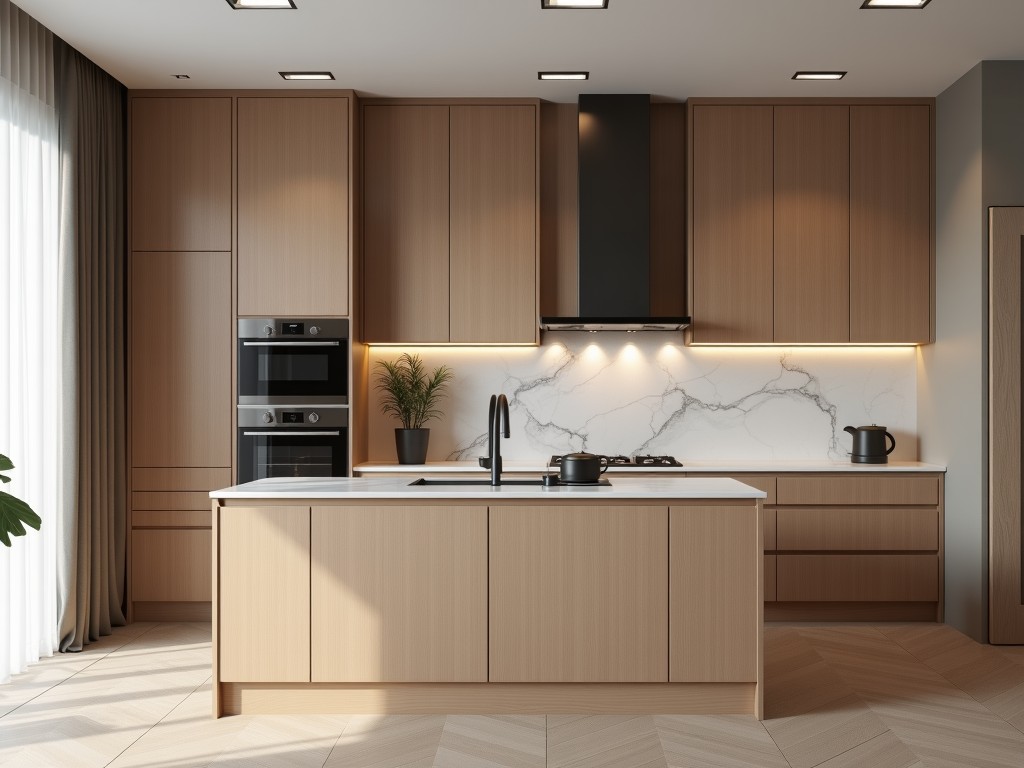
Custom Modern Kitchen Cabinets Factory
Industrial buyers seeking custom modern kitchen cabinets require precise engineering data, material specifications, and manufacturing capabilities before committing to supplier relationships. This
- Category:
- Kitchen Cabinet
Custom Modern Kitchen Cabinets Factory
Industrial buyers seeking custom modern kitchen cabinets require precise engineering data, material specifications, and manufacturing capabilities before committing to supplier relationships. This page provides technical details about factory production processes, dimensional tolerances, material options, and quality control methods relevant to B2B procurement decisions. Each section focuses on measurable characteristics rather than subjective claims.
Manufacturing Process and Dimensional Control
Modern cabinet production relies on CNC machining centers with positional accuracy typically within ±0.1mm for panel cutting and joint fabrication. Edge banding applications use hot-melt adhesives with activation temperatures between 180-220°C, ensuring bond strength exceeding 1.5 MPa under standard peel tests. Panel substrates undergo thickness calibration to maintain uniformity within ±0.2mm across full sheet dimensions, critical for alignment in frameless constructions.
Drawer systems are manufactured using undermount soft-close mechanisms rated for 40,000 cycles minimum, with side clearance tolerances held to ±0.3mm to prevent binding. Hinge cup drilling employs multi-spindle heads with depth control accurate to ±0.15mm, ensuring consistent reveal angles across all door assemblies. These specifications directly impact field performance and installation efficiency.
Material Options and Performance Characteristics
Substrate selection affects long-term stability, moisture resistance, and weight distribution in installed assemblies. Common industrial options include CARB2-compliant particleboard (density 600-700 kg/m³), moisture-resistant MDF (swell <5% after 24h water immersion), and plywood cores with cross-band veneer layers for enhanced screw retention (>180 N withdrawal force). Surface finishes range from melamine laminate (abrasion resistance 150-300 cycles) to UV-cured acrylics (pencil hardness 2H-3H).
Edge treatments influence durability at vulnerable points. PVC edge bands (thickness 0.4-2.0mm) provide impact resistance measured by Izod testing (typically 2-4 kJ/m²), while ABS alternatives offer improved UV stability. Veneer edges require precise temperature control during application (160-190°C) to prevent delamination, with bond strength validated through boil tests per EN 14323 standards.
Customization Capabilities and Tolerance Stacking
Custom modern kitchen cabinets require careful consideration of cumulative tolerances across multiple components. Door overlay specifications (typically 16-19mm for full-overlay) must account for hinge cup depth, panel thickness variation, and frame squareness to maintain consistent reveals. Interior dimensions are calculated based on external measurements minus material thickness, with adjustments for back panel clearance (usually 3-5mm) and shelf pin hole placement (±0.2mm positional accuracy).
Hardware integration points demand precise location data. Shelving systems use 5mm diameter pin holes spaced at 32mm intervals (European standard), with vertical positioning accuracy critical for load distribution. Pull-out mechanisms require minimum internal clearance calculations based on slide thickness (usually 12.7mm) plus recommended side gap (1mm per side), directly affecting usable storage dimensions.
Quality Control and Inspection Protocol
Factory quality control incorporates multiple inspection points throughout production. Incoming material verification includes moisture content testing (target 6-8% for wood-based panels), thickness measurement across 5 points per sheet, and visual grading for surface defects per ANSI A208.1 standards. Intermediate checks confirm joint integrity, edge band adhesion, and hole placement accuracy before assembly.
Final assembly verification includes diagonal measurements (difference <3mm indicates squareness), door alignment checks (gap uniformity ±0.5mm), and functional testing of all moving parts. Packaging preparation involves corner protection, edge guarding, and stretch-wrapping with humidity indicators included in each palletized unit. Test reports are available upon request for specific production batches.
Packaging and Logistics Considerations
Industrial packaging systems protect cabinets during transit and handling. Flat-pack configurations use 7mm triple-wall corrugated cartons with edge burst strength >35 kPa, assembled using hot-melt adhesive seams. Corner protectors are formed from expanded polystyrene (density 25 kg/m³) or molded pulp, positioned to absorb impact energies up to 15 J per corner. Stretch film application uses 23μm LLDPE with 300% elongation at break.
Container loading optimization considers weight distribution and center of gravity. Typical 20-foot GP containers accommodate 18-22 pallets of flat-packed cabinets (based on 1.1m x 1.1m pallet footprint), with maximum stack height limited to 2.2m to prevent bottom-layer deformation. Shockwatch labels and tilt indicators are available for high-value shipments to monitor handling conditions during transit.
Applications in Commercial and Residential Projects
Custom modern kitchen cabinets serve distinct functional requirements across different sectors. In multi-family residential developments, standardization of module widths (600mm increments) facilitates rapid installation while allowing for customized finishes per unit. Healthcare facility pantries require seamless edges and non-porous surfaces to meet infection control protocols, often specifying post-formed laminate or solid surface overlays.
Commercial kitchen installations demand enhanced load ratings for shelving systems (minimum 150 kg per shelf uniformly distributed) and resistance to frequent cleaning cycles. Educational environments prioritize impact resistance at corners and edges, frequently specifying 2mm ABS edging with rounded profiles. Each application drives specific material and hardware selections based on performance criteria rather than aesthetic preferences alone.
Typical Production Lead Times
| Project Scope | Lead Time (Weeks) | Conditions |
|---|---|---|
| Standard modular kitchen (up to 20 units) | 4-6 | Approved drawings, material selection confirmed |
| Custom luxury kitchen (bespoke dimensions) | 6-10 | Includes prototype approval, special finish development |
| Multi-unit residential (50+ units) | 8-12 | Phased delivery schedule, panel cutting optimization |
| Commercial food service installation | 5-7 | NSF-compliant materials, integrated drainage considerations |
Technical Inquiry Requirements
To initiate a quotation process, suppliers require specific technical documentation. Essential inputs include detailed CAD drawings or CNC-ready DXF files showing all panel dimensions, hole locations, and edge banding specifications. Material datasheets for selected substrates and finishes must be provided, including formaldehyde emission ratings and fire classification where applicable. Hardware schedules should list manufacturer part numbers for hinges, slides, and pulls to ensure compatibility.
Additional information improves quotation accuracy: edge band thickness and material preferences, required certifications (FSC, CARB2, E1), packaging specifications for destination country, and any special testing requirements (salt spray, humidity cycling). Providing complete technical packages reduces quotation turnaround time and minimizes revision cycles during sample approval.
For technical consultations, material samples, or project-specific quotations, contact our engineering team to discuss your custom modern kitchen cabinet requirements. Provide project specifications including dimensions, material preferences, hardware selections, and quantity requirements for a detailed response.



