Custom Kitchen Cabinet Supplier
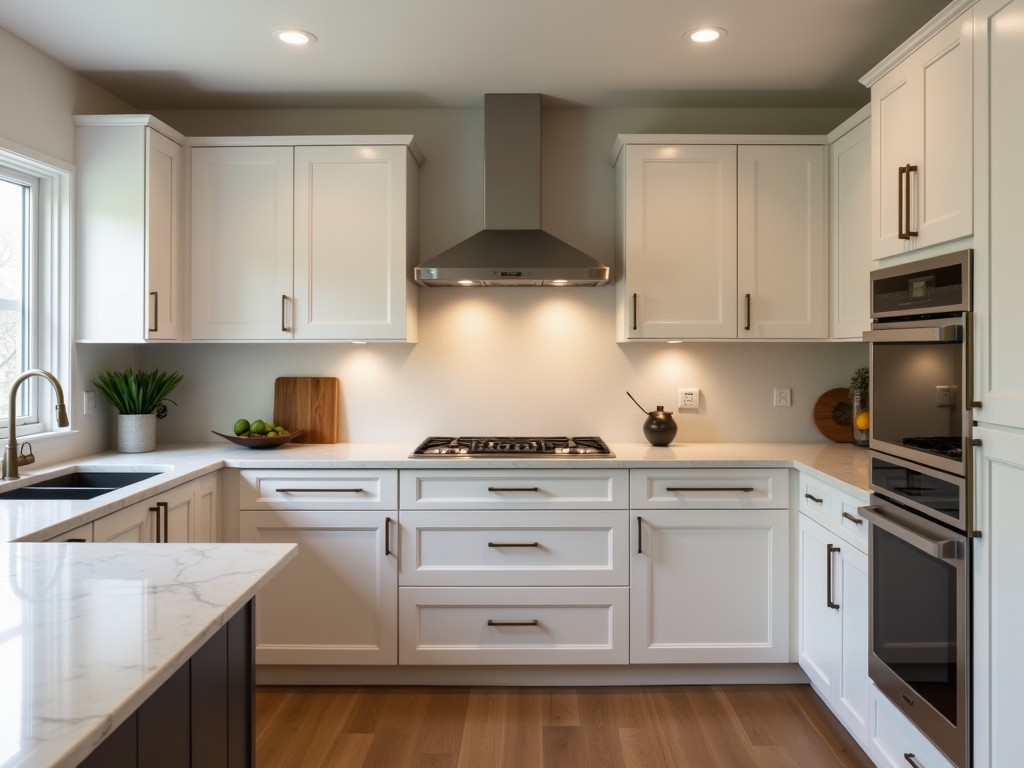
Custom Kitchen Cabinet Supplier
Industrial kitchens require cabinetry that withstands continuous operation, frequent cleaning, and exposure to moisture, heat, and chemicals. Selecting a supplier involves evaluating material
- Category:
- Kitchen Cabinet
Custom Kitchen Cabinet Supplier
Industrial kitchens require cabinetry that withstands continuous operation, frequent cleaning, and exposure to moisture, heat, and chemicals. Selecting a supplier involves evaluating material stability, joinery durability, finish resistance, and dimensional precision under real-world conditions. This page explains the technical considerations for specifying custom kitchen cabinets in commercial environments, focusing on measurable engineering characteristics that reduce long-term risk and lifecycle cost.
Material Selection for Hygienic and Structural Performance
Cabinet carcasses in industrial settings commonly use moisture-resistant substrate materials to prevent swelling, delamination, or microbial growth. Exterior-grade plywood with phenolic resin bonding (exceeding EN 314-2 Class 3) provides dimensional stability under fluctuating humidity, typically maintaining thickness variation below 0.2% after 24-hour soak tests. Alternatively, marine-grade HDPE sheets offer non-porous surfaces resistant to acids, alkalis, and temperatures up to 80°C, though they require specialized welding or mechanical fastening due to low surface energy. Particleboard is generally avoided in wet zones unless fully encapsulated with impermeable edgebanding and sealed joints, as its internal structure absorbs moisture rapidly, leading to strength loss exceeding 40% within 6 months in steam-exposed areas.
Door and drawer fronts demand surfaces that resist abrasion, impact, and chemical cleaning agents. High-pressure laminate (HPL) with melamine faces achieves Taber abrasion resistance of 300–500 cycles before 10% wear, suitable for high-traffic touchpoints. Solid surface materials (acrylic or polyester-based) provide seamless, repairable finishes with zero grout lines, reducing bacterial harborage; their hardness (Shore D 80–85) resists scratching from utensils while allowing localized repair via sanding and polishing. Stainless steel grade 304 fronts, brushed to #4 finish, offer superior corrosion resistance in saline or chlorinated environments, with tensile strength ≥515 MPa and yield strength ≥205 MPa, though they require careful handling to avoid denting during installation.
Joinery and Assembly Methods for Long-Term Integrity
Structural joints must maintain alignment under repeated loading and vibration from equipment operation. European-style concealed hinges with 3-way adjustment (depth, side, height) allow precise door alignment compensation for wall unevenness, typically offering ±2mm lateral and ±1.5mm vertical adjustment ranges. Cam-lock fasteners combined with pre-drilled dowel holes provide repeatable assembly accuracy, achieving joint shear strength of 1.8–2.5 kN in plywood substrates when installed to manufacturer torque specifications (usually 0.8–1.2 Nm). For high-stress applications such as heavy equipment bases or pantry units carrying >150 kg loads, through-bolts with metal brackets or mortise-and-tenon joints reinforced with epoxy adhesive are preferred, delivering tensile resistance exceeding 5 kN per joint.
Drawer systems require smooth, consistent operation under frequent full-extension use. Ball-bearing slides rated for 45–68 kg dynamic load per pair ensure lateral deflection remains under 0.5 mm at full extension, preventing binding or racking. Soft-close mechanisms incorporate hydraulic dampers that reduce closing velocity from 0.4 m/s to 0 m/s over 0.3–0.5 seconds, minimizing impact damage to cabinet frames and contents. Under-mount slides, while offering cleaner aesthetics, require precise cabinet interior dimensions (±0.5 mm tolerance) to avoid binding; side-mount slides tolerate greater variation (±1.5 mm) but reduce usable drawer width by 12–18 mm per side.
Finish Systems and Surface Protection
Surface finishes must resist degradation from repeated exposure to water, steam, grease, and alkaline cleaners (pH 10–13). Catalyzed polyurethane coatings applied at 40–60 μm dry film thickness provide chemical resistance equivalent to ASTM D1308, showing no blushing or softening after 24-hour immersion in 5% NaOH solution. UV-cured acrylics offer faster curing and higher surface hardness (pencil hardness 2H–3H) but may require thicker films (80–100 μm) to match chemical resistance of two-part polyurethanes. Powder-coated steel components achieve corrosion protection through zinc phosphate pretreatment and 60–80 μm epoxy-polyester hybrid coating, passing 500-hour salt spray tests (ASTM B117) with <10% red rust when properly maintained.
Edge sealing is critical for substrate protection. PVC or ABS edgebanding applied with hot-melt adhesive (EVA-based, melt index 8–12 g/10min) creates a moisture barrier when bonded at 180–200°C with pressure ≥4 bar; seam permeability tests show water vapor transmission rates below 0.5 g/m²/24h. Laser-edged finishes, which polymerize the substrate surface directly, eliminate adhesive layers and achieve seamless edges with water absorption <0.1% after 72-hour immersion, though they require specific material compatibility (e.g., melamine-faced boards with laser-reactive additives). Unsealed edges on absorbent substrates typically show swelling >0.8% within 48 hours in humid conditions, leading to finish delamination or joint loosening over time.
Customization Logic for Functional Workflow Integration
Customization begins with analyzing operational workflows, not merely aesthetic preferences. Cabinet depth, height, and internal partitioning must align with equipment footprint, ergonomic reach zones, and material handling paths. Base cabinets adjacent to cooking equipment often require increased depth (650–700 mm vs. standard 600 mm) to accommodate rear-mounted utilities or ventilation clearances, while wall cabinets above prep surfaces are typically mounted at 1400–1600 mm AFL (above finished level) to maintain 450–550 mm clearance between countertop and shelf bottom, reducing strain during repetitive lifting.
Internal accessories are specified based on load characteristics and usage frequency. Pull-out waste bins with soft-close runners and ventilation gaps accommodate 35–50 L containers, requiring minimum cabinet width of 300 mm for single units or 600 mm for double. Adjustable shelving systems use 25 mm diameter holes on 32 mm centers, supporting shelf loads of 40–60 kg per shelf when constructed from 18 mm plywood with front edge reinforcement. Spice drawers or utensil trays incorporate dividers with 6–12 mm thickness to prevent lateral movement; their depth is typically 50–80 mm to balance accessibility with storage efficiency.
Integration with building services requires precise cutouts and service chases. Electrical conduit chases are routed vertically behind carcasses or horizontally within kickplates, maintaining 50 mm minimum clearance from structural studs to avoid drilling interference. Plumbing penetrations for sinks or dishwashers require reinforced openings with moisture-barrier sleeves; corner radii ≥3 mm prevent stress concentration in brittle materials like HPL. Ventilation ducts for hoods are sealed with fire-rated mastic where they penetrate cabinet sides, maintaining ≥25 mm clearance from combustible substrates to meet local fire codes.
Quality Control and Dimensional Verification
Dimensional accuracy is verified at multiple stages to prevent on-site assembly issues. Cabinet carcasses are checked for diagonal deviation within ±2 mm using laser distance meters, ensuring racking remains below 0.5%—a threshold where door misalignment becomes visually apparent and functional interference likely. Panel thickness is measured at four points per sheet with micrometers (±0.01 mm resolution), rejecting material outside ±0.3 mm tolerance of nominal (e.g., 18 mm ±0.5 mm). Squareness of frame assemblies is confirmed via 3-4-5 triangle method or digital protractors, accepting deviations <0.5° to ensure doors close evenly without binding at hinges or strikes.
Finish adhesion and hardness are tested before packing. Cross-hatch adhesion tests (ASTM D3359) require ≥4B rating (90–95% coating retention) after 24-hour cure. Pencil hardness tests verify minimum 2H resistance for surfaces expected to endure utensil contact; softer grades (HB or B) show visible marking under 500 g load. Gloss consistency is measured at 60° angle with glossometer, accepting ±5 GU variation across a single component to avoid noticeable visual discrepancies under directional lighting.
Packaging protects edges and surfaces during transit. Corner protectors made of expanded polystyrene (EPS) or molded pulp absorb impact energies up to 5 J, preventing chipping on HPL or veneer edges. Interlayer sheets of low-density polyethylene (LDPE) film (50 μm thickness) prevent abrasion between stacked units. Humidity indicators inside packaging (cobalt chloride-based, changing from blue to pink at 40% RH) alert handlers to potential moisture exposure during long-haul shipment; units showing >60% RH exposure are inspected for substrate swelling before release.
Typical Specifications and Customization Parameters
| Parameter | Typical Range | Customizable According to Project Requirements |
|---|---|---|
| Carcass Material | 18mm MR plywood, 16mm HDPE | Marine plywood, stainless steel frame, aluminum extrusion |
| Door Thickness | 18–22mm | Solid surface (12mm), stainless steel (1.2mm), glass (6mm tempered) |
| Hinge Type | Concealed 3-way adjustable | Overlay, inset, pivot, soft-close only |
| Drawer Load Rating | 45–68 kg dynamic | 90 kg heavy-duty, lateral file, pot-and-pan organizers |
| Finish Type | Catalyzed PU, HPL | UV acrylic, powder coat, brushed SS, melamine |
| Standard Depth | 600mm base, 300mm wall | 650–750mm base, 350mm wall, oversized for equipment |
| Height Adjustment | ±15mm via leveling feet | Plinth height, toe-kick depth, suspended mounting |
Applications in Commercial Kitchen Environments
In food preparation zones, cabinets adjacent to sinks and dishwashers benefit from HDPE or stainless steel carcasses that resist prolonged exposure to standing water and chlorinated detergents, eliminating the risk of substrate swelling or adhesive failure common in wood-based materials under constant moisture. Their non-porous surfaces also facilitate rapid sanitation, reducing biofilm buildup in high-hygiene areas such as ready-to-eat assembly lines.
Cooking lines require cabinets that withstand radiant heat and occasional splatter from fryers, grills, or sauté stations. Solid surface or HPL-faced plywood with heat-resistant edges (rated to 120°C continuous) maintain dimensional stability and finish integrity where temperatures exceed 80°C during peak service, preventing warping or delamination that could compromise door alignment or create safety hazards from loose hardware.
Storage areas for dry goods or utensils prioritize accessibility and load efficiency. Deep pull-out shelves (500–600mm extension) in pantry cabinets reduce reaching strain and improve inventory visibility, while vertical dividers in sheet pan racks accommodate 18x26 inch trays with <25mm side clearance, maximizing vertical space utilization without damaging coatings during insertion or removal.
Cleaning chemical storage units demand chemically inert interiors and spill containment. Cabinets lined with HDPE or polypropylene (PP) sheets (1.5–2mm thickness) resist degradation from concentrated acids, alkalis, and solvents, while liquid-tight seams formed via hot-air welding prevent leakage onto adjacent floors or equipment, meeting OSHA 1910.120 hazardous material storage guidelines for compatibility and secondary containment.
Inquiry and Technical Support
Specifying custom kitchen cabinets for industrial use requires detailed project information to ensure material, finish, and hardware selections match environmental demands and operational workflows. Provide layout dimensions, equipment locations, anticipated load profiles, cleaning chemical types, and any regulatory compliance needs (e.g., NSF, local health codes) to enable accurate quotation and design validation. Our engineering team reviews submissions for structural feasibility, material compatibility, and installation practicality before proposing solutions.
To initiate a consultation, share your project requirements via the contact form. Include sketches, CAD files, or detailed descriptions of intended use cases to accelerate the review process. We respond to technical inquiries within one business day with preliminary material recommendations, lead time estimates, and questions for clarification.



