Curved French Kitchen Cabinets Suppliers
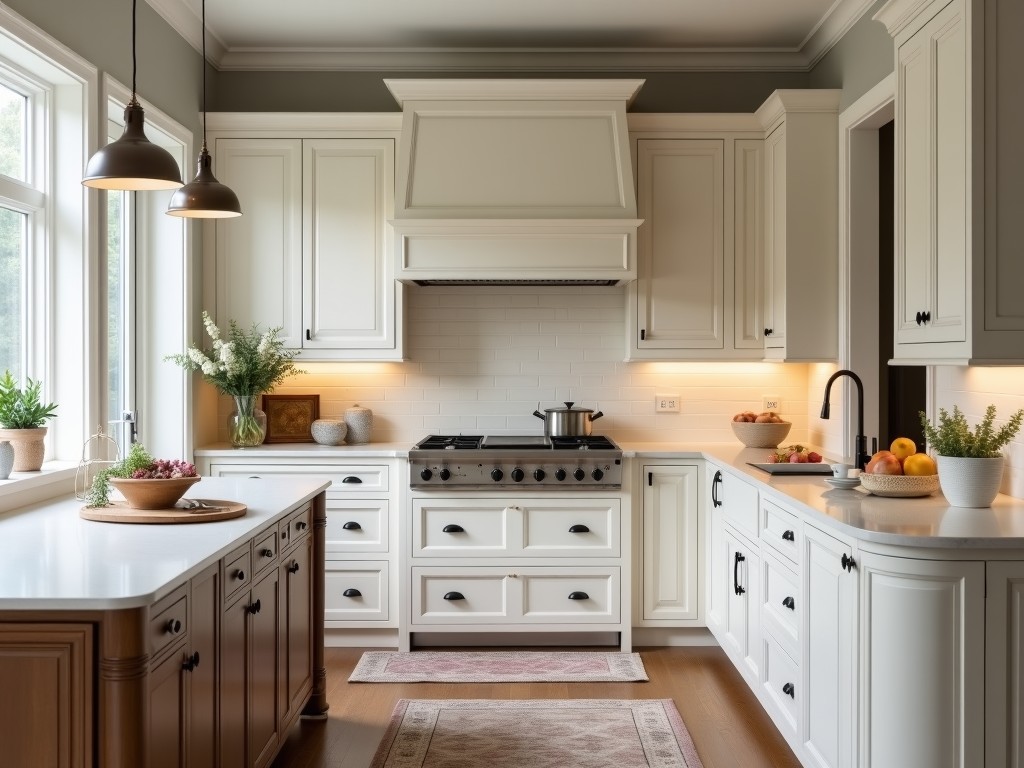
Curved French Kitchen Cabinets Suppliers
Curved French kitchen cabinets combine traditional aesthetic elements with functional kitchen design, requiring precise engineering to achieve both visual continuity and structural integrity. These
- Category:
- Kitchen Cabinet
Curved French Kitchen Cabinets: Industrial Specifications and Supplier Considerations
Curved French kitchen cabinets combine traditional aesthetic elements with functional kitchen design, requiring precise engineering to achieve both visual continuity and structural integrity. These cabinets feature a continuous radius along the front face, typically ranging from 300mm to 800mm, which introduces complex joinery and material stress considerations not present in standard rectilinear designs.
The curvature necessitates specialized manufacturing processes, including steam bending, laminated veneer layering, or CNC-machined solid wood segments, depending on the substrate material and desired finish. Each method affects dimensional stability, weight distribution, and long-term performance under varying humidity and thermal conditions common in kitchen environments.
Suppliers must account for the increased material waste and machining time associated with curved profiles, which directly impacts unit cost and lead time. Unlike flat panels, curved sections cannot be nested efficiently on standard sheet goods, requiring optimized cutting patterns and skilled labor for setup and finishing.
Hardware integration presents additional challenges; hinges, drawer slides, and internal fittings must be selected or adapted to accommodate the changing angle of the cabinet face along the curve. Misalignment can result in binding, uneven gaps, or premature wear, particularly in high-use applications.
Surface preparation and finishing require contour-adapted techniques to ensure uniform coating thickness and adhesion. Spray application parameters, sanding sequences, and UV curing cycles must be adjusted for the varying normal vectors across the curved surface to prevent runs, sags, or thin spots.
Material Selection for Curved Cabinet Applications
Material choice significantly influences the feasibility, durability, and finish quality of curved French cabinets. Solid hardwoods such as oak, maple, or walnut offer natural grain continuity but require careful drying and bending techniques to prevent cracking or springback. Typical moisture content must be stabilized between 6-8% before forming to minimize post-installation movement.
Engineered wood products like MDF or plywood provide greater dimensional stability and are commonly used for painted finishes. Multi-ply birch plywood with face veneers allows for tight radii bending (down to 200mm) when cross-band layers are oriented to resist delamination. However, edge exposure on curved sections necessitates specialized edge banding or solid wood lipping to maintain appearance and moisture resistance.
Laminate and thermofoil options are less common for true French curves due to limitations in conforming to complex radii without cracking or delaminating at the edges. When used, they typically require relief cuts and overlapping seams, which may compromise the seamless appearance expected in high-end kitchen designs.
Metal substrates (e.g., aluminum or stainless steel) are occasionally specified for modern interpretations but demand precision roll-forming or stamping tools. These materials offer superior humidity resistance but increase weight and require thermal break considerations in insulated wall applications.
Structural and Joinery Considerations
The structural performance of curved cabinets depends on effective load transfer through the curve and proper anchoring to adjacent cabinetry or wall systems. The radius introduces hoop stresses that must be resisted by the material’s modulus of elasticity and cross-sectional moment of inertia. For a 600mm radius curve in 18mm MDF, the maximum bending stress under a 50N point load at mid-span remains below material yield limits, but long-term creep under sustained load requires evaluation.
Joinery methods must accommodate angular changes along the curve. Traditional mortise and tenon or dowel joints are often modified with floating tenons or elongated slots to allow for seasonal movement. Pocket screws and confirmat fasteners are generally avoided on visible curved faces due to difficulty in achieving flush, aesthetically acceptable installation.
Corner blocks, internal brackets, or steel reinforcing plates are frequently used at the tangent points where the curve meets straight sections to prevent racking and maintain alignment. These elements are typically concealed behind interior panels or within the toe kick space to preserve the clean exterior profile.
Wall attachment requires careful planning; the varying angle of the cabinet back along the curve means that standard hanging rails or French cleats must be contoured or segmented to ensure full contact and load distribution. Improper mounting can lead to gap formation at the wall or uneven stress on the cabinet body.
Hardware and Functional Integration
Functional hardware must be selected to operate correctly despite the changing cabinet face angle. Hinges for curved doors often require adjustable three-dimensional components to compensate for the non-parallel relationship between door and cabinet frame along the curve. Concealed hinges with adjustable mounting plates allow for in-situ alignment of the door’s reveal and gap uniformity.
Drawer systems present a unique challenge; the front panel’s curve means that standard full-extension slides may bind if not properly angled. Solutions include using curved drawer fronts with matching radius or employing tilt-adjustable slide brackets that allow the drawer box to remain level while the front follows the cabinet contour.
Interior accessories such as pull-out shelves, spice racks, or waste bins must be designed with the internal cabinet geometry in mind. The effective depth and width vary along the curve, requiring custom-fabricated organizers or adjustable systems that can accommodate the changing cross-section.
Lighting integration, particularly under-cabinet or interior LED strips, must follow the curved profile to ensure uniform illumination. Flexible LED tapes with adhesive backing are commonly used, but their bending radius must be respected to avoid damaging the circuitry or causing uneven light output.
Finishing and Surface Treatment Protocols
Achieving a durable, uniform finish on curved surfaces requires adjustments to standard spraying and curing procedures. Electrostatic spray efficiency decreases on complex curves due to Faraday cage effects in recessed areas, necessitating multiple pass strategies or handheld touch-up guns to ensure adequate film build in concave zones.
UV-cured finishes offer rapid curing and high hardness but require consistent line-of-sight exposure; shadowed areas on tight curves may receive insufficient energy, leading to incomplete polymerization. In such cases, dual-cure (UV + moisture) systems or extended ambient curing periods are recommended to ensure full cross-linking.
Sanding between coats must use flexible abrasives or contour-following pads to avoid cutting through the finish on high points or leaving residue in recesses. Typical grit progression follows 180 → 220 → 320 for sealers and 400 → 600 for topcoats, with pressure adjusted to match the local surface curvature.
Edge sealing is critical on curved sections where end grain exposure is more prevalent due to the varying angle of cut. Specialized edge primers or hot-melt sealants are applied before finishing to prevent moisture ingress, which could cause swelling or finish delamination over time.
Final inspection includes gloss uniformity checks at multiple angles along the curve using a calibrated gloss meter, with acceptable variation typically held within ±5 GU (Gloss Units) across the surface to ensure visual consistency under directional lighting.
Supplier Evaluation Criteria
When evaluating suppliers for curved French kitchen cabinets, technical capability should be assessed through their manufacturing process documentation, including bending techniques, material conditioning protocols, and quality control checkpoints specific to curved components. Requesting process flow diagrams and material test reports (e.g., moisture content, bend radius tolerance, adhesion strength) provides objective basis for comparison.
Experience with similar projects—particularly those involving tight radii (<400mm), mixed material applications, or high-humidity environments—indicates practical problem-solving ability. Ask for project references detailing radius dimensions, substrate materials, finish types, and any field performance feedback.
Tolerance capabilities are a key differentiator; curved cabinets require tighter angular and radial tolerances than flat panels to maintain alignment and gap uniformity. Typical acceptable deviations include ±1.5mm in radius, ±2mm in height, and ±0.5mm in reveal consistency, though these may vary based on material and finish.
Lead time and scalability should be evaluated in context; curved components inherently have longer setup and processing times. Suppliers should provide detailed schedules separating engineering approval, material preparation, forming, machining, finishing, and assembly phases to identify potential bottlenecks.
Finally, inquire about packaging and damage prevention strategies. Curved panels are more susceptible to impact and pressure damage during transit. Custom foam cradles, corner protectors, and humidity-controlled wrapping are standard practices that reduce the risk of finish marring or substrate deformation.
Typical Specifications and Customization Options
| Parameter | Typical Range / Options | Notes |
|---|---|---|
| Front Face Radius | 300mm – 1200mm | Smaller radii increase forming complexity and material stress |
| Cabinet Height | 700mm – 900mm (base), 300mm – 700mm (wall) | Standard heights; custom heights available |
| Substrate Material | MDF, Plywood, Solid Wood, Particleboard | Affects bending method, weight, and finish compatibility |
| Finish Type | Paint, Stain, Lacquer, UV Cure, Melamine | Requires adjusted application for curved surfaces |
| Door Overlay | Full, Partial, Inset | Inset requires precise radius matching |
| Hardware Compatibility | Concealed Hinges, Soft-Close Slides, Push-to-Open | May require special brackets or adapters |
| Lead Time | 4–6 weeks (standard), 6–8 weeks (custom) | Dependent on material, finish, and complexity |
Specifications are typical values; actual capabilities vary by supplier and are customizable according to project requirements. Tolerances, material grades, and finish systems should be confirmed during quotation.
For technical inquiries, CAD file review, or project-specific quotations regarding curved French kitchen cabinets, contact our engineering team to discuss material selection, radius capabilities, and manufacturing lead times.



