Cream Lacquer Kitchen Cabinets
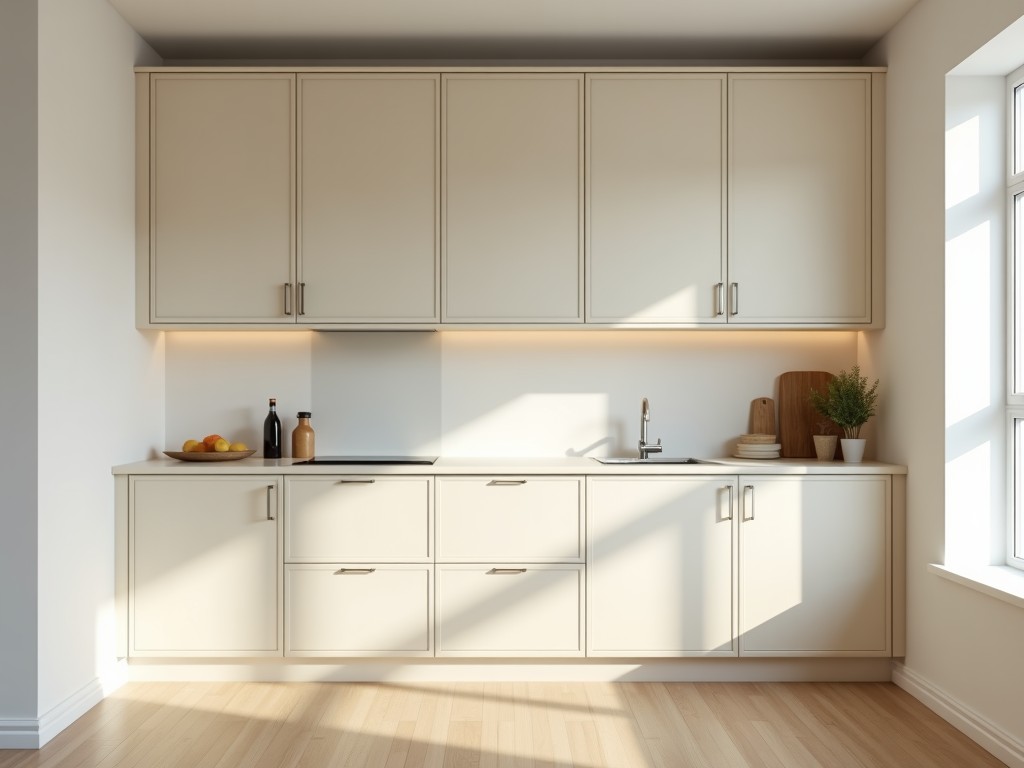
Cream Lacquer Kitchen Cabinets
Cream lacquer kitchen cabinets feature a high-gloss or matte finish applied over engineered wood substrates, delivering a seamless, non-porous surface resistant to moisture, stains, and daily wear.
- Category:
- Kitchen Cabinet
Cream Lacquer Kitchen Cabinets
Cream lacquer kitchen cabinets feature a high-gloss or matte finish applied over engineered wood substrates, delivering a seamless, non-porous surface resistant to moisture, stains, and daily wear. The coating process involves multiple layers of UV-cured or water-based lacquer, sanded between coats to achieve a uniform film thickness typically ranging from 0.1 to 0.3 mm. This finish provides consistent color retention and reflects light evenly, reducing the visibility of surface imperfections common in textured or stained alternatives.
Unlike painted or veneered surfaces, lacquer creates a monolithic barrier that prevents substrate swelling or delamination in humid environments. The hardness of cured lacquer, measured by pencil hardness tests, generally falls between 2H and 4H, offering resistance to light scratches from utensils or cleaning tools. Edge sealing is critical—exposed edges are banded with matching PVC or ABS tape and sealed with the same lacquer system to maintain integrity against moisture ingress.
Substrate selection directly impacts long-term performance. Medium-density fiberboard (MDF) is commonly used due to its uniform density and minimal grain show-through, ensuring consistent finish adhesion. Particleboard may be specified for cost-sensitive projects but requires stricter edge treatment due to higher moisture absorption. All substrates must meet E1 or CARB2 formaldehyde emission standards for indoor air quality compliance.
Technical Specifications
| Parameter | Typical Value | Notes |
|---|---|---|
| Substrate Material | MDF or Particleboard | MDF preferred for finish uniformity |
| Lacquer Type | UV-cured or water-based polyurethane | Low-VOC options available |
| Film Thickness | 0.1–0.3 mm | Measured after final cure |
| Surface Hardness | 2H–4H (pencil scale) | Resists light abrasion |
| Gloss Level | 10–90 GU (60° meter) | Matte to high-gloss options |
| Color Tolerance | ΔE < 1.5 (CIELAB) | Batch-to-batch consistency |
| Edge Sealing | PVC/ABS banding + lacquer seal | Prevents moisture ingress |
Performance Characteristics
Moisture resistance is a key consideration in kitchen environments. Cream lacquer cabinets undergo accelerated humidity cycling tests (typically 48 hours at 90% RH, 38°C) to evaluate coating adhesion and substrate stability. Properly finished units show no blistering, delamination, or discoloration under these conditions. The non-porous nature of the lacquer film also inhibits microbial growth on the surface, supporting hygiene in food preparation areas.
Thermal stability is evaluated through exposure to intermittent heat sources such as oven doors or hot pans. The lacquer film maintains integrity up to 80°C without softening or discoloration, though direct prolonged contact with heat sources should be avoided via proper installation clearances. Unlike thermoplastic finishes, cured lacquer does not reflow or deform under typical kitchen temperature fluctuations.
Impact resistance is influenced by substrate thickness and lacquer flexibility. 18 mm MDF substrates with a flexible lacquer topcoat can withstand impacts from falling objects (e.g., pots, utensils) without cracking or chipping. Harder, more brittle lacquers may offer higher scratch resistance but are prone to microfracturing under impact—formulation balance is critical for real-world durability.
Customization Options
Cream lacquer finishes are highly adaptable to project-specific requirements. Color matching is achieved through spectrophotometer analysis of reference samples, enabling replication of standard cream shades (e.g., RAL 9001, NCS S 0502-Y) or custom hues tailored to architectural palettes. Batch consistency is maintained via closed-loop mixing systems and periodic viscosity monitoring during production.
Gloss level can be adjusted across the matte-to-high-gloss spectrum by modifying the lacquer formulation or polishing process. Matte finishes (10–30 GU) reduce glare and fingerprint visibility, while high-gloss (70–90 GU) enhances light reflection and perceived spaciousness. Intermediate satin levels (40–60 GU) offer a balance of aesthetics and practicality for high-traffic kitchens.
Door styles range from flat-panel slab designs to shaker, raised-panel, or integrated handle profiles. Edge profiles can be square, rounded, or beveled, with matching lacquer applied to all surfaces. Hardware compatibility is pre-drilled to client specifications, accommodating standard or custom hinge, drawer slide, and pull configurations. Interior accessories such as pull-out trays, lazy Susans, or lighting channels are designed as modular additions.
Applications
Cream lacquer cabinets are particularly well-suited for modern and transitional kitchen designs where light, neutral tones enhance spatial perception. The reflective surface amplifies both natural and artificial lighting, making them effective in smaller or north-facing kitchens with limited daylight. Their seamless appearance complements minimalist aesthetics by minimizing visual joints and texture contrasts.
In multi-unit residential developments, the uniformity of lacquer finish ensures visual consistency across hundreds of units, reducing perceived variation between apartments. The durability of the finish supports high turnover rates in rental properties, where resistance to staining and ease of cleaning reduce maintenance cycles. Property managers benefit from long-term color stability, avoiding the need for frequent repainting or touch-ups.
Commercial applications include boutique hotels, assisted living facilities, and high-end office pantries. In healthcare-adjacent environments, the non-porous, cleanable surface meets infection control guidelines for surface hygiene. The ability to integrate anti-microbial additives into the lacquer topcoat (upon request) further supports compliance with stringent hygiene protocols in sensitive installations.
Quality Control
Quality assurance begins with incoming substrate inspection, where MDF density, moisture content, and formaldehyde emissions are verified against project specifications. Each panel is measured for thickness variation and surface smoothness before entering the coating line. In-line viscosity and pH monitoring of the lacquer ensure consistent application properties throughout production runs.
Post-coating, each unit undergoes visual inspection under standardized lighting (5000K, CRI >90) to detect orange peel, dust inclusions, or color deviation. Film thickness is measured via dry film thickness gauges at multiple points per panel. Adhesion testing (cross-hatch tape method) is performed on sample units per batch to confirm bonding strength to substrate and edge bands.
Final audit includes functional testing of hinges and drawer slides, alignment checks for door gaps and reveals, and verification of edge seal integrity. Packaging is designed to prevent surface abrasion during transit, with corner protectors and interleaving sheets between units. Upon request, third-party inspection reports or material safety data sheets (MSDS) for the lacquer system can be provided.
For technical inquiries, customization requests, or project-specific quotations, please contact our engineering team. Provide dimensions, substrate preferences, gloss level, and edge treatment requirements to receive a detailed response including lead times, packaging options, and compliance documentation.
Request Technical Consultation


