China Kitchen Cabinet Manufacturer
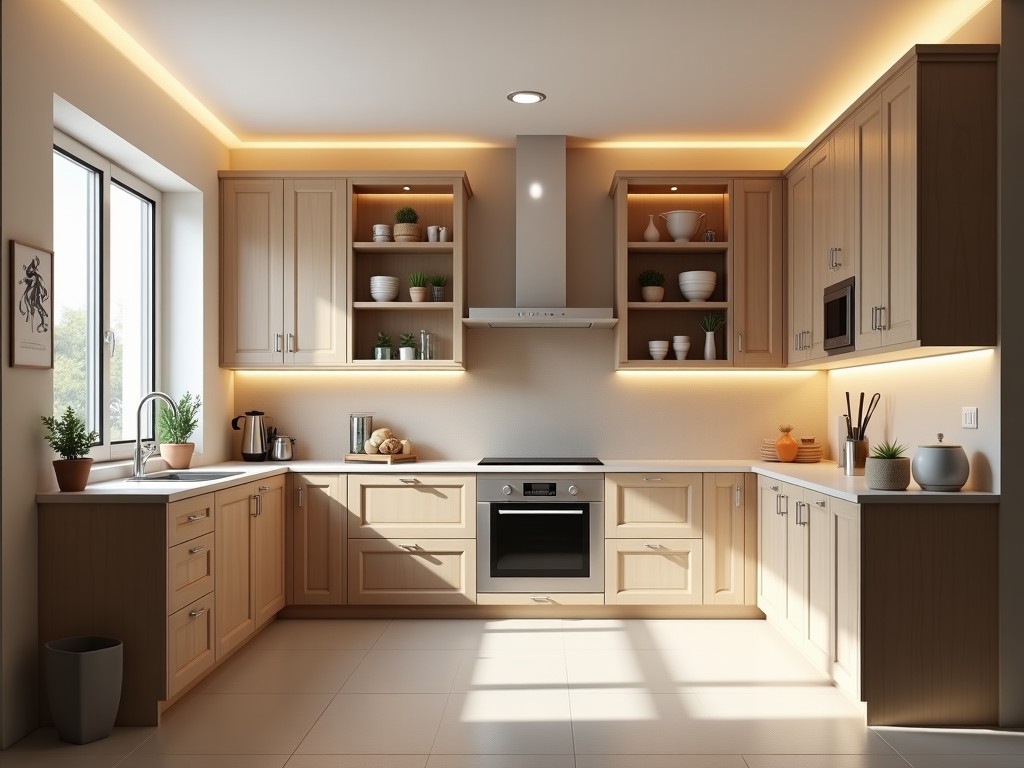
China Kitchen Cabinet Manufacturer
Selecting a kitchen cabinet manufacturer requires understanding material behavior, dimensional stability, and production scalability. This page explains the technical considerations for sourcing
- Category:
- Kitchen Cabinet
China Kitchen Cabinet Manufacturer: Technical Overview for Industrial Buyers
Selecting a kitchen cabinet manufacturer requires understanding material behavior, dimensional stability, and production scalability. This page explains the technical considerations for sourcing cabinets from Chinese manufacturers, focusing on engineering specifications rather than promotional claims.
Industrial buyers prioritize traceable material properties, repeatable manufacturing tolerances, and documented quality processes. The following sections detail these aspects to support informed procurement decisions.
Material Selection and Substrate Performance
Cabinet carcasses commonly use particleboard, MDF, or plywood substrates, each with distinct mechanical properties. Particleboard density typically ranges from 600–800 kg/m³, affecting screw withdrawal resistance and edge holding capacity. MDF offers uniform density (700–800 kg/m³) but lower moisture resistance unless treated with melamine or PVC laminates.
Plywood carcasses, constructed from cross-laminated veneers, provide superior dimensional stability in humid environments due to alternating grain layers. Bonding adhesives (e.g., E1 or E0 urea-formaldehyde) influence off-gassing levels and long-term durability, particularly in enclosed kitchen spaces.
Surface Finishes and Wear Resistance
Laminate finishes (HPL, CPL, or PVC foil) determine surface abrasion resistance, measured by Taber wear cycles. HPL typically withstands 300–600 cycles before visible wear, suitable for high-traffic commercial kitchens. PVC foils offer seamless edges but may delaminate under prolonged heat exposure (>60°C).
UV-cured coatings provide hardness ratings of 2H–4H on the pencil scale, resisting micro-scratches during cleaning. Edge banding thickness (0.4–2.0 mm) and adhesive type (hot-melt EVA or PUR) impact edge integrity, with PUR bonds maintaining strength after steam cycling tests.
Dimensional Tolerances and Assembly Precision
Cabinet squareness is critical for alignment during installation. Tolerances for diagonal deviation typically measure <2 mm per meter, verified via laser measurement systems. Hinge bore spacing accuracy (±0.5 mm) ensures consistent door gap alignment across production batches.
Drawer slide mounting holes require positional accuracy of ±0.3 mm to prevent binding or sagging under load. CNC drilling and routing systems achieve repeatability within these ranges, reducing field adjustment time during installation.
Hardware Integration and Load Performance
Soft-close hinges are rated for cycle life (e.g., 50,000–100,000 operations) and torque resistance. Door weight capacity depends on hinge quantity and placement; for example, two hinges support doors up to 24 kg when mounted at 1/4 and 3/4 height.
Drawer load ratings (static/dynamic) are tested per ANSI/KCMA standards. Side-mount slides typically rated for 30–50 kg dynamic load, while undermount slides may exceed 65 kg with reinforced brackets. Screw pull-out values in substrate materials (e.g., >800 N in 18mm particleboard) inform fastener selection.
Quality Control and Inspection Protocols
Incoming material inspection includes moisture content testing (target: 8–12% for wood substrates) and formaldehyde emission verification (EN 717-1 or CARB Phase 2). Dimensional checks occur at multiple stages: panel cutting, edge banding, and final assembly.
Functional testing involves door alignment verification, slide operation smoothness (measured in mm of travel deviation), and load cycling. AQL 2.5 sampling standards are commonly applied for visual and mechanical defects, with 100% inspection for critical dimensions like hinge bore locations.
Customization and Engineering Support
Custom dimensions require clear specification of carcass thickness, overlay type (full, half, inset), and reveal gaps. Manufacturers typically accommodate non-standard widths in 1mm increments, though minimum order quantities may apply for unique tooling (e.g., custom door profiles).
Engineering support includes DXF/DWG file validation for CNC nesting optimization, reducing material waste. BOM generation accounts for hardware compatibility (e.g., hinge cup depth matching blind bore depth) to prevent assembly interference.
Packaging and Logistics Considerations
Flat-pack designs reduce shipping volume by 60–70% compared to assembled units. Corner protectors (expanded polystyrene or cardboard) and edge guards mitigate impact damage during transit. Internal stabilization uses horizontal straps and vertical dividers to prevent panel shifting.
Export packaging complies with ISPM 15 for wood pallets (heat-treated or fumigated). Moisture barrier layers (PE film) prevent condensation damage during sea freight. Labeling includes SKU, batch number, and handling instructions (e.g., "Keep Dry," "This Side Up").
Typical Specifications Table
| Parameter | Typical Range / Value | Notes |
|---|---|---|
| Carcass Thickness | 16–19 mm | Particleboard, MDF, or plywood |
| Door Thickness | 18–22 mm | Includes substrate and finish |
| Screw Withdrawal (Face) | >800 N | 18mm particleboard, #8 screw |
| Hinge Bore Spacing Tolerance | ±0.5 mm | Measured center-to-center |
| Drawer Dynamic Load | 30–65 kg | Depends on slide type and reinforcement |
| Formaldehyde Emission | ≤0.1 mg/m³ | CARB Phase 2 / E0 equivalent |
For technical inquiries, material data sheets, or to discuss project-specific tolerances and finishes, contact our engineering team.
Request Technical Specification


