Built In Wine Cabinet Factory
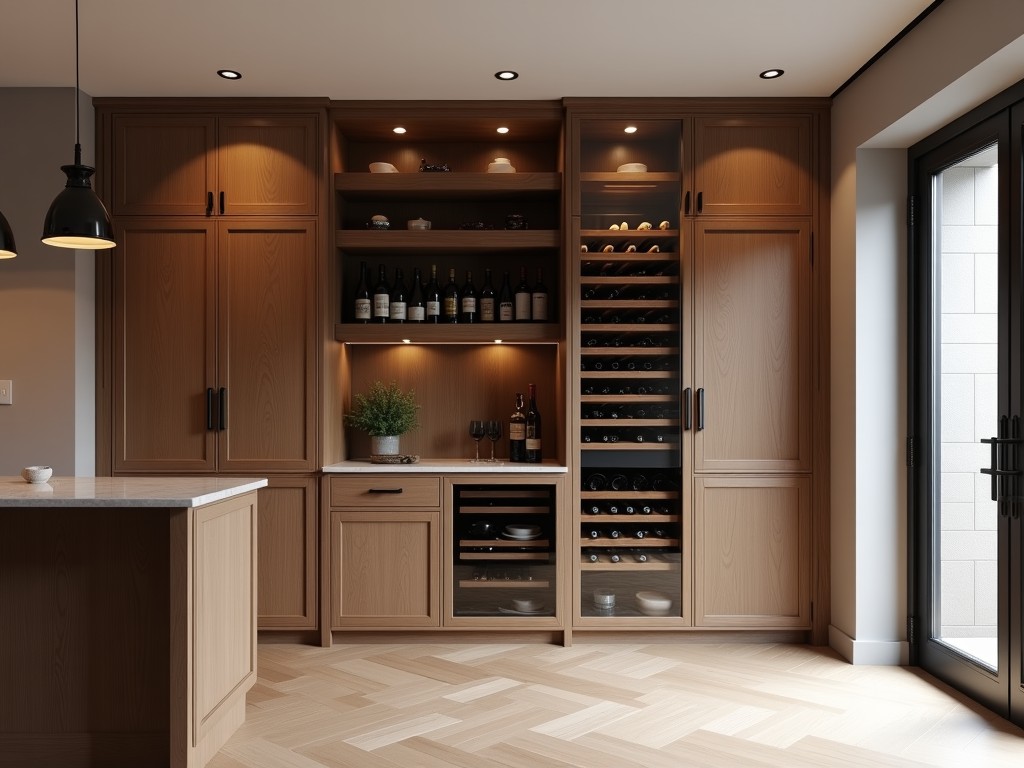
Built In Wine Cabinet Factory
A built-in wine cabinet factory specializes in the design and production of wine storage units intended for seamless integration into cabinetry, walls, or architectural niches. These units differ
- Category:
- Kitchen Cabinet
Built-In Wine Cabinet Factory
A built-in wine cabinet factory specializes in the design and production of wine storage units intended for seamless integration into cabinetry, walls, or architectural niches. These units differ from freestanding models in their structural integration requirements, thermal load management, and interface with surrounding building materials. The factory’s role is to engineer cabinets that maintain precise temperature and humidity control while adapting to variable installation environments.
Core Engineering Considerations
Temperature stability is the primary performance metric, requiring cooling systems capable of maintaining 10–18°C (±1°C) despite fluctuating ambient conditions. Humidity control must sustain 50–70% RH to prevent cork desiccation or label degradation, achieved through integrated humidification or passive moisture buffering. Vibration isolation is critical; compressors and fans are mounted on elastomeric isolators to limit transmission to <0.5µm RMS, protecting sediment in aged wines.
Thermal bridging at the cabinet interface with surrounding walls or countertops can compromise efficiency. Factories address this by specifying thermal break materials—such as expanded polystyrene or phenolic foam—between the cabinet chassis and building structure. Door seals use multi-durometer gaskets (typically EPDM or silicone) compressed to 15–25% deflection to achieve air leakage rates below 0.5 m³/h at 50 Pa pressure differential.
Electrical load planning must account for both steady-state operation and defrost cycles. Typical power draw ranges from 80–150W during stable conditions, peaking at 300–400W during defrost. Factories provide detailed electrical schematics and recommend dedicated circuits with surge protection to prevent compressor cycling faults.
Structural and Material Specifications
Cabinet chassis are predominantly constructed from 0.8–1.2mm galvanized steel or stainless steel (Grade 304) for corrosion resistance and dimensional stability. Interior linings use food-grade, odor-neutral materials such as ABS plastic or powder-coated aluminum, selected for non-reactivity with wine vapors and ease of cleaning. Shelving is typically hardwood (e.g., beech or mahogany) or stainless steel, designed to hold 750ml bottles at 15–20kg per shelf without deflection.
Insulation thickness ranges from 50–100mm depending on target climate class (SN, N, ST, T per IEC 62552). Polyurethane foam is common due to its low thermal conductivity (0.022–0.028 W/m·K), but vacuum insulation panels (VIPs) are used in high-end models to reduce thickness while maintaining equivalent R-values. Door assemblies incorporate double or triple glazing with low-emissivity coatings and argon gas fills to minimize radiant heat transfer.
Condensate management is essential in humid environments. Factories integrate gravity-fed drain lines or evaporative pans with heated elements to prevent overflow. Drain lines are sloped at minimum 2% and routed to accessible maintenance points, with anti-microbial additives in drain trays to inhibit biofilm formation.
Customization and Integration Logic
Built-in units are customized based on three primary variables: installation depth, ventilation requirements, and door overlay type. Depth is constrained by wall stud spacing or counter overhang, typically ranging from 550–650mm for standard applications. Ventilation clearance—critical for condenser airflow—is specified as 50mm at the top and 20mm at the sides unless a front-venting system is used.
Door overlay options include full overlay, inset, or frameless, dictating hinge type and cabinet frame compatibility. Full overlay doors conceal the cabinet frame entirely, requiring concealed hinges with 95°–110° opening angles. Inset doors sit flush within the frame, demanding precise machining tolerances (±0.5mm) to avoid binding. Factories provide CNC-cut templates and mounting brackets to ensure alignment with surrounding millwork.
Control interfaces are adapted to user preferences: touchscreen panels, mechanical dials, or smart home integration via Modbus or Zigbee. Sensor placement—critical for accurate readings—is validated during factory acceptance testing, with temperature probes located in the air return path and humidity sensors away from direct humidifier output.
Quality Control and Testing Protocol
Each unit undergoes a 72-hour pull-down test to verify cooling performance from 32°C ambient to 12°C setpoint. Temperature uniformity is mapped using 9-point sensor arrays (per ASHRAE 72), with acceptable variance ≤1.5°C across the storage volume. Humidity recovery time after door opening (simulated 30-second exposure) must return to setpoint within 15 minutes.
Door seal integrity is tested via pressure decay method, measuring leakage rate over 5 minutes at 100 Pa differential. Units exceeding 1.0 m³/h are rejected. Vibration testing uses accelerometers mounted on shelving brackets; peak acceleration must remain below 0.02g in the 5–500Hz range to meet wine storage standards.
Final inspection includes visual checks for finish uniformity, alignment gaps (<1.0mm), and functional verification of lighting, alarms, and door switches. All test data is retained for traceability, with serial numbers linked to calibration records of test equipment.
Typical Specifications Table
| Parameter | Typical Range | Notes |
|---|---|---|
| Temperature Range | 5–20°C | Adjustable in 0.5°C increments |
| Humidity Range | 30–80% RH | Passive or active humidification |
| Power Consumption (Stable) | 80–150W | Varies with insulation and ambient |
| Insulation Thickness | 50–100mm | PU foam or VIP options |
| Door Seal Leakage | <0.5 m³/h | At 50 Pa differential |
| Vibration Limit | <0.5µm RMS | Measured at shelf |
| Electrical Supply | 100–240V AC, 50/60Hz | Dedicated circuit recommended |
Applications in Commercial and Residential Settings
In residential installations, built-in wine cabinets are integrated into kitchen islands, pantry walls, or dining room alcoves, where aesthetic continuity with cabinetry is essential. The factory’s ability to match door panels, finishes, and handle profiles to surrounding millwork reduces visual disruption and supports cohesive interior design. These units are particularly valuable in open-plan layouts where freestanding appliances would disrupt sightlines.
In commercial environments—such as restaurants, hotels, or retail wine shops—built-in cabinets enable high-density storage under counters or within service walls, optimizing floor space for customer interaction. Front-venting models eliminate the need for rear clearance, allowing installation against back-of-house walls. Dual-zone configurations (separate temperature controls for red and white wine) are commonly requested, requiring independent evaporator circuits and dedicated control logic.
Marine and mobile applications (e.g., yachts, luxury RVs) present unique challenges: limited voltage stability, constant motion, and space constraints. Factories address these with DC-compatible compressors, reinforced mounting systems, and low-profile designs (<500mm height) that maintain performance despite 15° heel angles. Vibration specifications are tightened to <0.2µm RMS in these cases.
Ordering and Production Workflow
The procurement process begins with submission of installation drawings, including cutout dimensions, surrounding material specs, and electrical access points. Factories use this data to generate 3D models for interference checking, ensuring no collision with studs, pipes, or electrical conduits. Material selections—such as door finish, shelving type, and control location—are confirmed at this stage.
Lead time typically ranges from 4–8 weeks after design approval, depending on complexity and material availability. Standard finishes (e.g., white, black, stainless steel) are stocked; custom wood veneers or painted finishes may add 2–3 weeks. Prototypes are rarely required for standard configurations but are offered for novel integrations or high-volume OEM projects.
Packaging for shipment includes corner protectors, moisture barriers, and rigid outer crating designed to withstand forklift handling and transit vibration. Units are shipped upright with tilt indicators to detect improper handling. Installation manuals include detailed leveling procedures, as even 2° of tilt can affect door sealing and compressor lubrication.



