Antique Style Kitchen Cabinets
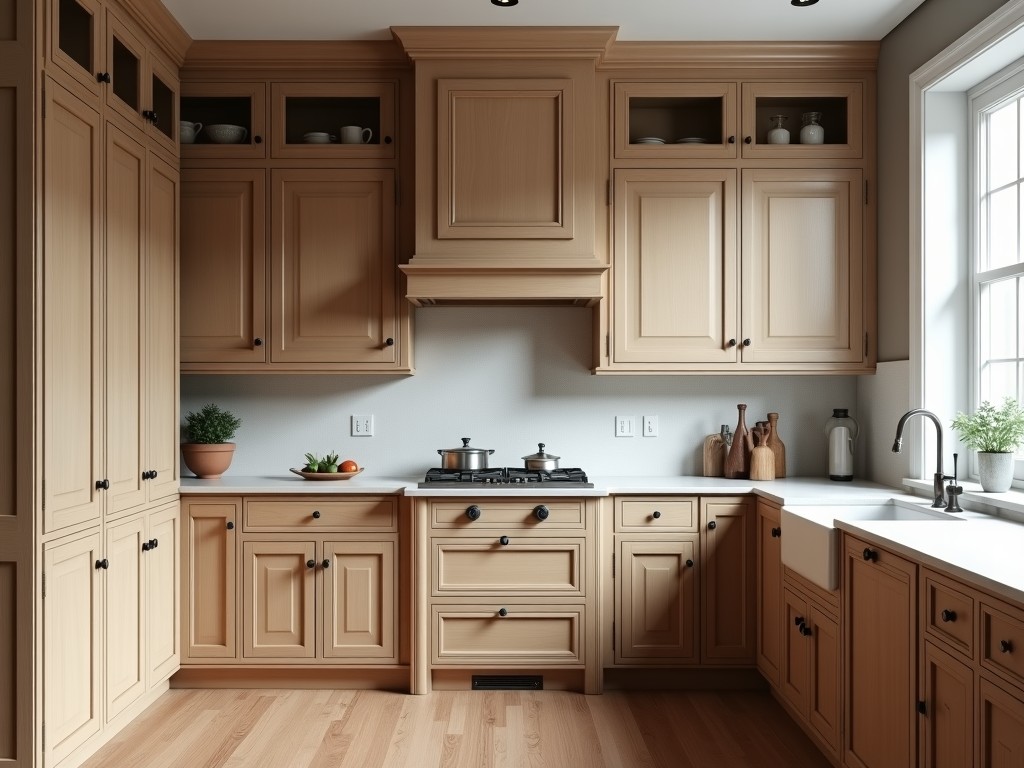
Antique Style Kitchen Cabinets
Antique style kitchen cabinets replicate historical woodworking aesthetics through modern industrial manufacturing processes. These units combine period-appropriate visual elements—such as raised
- Category:
- Kitchen Cabinet
Antique Style Kitchen Cabinets: Industrial Construction and Material Specifications
Antique style kitchen cabinets replicate historical woodworking aesthetics through modern industrial manufacturing processes. These units combine period-appropriate visual elements—such as raised panel doors, distressed finishes, and traditional joinery—with contemporary dimensional stability and production consistency. Industrial buyers specify these cabinets for renovation projects requiring authentic visual character without sacrificing modern performance standards.
Core Structural Materials and Dimensional Stability
Primary substrates utilize either solid hardwood (typically maple, oak, or cherry) or engineered wood composites with specific performance thresholds. Solid wood components undergo kiln-drying to 6-8% moisture content to minimize seasonal movement. Engineered options employ cross-banded plywood cores with void-free inner plies, meeting ANSI/HPVA HP-1 standards for face veneer bond strength (>135 psi). Frame-and-panel construction accommodates wood movement while maintaining square tolerances within ±1.5mm over 600mm spans.
Joinery Methods and Mechanical Fastening
Traditional mortise-and-tenon joints secure face frames, with tenon depths typically 1/3 of rail thickness and glue surfaces exceeding 300mm² per joint. Dowel reinforcement or mechanical fasteners (such as confirmat screws) may supplement joints in high-stress areas. Panel-to-frame connections use floating tongue-and-groove systems allowing 1.5mm expansion/contraction per 300mm width. Drawer boxes employ either dovetail joints (through or blind) or dowel-and-glue assemblies with bottom panels captured in 1/4" grooves.
Surface Preparation and Finishing Systems
Antique appearances result from multi-stage finishing protocols rather than inherent material properties. Processes include: hand-scraping or wire-brushing to simulate wear (depth 0.1-0.3mm), distressing via controlled impact tools, and glazing techniques where pigmented wiping stains accumulate in recesses. Topcoats utilize catalyzed conversion varnishes or water-based polyurethanes achieving 60-80 Gardner hardness and 200+ hour UV resistance (per ASTM G154). Film thickness averages 25-35 microns dry, measured via DFT gauges.
Hardware Integration and Functional Specifications
Period-appropriate hardware (hinges, pulls, latches) mounts via standardized industrial methods. Concealed European hinges offer 3-way adjustment (±1.5mm lateral, ±0.5mm depth, ±1.5mm height) with 110° opening angle. Drawer slides specify dynamic load ratings: 34kg (75lb) for side-mount, 45kg (100lb) for undermount soft-close systems. All hardware undergoes 50,000 cycle endurance testing per BHMA A156.9 standards. Back panels use 3mm hardboard or plywood fastened with staples or screws, providing racking resistance to 150Nm torque.
Quality Control and Dimensional Verification
Manufacturing incorporates statistical process control at critical stages: panel thickness tolerance ±0.2mm, door square verification via diagonal measurement (difference <1.5mm), and finish adhesion testing (ASTM D3359 Method B, minimum 4B rating). Random sampling checks glueline strength (>70% wood failure) and edge band bond integrity. Final inspection includes functional operation of all doors/drawers under load, gap uniformity assessment (target 1.5mm ±0.5mm reveal), and visual grading under 500 lux illumination.
Customization Parameters and Project Scalability
Industrial production accommodates variable project scales through modular design systems. Standard cabinet widths increment in 75mm steps (150mm to 900mm), heights in 50mm increments (300mm to 2250mm), and depths standardized at 580mm for base units, 350mm for wall units. Custom profiles accept non-standard dimensions with engineering review for structural integrity. Finish matching utilizes spectrophotometer readings (ΔE < 2.0) to ensure batch consistency across large orders. Lead times typically range 4-8 weeks depending on complexity and current capacity.
| Parameter | Typical Range | Industrial Standard |
|---|---|---|
| Door Panel Thickness | 18-22mm | ANSI/KCMA A161.1 |
| Frame Stile Width | 50-75mm | Project-specific |
| Glaze Retention in Profiles | 0.05-0.2mm film | Visual standard |
| Hinge Cup Diameter | 35mm | ISO 9122-1 |
| Drawer Bottom Groove Depth | 6-8mm | 1/4 panel thickness |
These specifications enable procurement teams to evaluate antique style cabinets against functional requirements rather than appearance alone. By defining measurable parameters—moisture content limits, joint strength thresholds, finish performance criteria, and dimensional tolerances—industrial buyers reduce uncertainty in long-term performance predictions. The combination of historical aesthetics with quantifiable engineering characteristics supports informed decision-making for projects where both visual authenticity and operational reliability are essential.
Technical Inquiry
For project-specific consultations regarding material selection, finish matching, or dimensional customization, contact our engineering team. Provide detailed requirements including intended environment, load expectations, and reference samples for accurate feasibility assessment.
Submit Technical Inquiry


