Wholesale Wooden Sliding Door
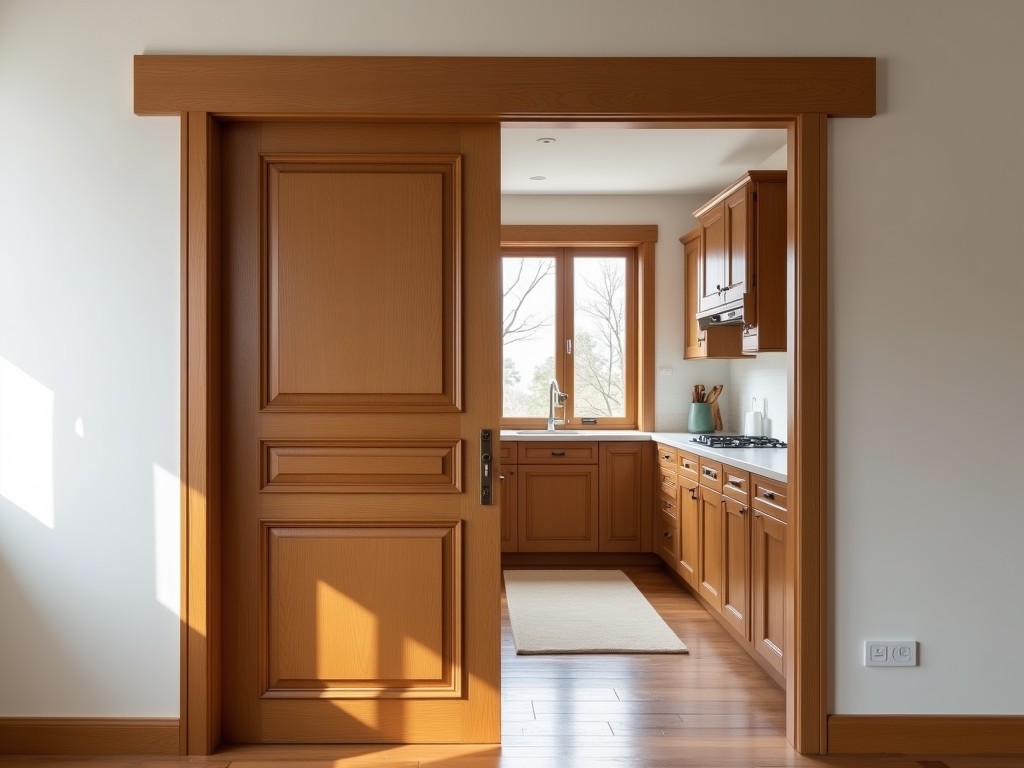
Wholesale Wooden Sliding Door
Wooden sliding doors for industrial and commercial applications require precise engineering to balance weight, dimensional stability, and operational smoothness. The core challenge lies in selecting
- Category:
- Interior Door
Wholesale Wooden Sliding Door
Wooden sliding doors for industrial and commercial applications require precise engineering to balance weight, dimensional stability, and operational smoothness. The core challenge lies in selecting wood species and construction methods that resist warping under varying humidity while maintaining sufficient rigidity for frequent use. Wholesale procurement demands standardized specifications that allow interchangeability across projects without compromising performance.
This page details the technical considerations for specifying wholesale wooden sliding doors, focusing on material behavior, hardware integration, and quality control parameters that directly impact lifecycle cost and installation success. Each section explains the rationale behind common specifications to support informed purchasing decisions.
Material Selection and Dimensional Stability
Hardwood species such as white oak, hard maple, and sapele are commonly selected for sliding door cores due to their specific gravity (0.60–0.75) and interlocked grain structure, which reduces tangential shrinkage. Softwoods like pine are generally avoided in high-cycle applications because their lower density (<0.50) leads to greater deflection under load and increased susceptibility to denting. Engineered wood cores—such as laminated veneer lumber (LVL) or finger-jointed stiles—provide enhanced stability by distributing grain orientation to counteract moisture-induced movement.
Surface veneers are typically 0.6mm thick rotary-cut or sliced hardwood, bonded with urea-formaldehyde or phenol-formaldehyde adhesives meeting E1 or CARB2 emissions standards. The core-to-veneer bond strength must exceed 1.0 MPa to prevent delamination under cyclic stress. For environments with relative humidity fluctuations exceeding 30%, a balanced construction with symmetrical veneer layers on both faces is essential to prevent bowing.
Hardware Systems and Load Distribution
Sliding door hardware must accommodate dynamic loads generated during acceleration and deceleration, not just static weight. A typical 100kg door imposes peak dynamic loads of up to 300kg on rollers and tracks during operation, necessitating hardware rated for at least 400kg dynamic capacity per set. Bottom-mounted roller systems are preferred for heavy doors (>80kg) as they transfer load directly to the floor structure, reducing header stress.
Track materials include extruded aluminum (6063-T5) or cold-rolled steel with zinc coating; steel tracks offer higher wear resistance but require regular lubrication to prevent corrosion-induced seizing. Roller bearings are typically sealed ball bearings (6202 or 6203 series) with nylon or steel wheels; nylon wheels reduce noise but have lower abrasion resistance compared to steel. Anti-jump blocks and floor guides are critical to prevent lateral displacement, especially in doors exceeding 2.4m in height.
Standard Specifications and Customization Parameters
Wholesale wooden sliding doors are commonly offered in predefined size ranges to streamline procurement, but dimensional flexibility remains essential for architectural integration. Standard heights typically span 2.0m to 2.4m in 50mm increments, while widths range from 0.8m to 1.2m per panel, with multi-panel configurations available for wider openings. Thickness options are usually 35mm, 40mm, or 45mm, directly influencing hardware compatibility and thermal performance.
Customization extends to veneer species, finish type (pre-finished UV coating, stain, or primer for field painting), and edge detailing (square, eased, or beveled). Hardware packages can be specified separately to match project-specific load requirements or aesthetic preferences. All custom dimensions must adhere to minimum stile and rail widths (typically 100mm) to maintain structural integrity, particularly in doors exceeding 2.2m in height.
| Parameter | Typical Range | Notes |
|---|---|---|
| Door Thickness | 35–45 mm | Increments of 5mm; affects hardware mortise depth |
| Panel Width (Single) | 800–1200 mm | Limited by stile width and hardware capacity |
| Panel Height | 2000–2400 mm | Height-to-width ratio should not exceed 3:1 for stability |
| Weight per Panel | 30–120 kg | Depends on species, thickness, and core type |
| Dynamic Load Rating (Hardware) | ≥400 kg per set | Required for 100kg doors to accommodate peak forces |
Quality Control and Testing Protocols
Incoming raw material inspection includes moisture content verification (target: 8–12% for interior use) using pin-type meters, with rejection thresholds set at >15% or <6% to prevent post-installation movement. Each batch undergoes dimensional stability testing: panels are conditioned at 50% RH for 72 hours, then measured for width and height change; acceptable variation is ≤0.5% per meter. Surface adhesion is tested via cross-hatch tape test (ASTM D3359), requiring ≥4B rating for veneer integrity.
Operational cycling tests simulate 25,000 open/close cycles (equivalent to 10 years of light commercial use) at 10 cycles per minute; doors must maintain smooth operation without binding, roller failure, or track deformation. Final inspection includes gap uniformity check (head, stile, and stile-to-stile gaps: 3±1mm) and diagonal measurement difference (<5mm) to confirm squareness. All test records are retained for traceability and linked to production lot numbers.
Packaging and Logistics Considerations
Wholesale shipments require packaging that protects against edge damage, surface abrasion, and moisture ingress during transit. Standard packaging includes polyethylene wrap (0.05mm thickness) followed by corner protectors (expanded polystyrene or molded pulp) and horizontal strapping. Doors are stacked flat on pallets with intermediate slip sheets (kraft paper or HDPE) to prevent surface marking; maximum stack height is typically 1.2m to avoid excessive bottom-layer pressure.
For export, additional moisture barrier layers (aluminum foil laminate) and desiccant packs are included based on destination climate. Pallets are secured with stretch wrap and corner boards, then labeled with handling instructions (e.g., “Keep Dry,” “Do Not Stack Flat”). Shock indicators may be applied upon request to monitor transit handling. All packaging materials are ISPM 15 compliant for international shipments.
For technical specifications, customization options, or quotation requests, please contact our engineering team.
Request Technical Consultation