Wholesale Interior Doors Bulk
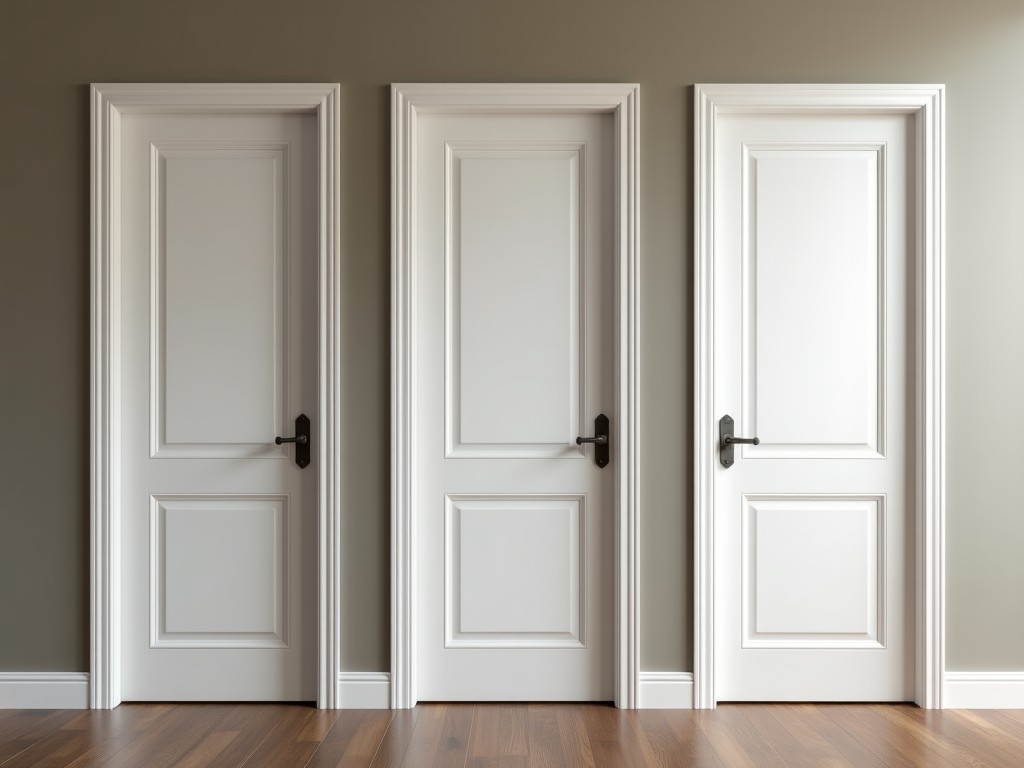
Wholesale Interior Doors Bulk
For commercial construction, multi-unit housing, and institutional projects requiring consistent door specifications at scale, bulk procurement of interior doors demands technical alignment between
- Category:
- Interior Door
Wholesale Interior Doors Bulk
For commercial construction, multi-unit housing, and institutional projects requiring consistent door specifications at scale, bulk procurement of interior doors demands technical alignment between design intent, material performance, and supply chain reliability. This page outlines the engineering considerations, material options, dimensional standards, and quality controls relevant to wholesale interior door procurement for B2B buyers. Each section explains functional requirements before addressing procurement logistics.
Interior doors in bulk orders are evaluated not by aesthetic finish alone, but by dimensional stability under varying humidity, resistance to impact and wear in high-traffic zones, fire rating compliance where required, and compatibility with standard frame systems. Procurement decisions hinge on traceable material properties, repeatable manufacturing tolerances, and documented testing protocols—not branding or superficial claims.
Core Material Options for Bulk Interior Doors
The structural and performance characteristics of interior doors begin with core material selection, which directly influences weight, sound transmission, fire resistance, and long-term dimensional stability. Three primary core types dominate bulk commercial applications: hollow metal, solid particleboard, and solid mineral core. Each serves distinct project requirements based on acoustic, safety, and load-bearing needs.
Hollow metal cores, typically formed from galvanized steel sheets with honeycomb or stiffener inserts, provide high impact resistance and are preferred in healthcare, corrections, and high-abuse environments. Solid particleboard cores offer balanced weight and cost efficiency for office and multi-family housing, with typical densities ranging from 450–650 kg/m³. Solid mineral cores, composed of calcium silicate or magnesium oxide blends, deliver superior fire resistance (up to 90-minute ratings) and sound attenuation (STC 30–35), making them suitable for stairwells, corridors, and demising walls in mixed-use buildings.
Core selection must align with local building codes (IBC, NFPA 80) and project-specific acoustic or fire separation requirements. Bulk orders benefit from material consistency—variations in core density or composition across units can compromise fire ratings or sound performance, leading to costly rework or rejection during inspection.
Standard Dimensions and Frame Compatibility
Dimensional accuracy is critical in bulk door procurement to ensure seamless installation with pre-hung frames, minimize field adjustments, and maintain fire seal integrity. Standard interior door sizes follow ANSI A250.8 and SDI-100 guidelines, with nominal widths increasing in 2-inch increments and heights typically fixed at 80 inches (2032 mm) for commercial applications.
Common nominal sizes include 24", 28", 30", 32", and 36" widths, all paired with 80" height. Actual door leaf dimensions are undersized by 1/8" in width and 1/4" in height to allow for clearance within the frame. For example, a nominal 32" x 80" door measures 31.75" x 79.5" actual size. Thickness options are predominantly 1-3/8" (35 mm) for residential-light commercial and 1-3/4" (44 mm) for full commercial compliance, the latter being required for fire-rated assemblies.
Frame compatibility depends on throat depth (typically 4-9/16" for 2x4 stud walls) and hinge preparation (4.5" x 4.5" or 5" x 4.5" mortise, three hinges per door for heights over 7'). Bulk orders should specify frame type (knock-down, welded, or seamless) and hardware prep standards (ANSI A115 Series) to avoid field mismatches. Tolerance control—typically ±1/16" for width/height and ±1/32" for squareness—is essential for maintaining interchangeability across large quantities.
Surface Finishes and Overlay Options
While bulk buyers prioritize structural consistency, surface finish affects both installation efficiency and long-term maintenance. Finishes are applied to the door stiles and rails after core assembly and must resist scratching, moisture absorption, and UV degradation in interior environments. Common overlay materials include high-pressure laminate (HPL), vinyl, primed MDF, and prefinished wood veneer.
HPL overlays, bonded under heat and pressure, offer superior abrasion resistance (ASTM D4060) and are ideal for high-traffic corridors in schools or hospitals. Vinyl overlays provide seamless, moisture-resistant surfaces suitable for humid environments like locker rooms or medical facilities, with weldable seams for infection control. Primed MDF surfaces allow for field painting to match specific color schedules, though they require careful handling to prevent edge chipping. Prefinished wood veneers provide aesthetic warmth but demand strict humidity control (40–60% RH) to prevent delamination or warping.
Finish selection should consider maintenance protocols, expected cleaning agents, and exposure to direct sunlight. Bulk orders benefit from finish uniformity—variations in gloss level, color hue, or texture across units can be visually disruptive in long corridors or open-plan spaces. Suppliers should provide finish batch codes and allow for sample approval before full production.
Fire Rating and Compliance Considerations
Fire-rated interior doors are not optional in many commercial applications—they are code-mandated life safety components. Bulk procurement of fire doors requires verification of third-party labeling (e.g., UL, Intertek, FM Approvals), not just manufacturer claims. The fire rating depends on the entire assembly: door leaf, frame, hardware, glazing (if any), and intumescent seals must all be compatible and listed together.
Common fire ratings for interior doors include 20-minute (1/3 hour), 45-minute (3/4 hour), 60-minute (1 hour), and 90-minute (1-1/2 hour) ratings, tested per NFPA 252 or UL 10C. A 90-minute mineral core door, for instance, typically uses a 54 mm thick solid core with intumescent strips that expand under heat to seal gaps. The frame must be fire-rated steel or labeled wood, and hinges must be ball-bearing or spring-type to maintain alignment during fire exposure.
Bulk buyers must request copy of the actual listing documentation for the specific door-frame-hardware combination being purchased. Field modifications (e.g., cutting for hardware, undercutting for airflow) can void fire ratings unless performed per manufacturer’s approved procedures. Label visibility—ensuring the permanent fire label remains unobstructed after installation—is a frequent inspection point and should be verified during submittal review.
Packaging and Logistics for Bulk Shipments
Protecting door finishes and edges during transit is as critical as manufacturing quality. Bulk shipments are susceptible to corner dents, surface scratches, and moisture absorption if not properly packaged. Standard packaging for commercial interior doors includes individual polyethylene wraps, corner protectors, and horizontal stacking on pallets with interstitial dunnage to prevent movement.
Each door is typically wrapped in 4–6 mil polyethylene film, with reinforced cardboard or plastic corner guards applied to all vertical edges. Pallets are sized to accommodate 10–20 doors depending on thickness and height, secured with plastic or steel strapping. For overseas shipments, additional moisture barrier layers and ISPM-15 compliant wood pallets are required. Interior doors should never be stored vertically or exposed to direct weather during transit or on-site staging.
Packaging specifications should be included in the purchase order to avoid disputes over damage claims. Buyers should specify acceptable defect thresholds (e.g., no more than 2% surface blemishes per batch) and require photographic documentation of packaging before shipment. Lead times for bulk orders typically range from 4–8 weeks, depending on core material availability, finish complexity, and fire rating certification timelines.
Quality Control and Inspection Protocols
Consistency across hundreds or thousands of units requires rigorous quality control at multiple stages: raw material inspection, core assembly, overlay bonding, hardware prep, and final audit. Bulk buyers should define acceptance criteria in the procurement contract, referencing measurable attributes rather than subjective judgments.
Critical inspection points include: dimensional verification (width, height, thickness, squareness) using calibrated gauges; core density testing via sampling (e.g., ASTM D1037 for particleboard); adhesion strength of overlays (ASTM D4541); fire label presence and legibility; and hardware hole alignment (within ±0.5 mm of template). Surface finish is assessed for gloss uniformity (ASTM D523), color delta-E (<2.0 batch-to-batch), and absence of blisters, bubbles, or pinholing.
Packaging integrity is verified pre-shipment: corner protector retention, wrap seal, and pallet stability. Suppliers should provide mill test reports for core materials, finish batch certificates, and third-party fire labeling documentation upon request. For fire-rated doors, a sample from each production batch may be subjected to repeat fire testing to ensure ongoing compliance—this is especially important for long-term supply contracts.
Typical Specifications Summary
| Parameter | Typical Range / Standard | Notes |
|---|---|---|
| Nominal Width | 24", 28", 30", 32", 36" | Actual size: nominal − 1/8" |
| Nominal Height | 80" (2032 mm) | Actual size: nominal − 1/4" |
| Thickness | 1-3/8" (35 mm) or 1-3/4" (44 mm) | 1-3/4" required for most fire ratings |
| Core Options | Hollow metal, particleboard, mineral | Selection based on acoustic, fire, abuse needs |
| Fire Rating | 20, 45, 60, 90 min (per assembly) | Requires labeled frame, hardware, seals |
| Overlay Materials | HPL, vinyl, primed MDF, wood veneer | Abrasion, moisture, and paint compatibility vary |
| Hinge Prep | 3 hinges; 4.5"x4.5" or 5"x4.5" mortise | Ball-bearing recommended for frequency >25 cycles/day |
| Packaging | Poly wrap, corner guards, palletized | Moisture barrier required for export |
*Values represent typical commercial standards. Actual specifications may vary based on project requirements, local codes, and manufacturer capabilities. Confirm all details during submittal review.
For project-specific inquiries regarding bulk interior door procurement—including custom dimensions, fire-rated assemblies, acoustic performance data, or packaging logistics—contact our technical sales team to discuss your requirements. Provide project specifications, schedule, and destination details for a detailed quotation and lead time assessment.