Tempered Glass Sliding Interior Door
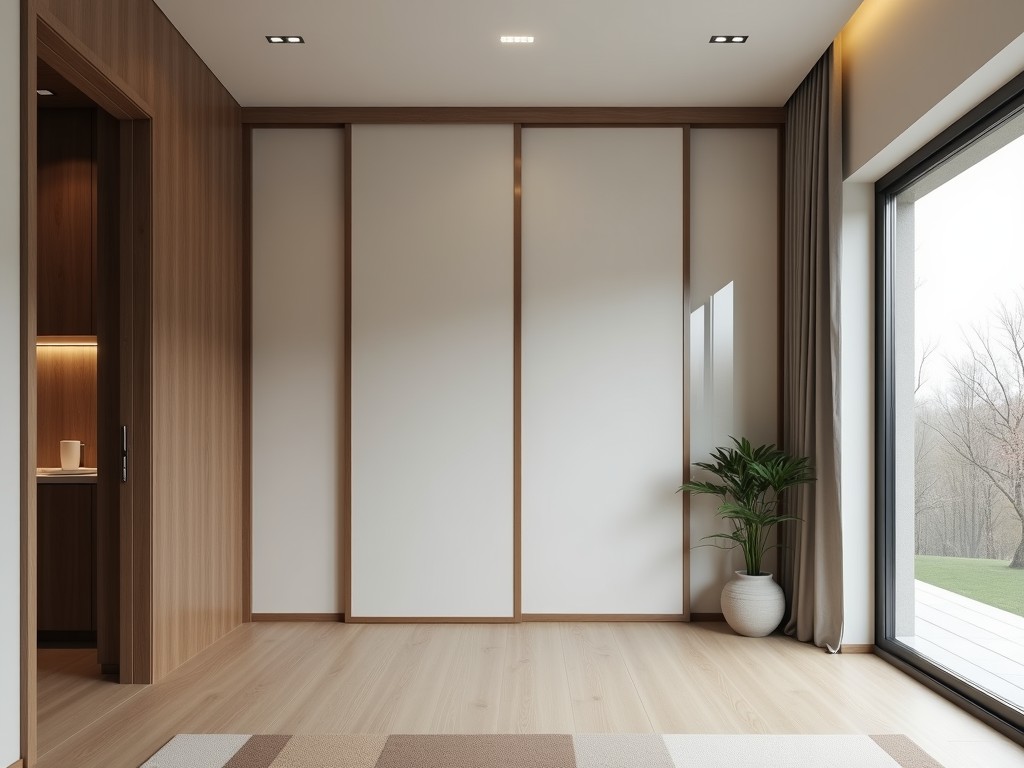
Tempered Glass Sliding Interior Door
Tempered glass sliding interior doors provide a durable, space-efficient solution for dividing interior spaces while maintaining visual openness and light transmission. The sliding mechanism
- Category:
- Interior Door
Tempered Glass Sliding Interior Door
Tempered glass sliding interior doors provide a durable, space-efficient solution for dividing interior spaces while maintaining visual openness and light transmission. The sliding mechanism eliminates the swing clearance required by hinged doors, making them ideal for corridors, conference rooms, healthcare facilities, and modular office layouts where floor space is constrained.
The glass undergoes thermal tempering to increase its mechanical strength and safety characteristics. When broken, tempered glass fractures into small, relatively harmless granules rather than sharp shards, reducing injury risk in high-traffic environments. This property is critical for applications involving frequent human interaction or potential impact.
Frame materials are selected based on structural requirements, corrosion resistance, and aesthetic compatibility with surrounding architecture. Common options include extruded aluminum alloys (6063-T5), stainless steel (304/316), and powder-coated steel, each offering distinct advantages in weight, durability, and finish consistency.
Hardware components—including rollers, guides, locks, and handles—are engineered for long-term performance under repeated cycling. Roller assemblies typically use sealed ball bearings or polymer bushings to minimize friction and wear, while track systems are precision-machined to ensure smooth, quiet operation over thousands of cycles.
Key Technical Specifications
| Parameter | Typical Value | Notes |
|---|---|---|
| Glass Thickness | 8 mm, 10 mm, 12 mm | Thicker glass increases rigidity and sound attenuation; 12 mm common for acoustic partitions |
| Maximum Panel Width | 1200 mm | Limited by glass weight and roller load capacity; wider spans require multiple panels or reinforced framing |
| Maximum Panel Height | 3000 mm | Height constrained by buckling resistance and track alignment tolerances |
| Frame Material | Extruded aluminum (6063-T5), stainless steel, powder-coated steel | Material choice affects weight, corrosion resistance, and finish options |
| Roller Type | Sealed ball bearing or nylon bushing | Ball bearing preferred for high-cycle applications; nylon for quieter operation in low-traffic zones |
| Surface Finish | Clear, frosted, tinted, laminated, patterned | Finishes affect light diffusion, privacy, and aesthetic integration; laminated options enhance safety and sound reduction |
Applications and Functional Benefits
In healthcare environments, tempered glass sliding doors support infection control protocols by minimizing touchpoints and allowing visual monitoring of patient areas without physical entry. The smooth, non-porous surfaces facilitate cleaning with standard disinfectants, and the lack of hinges eliminates crevices where contaminants can accumulate.
Open-plan offices use these doors to create flexible meeting zones that can be opened for collaboration or closed for focused work. The transparency maintains spatial awareness and daylight penetration, reducing reliance on artificial lighting while providing acoustic separation when needed—particularly when laminated or double-glazed configurations are specified.
Retail and hospitality installations leverage the minimal sightlines of slim aluminum frames to maximize product visibility and create seamless transitions between zones. The sliding mechanism allows for rapid reconfiguration during peak hours or events, adapting space usage without disrupting customer flow.
Educational institutions apply sliding glass doors in libraries, laboratories, and administrative areas to balance openness with noise control. The ability to fully retract doors into wall pockets enables complete space merging for large gatherings, while partial closure supports quiet study zones without sacrificing supervision lines of sight.
Customization Options
- Glass treatments: acid-etched, sandblasted, digital printing, switchable privacy (PDLC)
- Frame profiles: slim (25 mm), standard (40 mm), heavy-duty (50 mm+) for high-load applications
- Hardware finishes: brushed aluminum, black oxide, custom RAL powder coat
- Tracking systems: top-hung, bottom-rolling, or dual-track for synchronized multi-panel operation
- Accessories: soft-close mechanisms, floor locks, access control integration, panic hardware
Quality Control and Manufacturing Considerations
Tempering process parameters—heating temperature, soak time, and cooling rate—are precisely controlled to achieve uniform surface compression (>10,000 psi) and edge strength. Inadequate tempering can result in spontaneous breakage or insufficient impact resistance, so batch testing per ANSI Z97.1 or EN 12150 standards is standard practice.
Edge quality is critical; micro-cracks from improper cutting or grinding can propagate during tempering. Advanced CNC edging with diamond wheels and polishing ensures defect-free edges before thermal processing. Post-tempering, all edges are inspected for chips or inclusions that could compromise safety performance.
Frame fabrication involves precision cutting, milling, and welding (where applicable) to maintain dimensional tolerances within ±0.5 mm. Misalignment between frame and glass can induce stress concentrations, leading to premature failure. Dry-fit assemblies are performed before final glazing to verify squareness, parallelism, and smooth operation.
Hardware installation follows torque specifications to prevent over-compression of glass or frame deformation. Roller preload is adjusted to ensure even weight distribution across all wheels, preventing tracking issues or uneven wear. Final functional testing includes cycle tests (typically 5,000–10,000 operations), load verification, and air/water infiltration checks where applicable.
For project-specific configurations, including custom dimensions, glass types, hardware integration, or compliance with regional safety standards, contact our technical team to discuss requirements and obtain a detailed quotation.
Request Technical Consultation