Space Saving Sliding Glass Door Factory
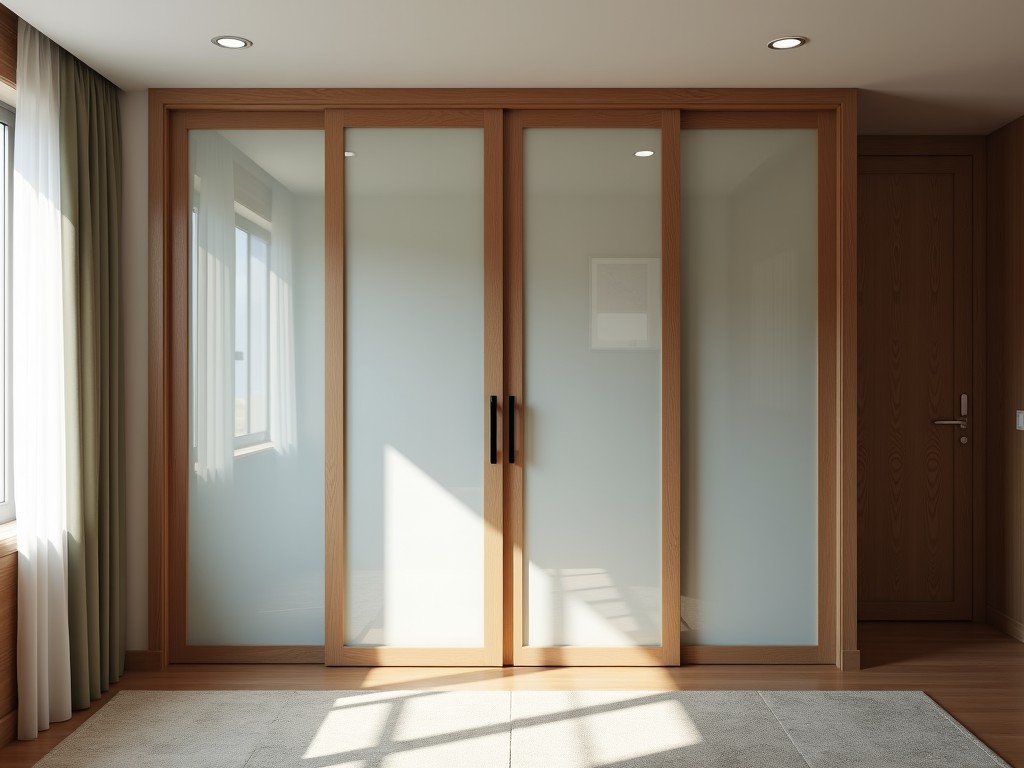
Space Saving Sliding Glass Door Factory
Industrial facilities increasingly require access solutions that minimize swing clearance while maintaining structural integrity and environmental control. Traditional hinged doors consume
- Category:
- Interior Door
Space Saving Sliding Glass Door Factory
Industrial facilities increasingly require access solutions that minimize swing clearance while maintaining structural integrity and environmental control. Traditional hinged doors consume significant operational space, particularly in high-traffic zones, cleanrooms, or equipment-intensive areas where every square meter impacts workflow efficiency. Sliding glass doors eliminate this footprint by moving horizontally along a track, freeing up to 50% more usable floor area compared to hinged alternatives of equivalent opening size.
The core mechanism relies on precision-engineered roller systems mounted within anodized aluminum headers, supporting tempered or laminated glass panels weighing up to 120 kg per leaf. Load distribution is critical—rollers must withstand both static weight and dynamic forces from frequent cycling, with typical designs incorporating dual-wheel bogies and anti-lift guides to prevent derailment under lateral loads. Header deflection is limited to L/300 under maximum specified load to ensure smooth operation over 20,000+ cycles without binding.
Glass selection directly affects safety, thermal performance, and visual clarity. Tempered glass (minimum 10mm thickness) provides impact resistance and shatters into small, relatively harmless fragments upon breakage. Laminated variants (typically 6mm+0.76mm PVB+6mm) offer enhanced security and sound attenuation, achieving STC ratings up to 35 dB depending on interlayer and glazing configuration. Low-iron glass options reduce green tint for improved light transmission (>91%), critical in laboratories or display environments where color accuracy matters.
Track systems are manufactured from extruded 6063-T5 aluminum with hard anodized coatings (minimum 15µm thickness) to resist wear and corrosion in humid or chemically exposed environments. Stainless steel (304 or 316 grade) alternatives are available for marine, food processing, or pharmaceutical applications where exposure to chlorides or cleaning agents necessitates higher corrosion resistance. Track straightness tolerances are held to ±0.5mm over 3-meter lengths to ensure consistent roller engagement and prevent premature wear.
Key Design Considerations for Industrial Applications
Industrial sliding glass doors must accommodate specific operational demands beyond basic movement. Factors such as pressure differentials in cleanrooms, thermal expansion in exterior installations, and impact resistance in logistics corridors influence hardware selection and framing details. For example, cleanroom installations often require compressed air purging channels within the frame to maintain positive pressure, while exterior doors in temperate climates may incorporate thermal breaks to reduce condensation risk.
Frame depth and glass edge clearance are tailored to application needs. Standard framing uses 45mm x 45mm aluminum sections, but deeper profiles (up to 65mm) accommodate thicker glazing or integrated blinds. Edge clearance between glass and frame typically ranges from 3mm to 6mm, balanced to allow thermal expansion while minimizing air infiltration. In high-cycle environments, self-lubricating roller bearings (often PTFE-based) reduce maintenance frequency compared to steel-on-steel systems requiring periodic greasing.
Automation compatibility is increasingly common in industrial settings. Doors can be integrated with motion sensors, access control systems, or PLC interfaces for hands-free operation. Motorized systems typically use 24V DC brushless motors with soft-start/soft-stop functionality to reduce mechanical stress, drawing less than 5A during operation. Manual override mechanisms remain standard for power failure scenarios, designed to engage within 2 seconds of activation.
Customization Options and Engineering Support
Factory production allows precise adaptation to project-specific constraints. Unlike standardized catalog products, industrial sliding glass doors are engineered to exact opening dimensions, load requirements, and environmental conditions. This includes non-standard angles (e.g., 135° corner configurations), variable panel widths for uneven openings, and integration with existing structural steel or concrete surrounds. Engineering review begins with detailed site measurements and load calculations to prevent field modifications.
Hardware finishes extend beyond standard anodizing to include powder coating in RAL colors for aesthetic matching or chemical resistance. Specialized coatings such as PVDF or ceramic-based treatments are available for UV stability in exterior applications or resistance to aggressive cleaning agents. All finishes undergo salt spray testing (ASTM B117) with typical results exceeding 500 hours for anodized and 1000 hours for high-end powder coats before visible degradation.
Glass processing includes edgework (seamed, polished, or beveled), hole drilling for handles or sensors, and notch cutting for frame integration. Tolerances for hole placement are maintained at ±0.5mm to ensure proper hardware alignment. Heat-soaking treatment is available upon request for tempered glass to reduce the risk of spontaneous breakage from nickel sulfide inclusions, particularly relevant in safety-critical installations.
Typical Specifications Table
| Parameter | Typical Range | Notes |
|---|---|---|
| Maximum Panel Weight | Up to 120 kg | Per leaf; higher with reinforced hardware |
| Glass Thickness | 8–19 mm | Tempered, laminated, or insulated units |
| Header Deflection Limit | L/300 | Under max load; ensures smooth operation |
| Track Straightness Tolerance | ±0.5 mm over 3m | Critical for roller engagement and wear |
| Cycle Life (Residential Equivalent) | >20,000 cycles | With maintenance; industrial duty may require more robust components |
| Sound Transmission Class (STC) | 25–35 dB | Dependent on glazing and sealing |
| Operating Temperature Range | -20°C to +60°C | Standard seals; extended ranges available |
Quality control begins at material intake, with mill certificates verified for aluminum extrusion and glass composition. In-process inspections include track straightness checks, roller torque validation, and glass edge quality assessment using 10x magnification. Final assembly undergoes functional testing—minimum 50 open/close cycles under load—followed by air and water spray testing (where applicable) to validate sealing performance. Documentation, including material certifications and test reports, is provided upon request.
Lead times vary based on complexity and current factory load. Standard configurations (single slide, tempered glass, anodized finish) typically require 3–4 weeks from approved drawing to shipment. Custom projects involving laminated glass, special finishes, or integrated automation may extend to 6–8 weeks. Expedited options are available for critical-path items, subject to production capacity and additional tooling or material sourcing constraints.
Packaging is designed for industrial handling and long-distance transport. Glass panels are separated by A-frame stillages with foam edge protection and secured with polyester strapping. Hardware kits are packed in labeled, corrosion-inhibiting bags with desiccants. Crates undergo ISPM 15 heat treatment for international shipping and include shock indicators to detect mishandling during transit. All shipments include detailed assembly drawings and maintenance guidelines.
For projects requiring precise integration, early engagement with the factory engineering team is recommended. Providing accurate opening dimensions, substrate details (e.g., concrete, steel framing), environmental conditions (temperature range, humidity, exposure to chemicals), and operational requirements (cycle frequency, automation needs, accessibility standards) enables accurate quoting and minimizes redesign risk. Site surveys or virtual consultations can be arranged to validate specifications before production begins.



