Oem Hidden Pocket Sliding Door
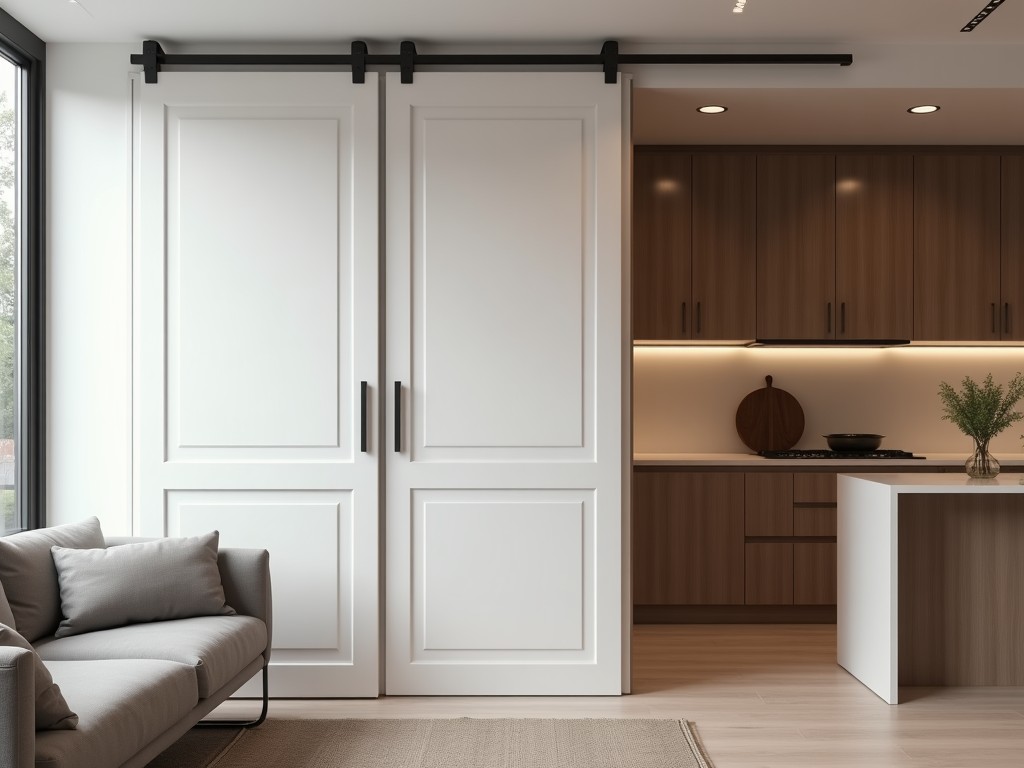
Oem Hidden Pocket Sliding Door
Hidden pocket sliding doors are engineered for applications where space efficiency and seamless integration are critical. Unlike surface-mounted or exposed-track systems, the door panel retracts
- Category:
- Interior Door
OEM Hidden Pocket Sliding Door
Hidden pocket sliding doors are engineered for applications where space efficiency and seamless integration are critical. Unlike surface-mounted or exposed-track systems, the door panel retracts fully within a concealed cavity in the wall, eliminating visual hardware and maximizing usable floor area. This configuration is particularly valuable in high-traffic industrial environments, medical facilities, cleanrooms, and modular office partitions where unobstructed access and minimal maintenance are priorities.
The system relies on precision-guided rollers operating within a protected upper track, with optional floor guides or bottom rollers depending on load requirements. Wall cavities must be structurally reinforced to support the door’s weight during operation and when fully retracted. Frame materials are selected based on environmental exposure, fire rating needs, and compatibility with surrounding wall assemblies such as gypsum, metal stud, or concrete masonry units.
Key Design Considerations
Load capacity is determined by roller bearing type, track material, and the number of support points per panel. Standard configurations support door weights up to 120 kg per panel, with heavy-duty variants capable of 200 kg using reinforced steel tracks and dual-wheel polymer-encased bearings. Lateral stability is maintained through anti-jump guides and optional floor channels that prevent panel swinging during operation.
Track alignment tolerance directly affects operational smoothness and long-term wear. Installation requires sub-floor and header leveling within ±1.5 mm over the door’s travel path to prevent binding or uneven wear. Seals and brushes integrated into the jamb reduce air infiltration and particle transmission, meeting ISO 14644-1 Class 6 requirements in controlled environments when properly specified.
Material and Finish Options
Door panels are commonly fabricated from cold-rolled steel, stainless steel (304 or 316 grade), aluminum extrusions, or high-pressure laminate over composite cores. Steel panels offer high impact resistance and are frequently powder-coated in RAL colors for corrosion protection. Stainless steel variants are selected for hygienic zones due to non-porous surfaces and resistance to cleaning agents. Aluminum provides a favorable strength-to-weight ratio for large-span applications where minimizing dead load is essential.
Surface finishes vary by material and environment. Powder coating provides uniform thickness (60–80 µm) and UV stability for interior/exterior use. Anodized aluminum finishes (Clear, Bronze, Black) offer enhanced abrasion resistance. For food processing or pharmaceutical areas, electropolished stainless steel (Ra < 0.4 µm) minimizes microbial retention. All finishes are tested for adhesion (ASTM D3359) and humidity resistance (ASTM D2247) prior to shipment.
Typical Specifications
| Parameter | Standard Range | Notes |
|---|---|---|
| Max Door Weight | Up to 200 kg | Dependent on roller and track configuration |
| Panel Thickness | 35–50 mm | Core-dependent; includes frame and facing |
| Clear Opening Height | 2000–2800 mm | Custom heights available upon engineering review |
| Track Material | Galvanized steel, stainless steel, or aluminum | Selected based on load and environmental factors |
| Seal Type | Pile brush, silicone bulb, or magnetic | Chosen per pressure differential and contamination control needs |
Applications in Industrial and Commercial Settings
In manufacturing plants, hidden pocket doors are used to segregate clean assembly zones from machining areas, allowing rapid changeover without sacrificing floor space. The absence of floor-mounted tracks prevents debris accumulation and reduces trip hazards in zones with automated guided vehicles (AGVs) or frequent material handling. Retraction into the wall also eliminates interference with overhead conveyors or ceiling-mounted equipment.
Healthcare facilities utilize these doors in patient corridors, imaging suites, and sterile processing departments where minimizing surface contact points supports infection control protocols. The smooth, crevice-free surface withstands repeated disinfection with hydrogen peroxide or quaternary ammonium compounds. Acoustic-rated variants with mineral wool cores and perimeter seals achieve STC ratings of 35–42, reducing noise transmission between adjacent spaces.
Modular office systems and laboratory complexes benefit from the door’s ability to create adaptable spaces without permanent structural changes. When retracted, the door leaves no visual trace, preserving sightlines and design continuity. Integration with access control systems, motion sensors, or automatic operators is facilitated by standard mounting points in the header and jamb, enabling retrofit or upgrade without modifying the core mechanism.
Customization and Integration
Customization begins with structural analysis of the host wall to determine required reinforcement, header depth, and cavity dimensions. Panel dimensions are tailored to clear opening requirements, with standard widths ranging from 700 mm to 1500 mm per leaf. Hardware selections — including soft-close dampers, electromagnetic holders, or manual pulls — are based on usage frequency, safety regulations, and user ergonomics.
Electrical conduits for low-voltage wiring (e.g., for access control or lighting) can be routed through the header or jamb channels during fabrication, avoiding post-installation chasing. Fire-rated versions incorporate intumescent seals and mineral wool cores to maintain integrity for 30, 60, or 90 minutes per ASTM E2072 or EN 1634-1. All custom designs undergo manufacturability review to ensure compatibility with standard tooling and assembly processes.
Surface preparations such as primer-only finishes allow for on-site painting to match adjacent walls, while pre-finished options reduce field labor. Hardware locations are templated to prevent misalignment during installation. For OEM integration, detailed BIM models, installation manuals, and load calculation sheets are provided upon request to support early-stage design coordination.
To discuss your specific requirements for an OEM hidden pocket sliding door — including load conditions, environmental factors, or integration with existing systems — please reach out to our technical team. Provide your project dimensions, wall construction details, and operational expectations for a preliminary assessment and quotation.
Submit Inquiry


