Oem Aluminum Sliding Glass Door
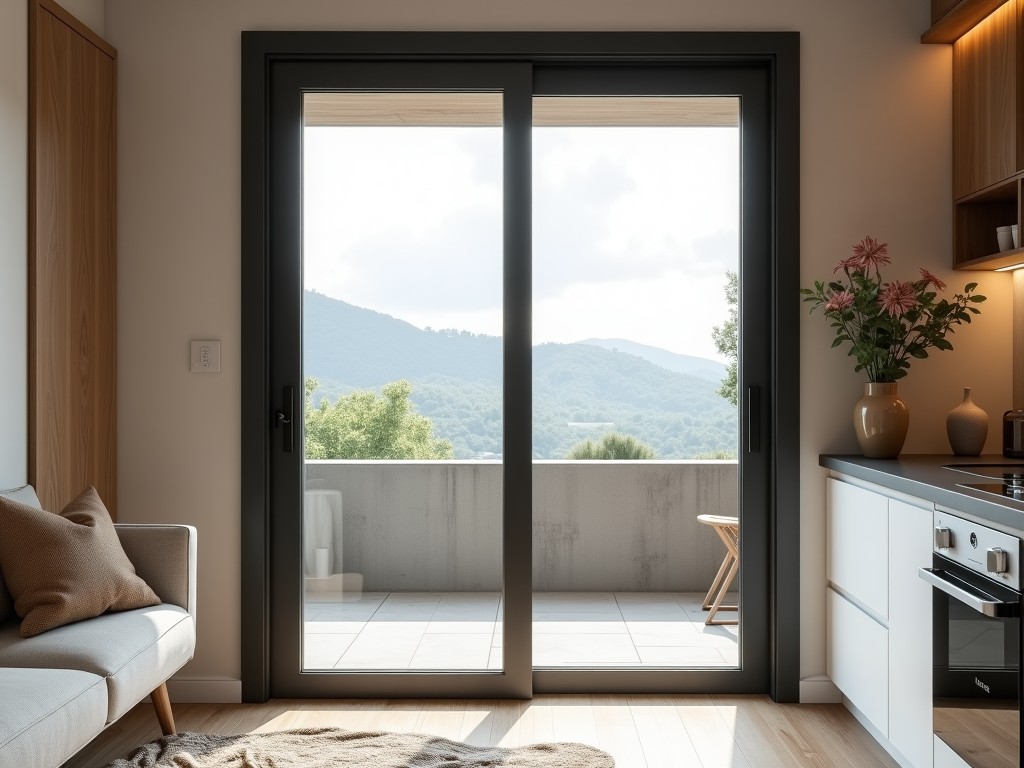
Oem Aluminum Sliding Glass Door
OEM aluminum sliding glass doors are engineered for industrial and commercial applications where precision fit, structural integrity, and long-term operational reliability are critical. These systems
- Category:
- Interior Door
OEM Aluminum Sliding Glass Door
OEM aluminum sliding glass doors are engineered for industrial and commercial applications where precision fit, structural integrity, and long-term operational reliability are critical. These systems combine thermally broken aluminum profiles with high-performance glazing to deliver smooth sliding action, weather resistance, and dimensional stability under varying load conditions. Unlike standard retail units, OEM variants are manufactured to exact project specifications, allowing seamless integration into curtain wall systems, factory entrances, transportation hubs, and modular building assemblies. The primary value lies in reducing field adjustment time, minimizing air and water infiltration risks, and ensuring compatibility with automated building management systems. Each unit is produced under controlled factory conditions to maintain tight tolerances across all mating surfaces.
Core Structural Design
The door frame utilizes extruded 6063-T5 aluminum alloy with a minimum wall thickness of 1.4mm for stiles and 1.8mm for rails, providing sufficient rigidity to resist deflection under wind loads up to 2400 Pa. Thermal break technology employs polyamide strips with a thermal conductivity of ≤0.25 W/m·K, reducing heat transfer between interior and exterior profiles by up to 65% compared to solid aluminum. Rollers are manufactured from reinforced nylon or stainless steel with sealed ball bearings rated for 100,000+ cycles, ensuring consistent operation even in high-traffic environments. The interlocking meeting stile design includes dual-row wool pile weatherstripping with a compression set of <5% after 500 hours at 70°C, maintaining effective sealing over extended service life.
Glazing Options and Performance
Glazing configurations are selected based on project-specific requirements for thermal performance, acoustic attenuation, and safety compliance. Standard options include double-glazed units with low-emissivity (low-E) coatings and argon gas fill, achieving U-factors as low as 1.2 W/m²·K and SHGC values between 0.25 and 0.40 depending on coating type. For sound-sensitive environments, laminated glass with PVB interlayers (0.76mm or 1.52mm) provides STC ratings up to 38 dB. All glazing is factory-sealed using butyl primary and polysulfide secondary sealants to ensure long-term moisture resistance. Impact-resistant variants meet ASTM E1886/E1996 standards for hurricane-prone regions, incorporating tempered or heat-strengthened glass layers.
Customization and Integration
OEM production allows full customization of frame dimensions, panel configurations, hardware placement, and surface finishes to match architectural specifications. Common configurations include 2-panel, 3-panel, and 4-panel sliding systems with optional fixed sidelites or transoms. Frame depths range from 50mm to 100mm to accommodate varying wall thicknesses and insulation layers. Surface treatments consist of powder coating (60-80 micron thickness), anodizing (15-25 micron), or PVDF fluoropolymer coating for enhanced UV resistance in exposed environments. Hardware options include multi-point locking systems, flush pulls, and concealed overhead or floor-guided tracks, all selected based on operational frequency and security requirements.
Quality Control and Testing
Each unit undergoes factory testing to verify performance against AAMA/WDMA/CSA 101/I.S.2/A440 standards. Air infiltration is measured at 75 Pa pressure differential, with acceptable leakage rates below 0.3 L/s·m² for fixed systems and 1.5 L/s·m² for operable units. Water resistance testing follows ASTM E547, applying pressure equivalent to 150 mm/hr rainfall rate without leakage. Structural integrity is validated through uniform load testing at 150% of design pressure, ensuring no permanent deformation or hardware failure. Finish adhesion is assessed via ASTM D3359 tape test, requiring minimum 4B rating for powder-coated surfaces. All test results are documented and available upon request for project approval processes.
Typical Applications
These doors are specified in environments where operational durability and environmental control directly impact safety, productivity, or regulatory compliance. In manufacturing facilities, they maintain pressure differentials in cleanrooms or prevent contaminant migration between zones. Transportation terminals use them to manage pedestrian flow while minimizing HVAC losses through frequent cycling. Data centers install them at equipment access points to preserve cooling efficiency without compromising security. Architectural projects in high-rise buildings leverage their slim sightlines and large panel capabilities to maximize daylight while meeting energy codes. The ability to integrate with access control systems and building automation makes them suitable for secure entries in government and research facilities.
| Parameter | Typical Range | Notes |
|---|---|---|
| Frame Depth | 50–100 mm | Customizable per wall assembly |
| Glass Thickness | 24–36 mm IGU | Laminated or tempered options |
| U-Factor | 1.2–2.8 W/m²·K | Dependent on glazing and thermal break |
| Air Infiltration | <0.3 L/s·m² (fixed) | Measured at 75 Pa |
| Cycle Life | 100,000+ operations | With sealed bearings |
| Finish Warranty | 10–20 years | Powder coating or PVDF |
Lead times for OEM aluminum sliding glass doors typically range from 4 to 6 weeks after approval of shop drawings, depending on complexity and finish selection. Samples of frame profiles, glazing units, and hardware components are available for evaluation prior to full production. Quotations require detailed specifications including rough opening dimensions, panel configuration, glazing type, finish color, hardware preferences, and any required certifications (e.g., NFRC, CE, ASTM). Packaging involves individual wrapping with corner protectors, placement in wooden crates or steel frames, and sealing with moisture-resistant film for export protection. Installation guidance is provided via annotated CAD drawings and step-by-step manuals to ensure proper alignment, shimming, and sealing during field assembly.
For technical consultation, custom quotation requests, or to discuss project-specific requirements for OEM aluminum sliding glass doors, please contact our engineering team.
Request Technical Specification Sheet


