Interior Door Manufacturer China
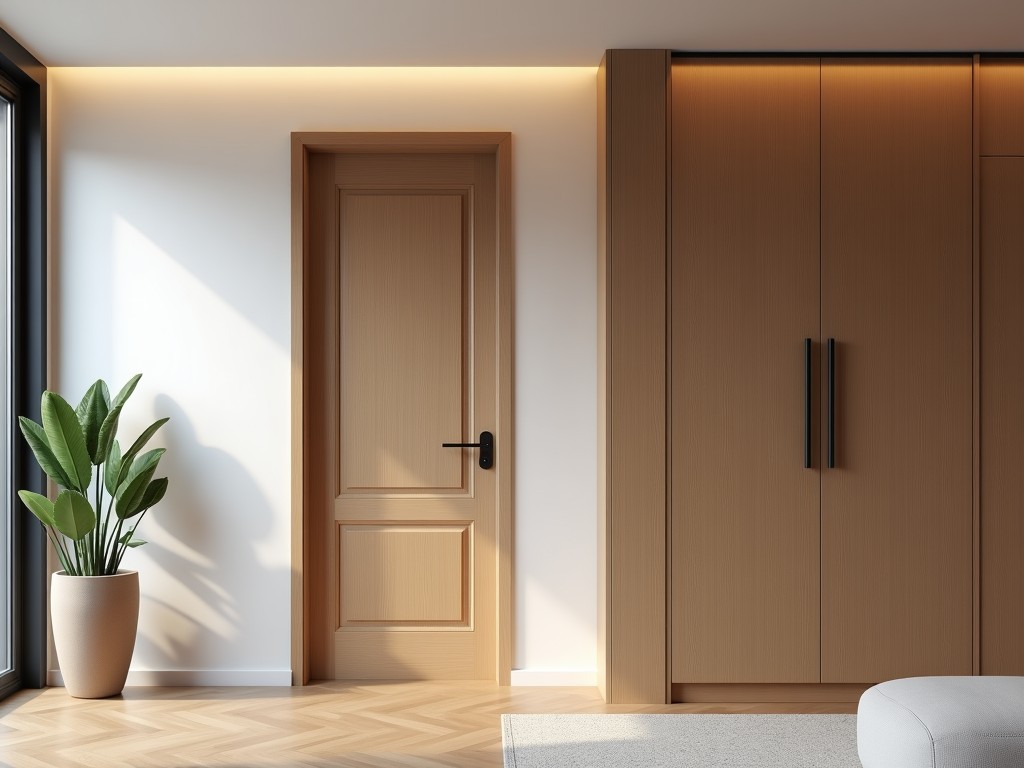
Interior Door Manufacturer China
For industrial buyers sourcing interior doors from Chinese manufacturers, understanding the technical parameters, material constraints, and production capabilities is essential to mitigate supply
- Category:
- Interior Door
Interior Door Manufacturer China: Technical Specifications and Industrial Applications
For industrial buyers sourcing interior doors from Chinese manufacturers, understanding the technical parameters, material constraints, and production capabilities is essential to mitigate supply chain risk and ensure long-term performance. This page details the engineering characteristics, manufacturing considerations, and application-specific factors that influence door selection in commercial, institutional, and light industrial environments.
Chinese interior door manufacturers serve global markets by producing standardized and custom door assemblies that meet regional building codes and performance standards. Selection should be based on measurable attributes such as core composition, edge bonding integrity, surface finish durability, and dimensional stability under varying humidity conditions—not on generic claims of quality or reliability.
Core Construction and Material Performance
The structural behavior of an interior door is primarily determined by its core material, which affects weight, fire resistance, acoustic attenuation, and screw-holding capacity. Common core types include particleboard, MDF, hollow honeycomb, and solid woodblock, each with distinct engineering trade-offs.
Particleboard cores offer cost efficiency and moderate screw retention but exhibit limited moisture resistance. MDF cores provide superior surface uniformity for painted finishes and consistent density, though they are heavier and more prone to edge swelling if not properly sealed. Hollow honeycomb cores reduce weight by up to 40% compared to solid cores, making them suitable for high-frequency operation in lightweight partitions, but require reinforced lock blocks and edge stiles to maintain rigidity. Solid woodblock cores deliver the highest screw-holding value (>1500 N) and impact resistance, ideal for high-traffic institutional doors, though they increase door weight and material cost.
Surface materials such as PVC foil, HPL, veneer, or painted finishes are bonded to the core using hot-press or cold-press methods. Bond strength is critical—delamination risk increases if adhesive curing temperature, pressure, or duration deviates from specifications. Buyers should request peel adhesion test data (ASTM D903) and cyclic humidity test results (per GB/T 17657) to evaluate long-term surface integrity.
Dimensional Tolerances and Frame Compatibility
Dimensional accuracy directly affects installation efficiency, operational smoothness, and long-term alignment. Industrial buyers must specify not only nominal dimensions but also allowable tolerances for width, height, thickness, and squareness to ensure compatibility with frames, hinges, and closing mechanisms.
Standard interior door thicknesses range from 35mm to 45mm, with 40mm being common for commercial applications. Width tolerances typically fall within ±1.5mm, height within ±2.0mm, and diagonal difference (squareness) should not exceed 3mm to prevent binding. Thickness variation across the door face must be ≤0.5mm to ensure uniform hinge loading and consistent clearance.
Frame compatibility depends on the door’s rebate depth and stile width. Manufacturers should provide detailed CAD profiles showing the relationship between door edge geometry and frame rebate. Buyers installing doors in fire-rated assemblies must verify that the door leaf, frame, and hardware collectively maintain the required fire resistance rating (e.g., 30-minute or 60-minute) as certified by an accredited laboratory.
Customization Options and Engineering Constraints
Customization extends beyond aesthetics to functional adaptations such as cutouts for glazing, louvers, or hardware integration. However, each modification introduces structural implications that must be evaluated during design.
Glazing cutouts require minimum stile and rail widths—typically 100mm for stiles and 150mm for bottom rails—to maintain structural integrity. Louver installations necessitate internal baffles or reinforced cores to prevent sagging. Hardware preparations (for locks, hinges, closers) must align with ANSI/BHMA standards; non-standard preparations increase installation complexity and risk of field failure.
Surface finish customization involves trade-offs: PVC foil offers moisture resistance and ease of cleaning but limited repair options; HPL provides high abrasion resistance (Taber wear index <80 mg/1000 cycles) but requires precision edge banding; veneer allows staining and refinishing but demands controlled humidity environments to prevent checking. Painted finishes require primer compatibility and topcoat flexibility to resist cracking under thermal cycling.
Quality Control and Inspection Protocols
Consistent quality in mass production depends on standardized inspection points throughout the manufacturing process. Buyers should understand which checks are performed and at what stage to assess supplier reliability.
Incoming material inspection includes core density verification (via gamma ray or contact probe), moisture content testing (target: 8–12% for wood-based cores), and adhesive solids content. During production, dimensional checks occur post-press and pre-sanding; surface defect detection uses standardized lighting (45° viewing angle, 500 lux) to identify scratches, stains, or print defects. Final inspection includes operation testing (50-cycle open/close), gap measurement around the perimeter, and hardware alignment verification.
Statistical process control (SPC) is applied to critical dimensions such as thickness and squareness. Buyers may request batch-level inspection reports or witness testing for high-value orders. For export shipments, packaging integrity is validated through drop testing (per ISTA 3A) and vibration simulation to ensure doors arrive without corner chipping or edge damage.
Typical Technical Specifications
| Parameter | Typical Value or Range | Notes |
|---|---|---|
| Core Type | Particleboard, MDF, Hollow Honeycomb, Solid Woodblock | Selected based on weight, cost, and performance requirements |
| Door Thickness | 35mm – 45mm | 40mm standard for commercial use |
| Width Tolerance | ±1.5mm | Ensures frame compatibility |
| Height Tolerance | ±2.0mm | Critical for floor clearance |
| Squareness (Diagonal Diff) | ≤3mm | Prevents binding and uneven gaps |
| Surface Bond Strength | ≥1.0 N/mm (peel adhesion) | Tested per ASTM D903 |
| Moisture Content (Core) | 8% – 12% | Prevents warping and dimensional change |
| Fire Rating (Optional) | 30-min, 60-min (with certified assembly) | Requires compatible frame and hardware |
| Weight (40mm MDF Core, 2100x900mm) | Approx. 28–32 kg | Varies with core and surface material |
Values represent typical production capabilities. Exact specifications are customizable according to project requirements and must be confirmed during quotation.
Applications in Industrial and Commercial Environments
Interior doors from Chinese manufacturers are specified in environments where durability, ease of maintenance, and code compliance are priorities. Selection is driven by functional demands rather than aesthetics alone.
In healthcare facilities, doors require non-porous surfaces (e.g., PVC foil or HPL) that withstand frequent cleaning with disinfectants and resist microbial growth. Acoustic performance (STC 30–35) is often required for patient rooms and examination areas, achievable through solid or filled cores and perimeter sealing systems.
Educational institutions prioritize impact resistance and vandalism deterrence. Solid woodblock or reinforced MDF cores with steel-stiffened stiles are used in high-abuse areas such as gymnasiums and corridors. Hardware preparations must accommodate heavy-duty hinges and anti-ligature locks where mandated.
In office and administrative buildings, dimensional stability and finish consistency are key for maintaining visual uniformity across large installations. Pre-finished HPL or painted doors reduce on-site labor. Fire-rated assemblies are common in stairwells and service corridors, requiring third-party certification of the complete door-leaf-frame-hardware system.
For technical inquiries, custom specifications, or to request material samples and test reports, contact our engineering team to discuss your project requirements.
Request Technical Consultation


