Aluminum Bi Folding Door
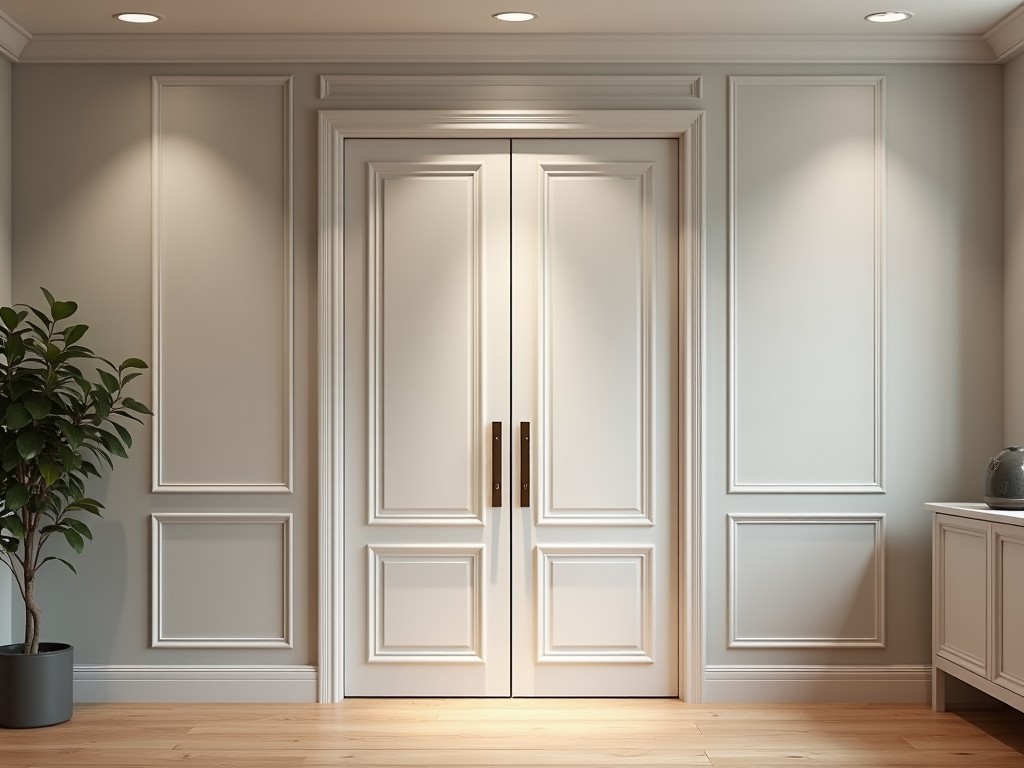
Aluminum Bi Folding Door
Aluminum bi folding doors are engineered for applications requiring large, unobstructed openings with minimal structural intrusion. The system operates through multiple interconnected panels that
- Category:
- Interior Door
Aluminum Bi Folding Door
Aluminum bi folding doors are engineered for applications requiring large, unobstructed openings with minimal structural intrusion. The system operates through multiple interconnected panels that fold and slide along top and bottom tracks, stacking compactly to one or both sides when opened. This configuration maximizes clear passage width while maintaining weather resistance and security integrity.
The door’s functionality relies on precision-engineered hinges, rollers, and locking mechanisms distributed across each panel. Load-bearing components are designed to handle repeated cycling and environmental exposure without deformation. Panel alignment is maintained through adjustable hardware, ensuring consistent sealing performance over the product’s service life.
Material selection focuses on aluminum alloys with specific temper conditions to balance strength, corrosion resistance, and fabricability. Commonly used alloys include 6063-T5 and 6061-T6, selected for their extrusion suitability and mechanical properties. Surface treatments such as anodizing or powder coating are applied to enhance durability and meet aesthetic requirements.
Technical Specifications
| Parameter | Typical Value | Notes |
|---|---|---|
| Frame Depth | 70 mm – 90 mm | Depends on panel weight and wind load requirements |
| Panel Thickness | 40 mm – 60 mm | Includes thermal break and glazing pocket |
| Max Panel Width | 1000 mm | Limited by hardware capacity and deflection criteria |
| Max Panel Height | 3000 mm | Subject to hinge and roller load ratings |
| Glazing Options | Single, double, or triple glazing | Glazing thickness up to 24 mm to meet thermal and acoustic performance |
| Operating Force | < 150 N | Measured at handle for smooth manual operation |
| Air Permeability | Class 4 (EN 12207) | Tested under differential pressure conditions |
| Water Tightness | Class 9A (EN 12208) | No water leakage under specified test pressure |
| Wind Load Resistance | Class C5/B5 (EN 12210) | Suitable for high-exposure installations |
Material and Finish Options
The structural integrity of aluminum bi folding doors begins with the alloy selection. 6063-T5 is frequently chosen for its excellent extrudability, smooth surface finish, and adequate mechanical strength for standard applications. For higher load demands or reduced deflection, 6061-T6 offers superior tensile strength and hardness, though it requires more precise extrusion controls.
Surface treatments are applied not only for appearance but also to enhance environmental resistance. Anodizing creates a durable, integral oxide layer that improves corrosion resistance and surface hardness, typically ranging from 15 to 25 microns in thickness. Powder coating provides a uniform, thick film that can be customized to specific RAL colors and offers strong UV stability, with typical film weights between 60 and 80 microns.
Thermal performance is addressed through polyamide thermal breaks inserted between interior and exterior aluminum profiles. These breaks reduce conductive heat transfer, contributing to improved U-values. The effectiveness of the thermal break depends on its material properties, geometry, and integration quality during assembly.
Hardware and Operational Components
The smooth and reliable operation of bi folding doors depends on specialized hardware engineered for cyclic loading and precise alignment. Top-hung systems are common, where the primary load is carried by rollers in the upper track, reducing wear on the bottom guide and minimizing debris accumulation. Bottom guides maintain lateral stability and prevent panel swinging during operation.
Hinges connect adjacent panels and must accommodate both folding motion and in-plane adjustments. Stainless steel hinges with self-lubricating bearings are used to resist corrosion and ensure consistent torque over thousands of cycles. Adjustability in hinges allows for compensation of building settlement or frame misalignment during installation.
Locking mechanisms are distributed across multiple points to enhance security and weather sealing. Shoot bolts engage into the head and sill, while central locks or multipoint systems secure the meeting stiles. Seals are typically made from EPDM or silicone rubber, compressed between panels and frame to achieve air and water tightness under pressure differentials.
Applications in Industrial and Commercial Settings
Aluminum bi folding doors are selected in environments where large, flexible openings improve operational efficiency. In logistics and warehousing facilities, they enable rapid loading and unloading by creating wide, unobstructed access points that can be fully retracted when not in use, reducing congestion at dock doors.
In manufacturing plants, these doors support flexible workspace configuration by allowing temporary expansion of production areas or segregation of zones during different processes. Their ability to open fully supports the movement of large equipment or material handling systems without requiring permanent structural modifications.
Commercial applications include showrooms, restaurants, and retail spaces where the seamless transition between indoor and outdoor areas enhances user experience. The slim sightlines and minimal frame intrusion preserve visual openness while maintaining performance standards for weather resistance and security.
Design and Customization Considerations
Panel configuration is determined by the required opening width, available stacking space, and operational preferences. Common layouts include 2-panel, 4-panel, or 6-panel systems, which can open to one side, both sides, or center-fold depending on site constraints. The number of panels directly affects the stacking depth when folded, which must be accommodated in the design.
Glazing selection influences thermal, acoustic, and safety performance. Double or triple glazing with low-emissivity coatings and inert gas fills improves thermal efficiency, while laminated or tempered glass enhances impact resistance and safety compliance. The choice of glazing must align with the door’s structural capacity and local building regulations.
Hardware finishes are selected to match or contrast with the frame, with options including brushed stainless steel, matte black, or custom colors. Threshold design is critical for accessibility and weather performance; low-threshold options comply with ADA requirements while maintaining effective drainage and sealing when paired with appropriate sill details.
Quality Control and Manufacturing Process
Manufacturing begins with precision cutting and machining of extruded aluminum profiles to exact tolerances. CNC equipment ensures consistent hole placement for hardware, drainage paths, and gasket channels. Each component undergoes dimensional verification before assembly to prevent cumulative tolerances that could affect operation or sealing.
Assembly involves the installation of thermal breaks, glazing gaskets, hardware, and seals under controlled conditions. Seal compression is verified using pressure-sensitive film or feeler gauges to ensure uniform contact without over-compression, which could degrade material performance or increase operating force.
Finished units undergo functional testing, including multiple opening and closing cycles, air and water ingress simulation, and load testing. Performance data is recorded and compared against design specifications. Only units meeting all criteria proceed to packaging, which includes corner protection, stretch wrapping, and crate stabilization for safe transport.
For project-specific configurations, load calculations, or detailed performance data, contact our technical team to discuss your requirements.
Request Technical Consultation


