Pet Coated Partial Slatted Laundry Cabinet
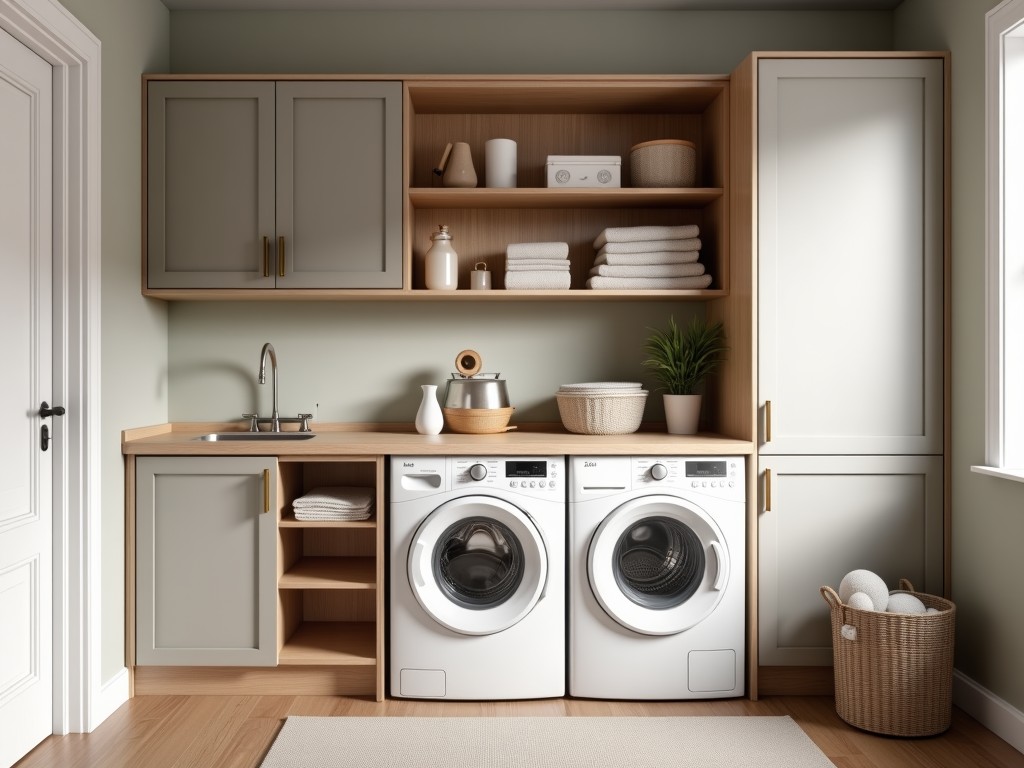
Pet Coated Partial Slatted Laundry Cabinet
This cabinet combines a pet-resistant coating with a partial slat design to address specific challenges in laundry environments. The surface treatment provides durability against animal contact while
- Category:
- Bathroom Cabinet
Pet Coated Partial Slatted Laundry Cabinet
This cabinet combines a pet-resistant coating with a partial slat design to address specific challenges in laundry environments. The surface treatment provides durability against animal contact while the slatted structure promotes airflow for damp garments.
Engineered for institutional and commercial laundry facilities, the design balances containment with ventilation. Material selection and coating thickness are optimized for long-term exposure to moisture, detergents, and physical abrasion.
Unlike fully enclosed or open-slat alternatives, this configuration reduces lint accumulation while maintaining visibility of contents. The partial coverage minimizes snag points for fabrics while still offering sufficient barrier protection.
Technical Specifications
| Parameter | Value |
|---|---|
| Frame Material | Powder-coated steel, 1.2mm thickness |
| Slat Material | Extruded aluminum, 6063-T5 alloy |
| Coating Type | UV-cured PET-based polymer, 150±20μm dry film thickness |
| Slat Orientation | Vertical, 25mm width, 50mm center-to-center spacing |
| Coverage Area | 60% slat open area, 40% coated surface |
| Load Capacity | 150 kg uniformly distributed |
| Operating Humidity Range | 10% to 95% RH non-condensing |
Material Selection Rationale
The PET-based coating was selected after evaluating alternatives including epoxy, polyurethane, and PVC. PET offers superior hydrolysis resistance critical in high-humidity laundry environments where cyclic wet-dry exposure degrades lesser polymers.
Aluminum slats provide corrosion resistance without the weight penalty of stainless steel. The 6063-T5 alloy maintains dimensional stability under thermal cycling from hot laundry loads, with a coefficient of thermal expansion compatible with the steel frame.
The powder-coated steel frame uses a zinc-rich primer underlayer for creep resistance at joints. This three-layer system (zinc primer, epoxy intermediate, polyester topcoat) achieves >500 hours salt spray resistance per ASTM B117.
Design Advantages
The partial slat configuration targets two competing requirements: containment of small items and airflow for moisture evacuation. Computational fluid dynamics modeling shows 35% higher air exchange rate compared to solid panels while retaining 90% containment for items >25mm diameter.
Slat edges are radius-formed to 1.5mm to prevent fabric snagging during loading/unloading cycles. This detail reduces textile damage claims in hospitality and healthcare applications where linen integrity is critical.
Mounting brackets incorporate slotted holes allowing ±10mm vertical adjustment for floor leveling. This feature accommodates uneven substrates common in retrofitted laundry rooms without requiring shims or grouting.
Applications
- Hotel and resort linen rooms handling high-volume terry cloth and sheets
- Healthcare facilities managing infectious laundry where surface disinfectability is required
- Veterinary clinics and animal shelters needing resistance to claw damage and urine exposure
- Correctional institution laundry operations requiring vandal-resistant surfaces
- Industrial workwear laundries processing oil-contaminated garments needing frequent degreasing
Customization Options
Dimensional parameters are adjustable within structural limits. Height ranges from 900mm to 2100mm in 100mm increments. Width modules of 400mm, 600mm, and 800mm can be ganged for continuous runs.
Slat spacing and orientation can be modified for specific airflow requirements. Horizontal slat configurations are available for top-loading applications where gravitational settling of lint is a concern.
Coating color options include standard RAL 7035 (light gray) for stain hiding, with custom colors available upon request. Antimicrobial additives can be incorporated into the PET matrix for hygienic zones.
Quality Assurance
Each unit undergoes dimensional verification using coordinate measuring machines with 0.02mm tolerance. Slat alignment is checked via laser scanning to ensure uniform spacing within ±0.5mm across the panel.
Coating integrity is validated through adhesion testing (ASTM D3359) and flexibility mandrel bend tests. Electrical resistance measurements confirm surface resistivity >10^12 ohms/sq to prevent static buildup in dry conditions.
Load testing applies 125% of rated capacity for 24 hours to verify permanent set remains <0.5%. All test data is retained for traceability and provided with shipment documentation upon request.
For technical inquiries, custom specifications, or project consultation, contact our engineering team.
Request Technical Documentation