Oem Odm Bathroom Vanity Cabinet Manufacturer
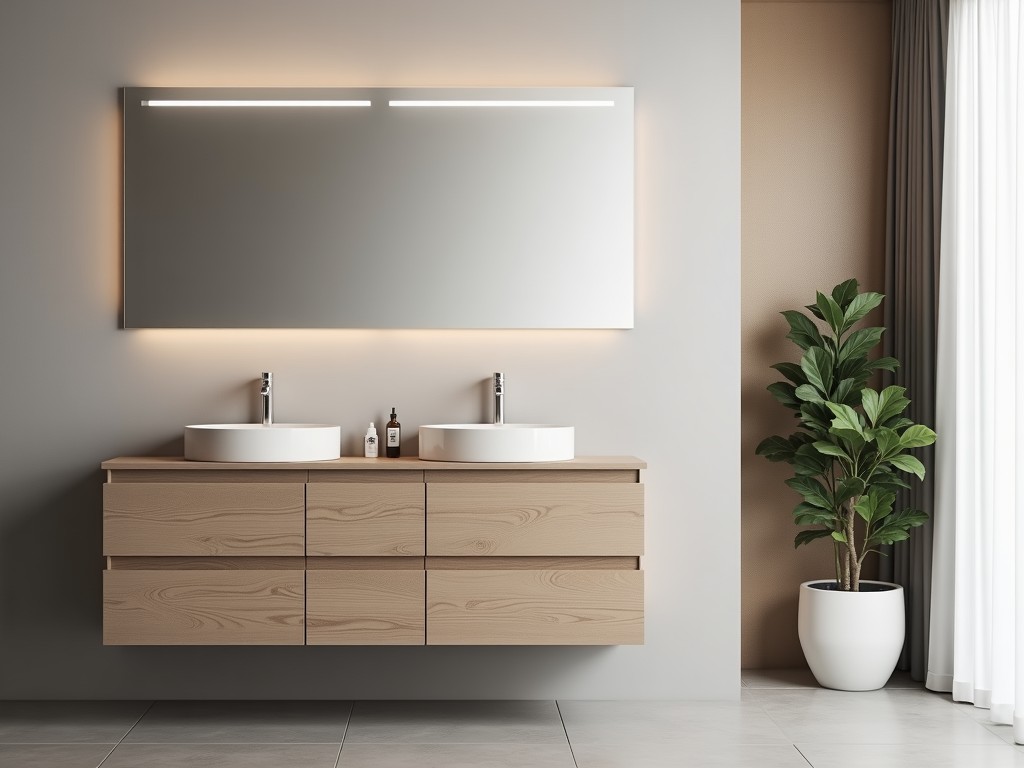
Oem Odm Bathroom Vanity Cabinet Manufacturer
Selecting a manufacturer for custom bathroom vanity cabinets requires understanding the technical capabilities that determine product suitability for commercial, hospitality, or high-end residential
- Category:
- Bathroom Cabinet
OEM/ODM Bathroom Vanity Cabinet Manufacturer
Selecting a manufacturer for custom bathroom vanity cabinets requires understanding the technical capabilities that determine product suitability for commercial, hospitality, or high-end residential projects. This page outlines the engineering and production considerations relevant to sourcing OEM/ODM vanity cabinets, focusing on measurable attributes rather than subjective claims.
Manufacturing Process and Material Selection
Cabinet construction begins with substrate selection, which directly impacts dimensional stability in humid environments. Common substrates include 18mm MR-grade plywood (moisture resistance tested per EN 312), 16mm particleboard with melamine facing, or 12mm MDF for painted finishes. Edge sealing is critical—PVC edgebanding (0.5–2mm thickness) applied via hot-melt adhesive prevents water ingress at joints. For wet zones, marine-grade plywood or WPC (wood-plastic composite) may be specified, though these increase material cost by 20–40%.
Hardware integration affects long-term performance. Soft-close hinges (rated for 50,000 cycles per EN 15570) and full-extension drawer slides (dynamic load capacity 30–40kg) are standard in commercial grades. Adjustable leg systems (steel, powder-coated, height range 0–50mm) accommodate uneven flooring. All metal components undergo salt spray testing (minimum 96 hours for Grade 5 corrosion resistance per ASTM B117) when specified for coastal or high-humidity installations.
Customization Workflow and Tolerances
OEM/ODM projects require clear specification of interface points. Vanity cabinets are designed to integrate with countertops (typically quartz, solid surface, or ceramic), undermount sinks, and plumbing rough-ins. Standard clearance between cabinet top and countertop underside is 18–22mm to allow for adhesive bonding and thermal expansion. Plumbing chase dimensions must accommodate P-traps (minimum 100mm depth) and supply lines; rear panel cutouts are sized per project drawings with ±2mm tolerance.
Door and drawer alignment is controlled through Euro-style hinges with 3-way adjustment (depth, side, height) and drawer boxes with cam locks for squareness. Typical gap tolerances: 1.5–2.0mm between door and frame, 0.5mm vertical alignment between adjacent drawers. Custom profiles (e.g., shaker, slab, routed) are achievable via CNC routing; radius internal corners require minimum 3mm tooling to prevent tear-out in veneered substrates.
Quality Control and Testing Protocols
Incoming material inspection includes moisture content measurement (target 8–12% for wood substrates using pin-type meters) and thickness verification (±0.3mm tolerance). During assembly, glue joint strength is spot-tested (minimum 1.0 MPa shear strength for PVAc adhesives per EN 204). Finished units undergo functional testing: door cycle tests (20 openings/closings per minute for 10 minutes), drawer load tests (25kg static, 10kg dynamic), and water resistance testing (surface exposed to 95% RH for 24 hours, no delamination or swelling >0.5mm).
Packaging is engineered to prevent damage during transit. Corner protectors (formed polystyrene or molded pulp), edge guards, and horizontal strapping secure units on pallets. Standard export packaging includes 6mm polyethylene foam wrap and 5-ply corrugated cartons (burst strength >275 kPa). For LCL shipments, additional corner bracing and top/bottom rigid boards are added. ISTA 3A certification is available upon request for packaging validation.
Typical Specifications Table
| Parameter | Typical Value / Range | Notes |
|---|---|---|
| Substrate Thickness | 12–18mm | MDF/particleboard/plywood; selected per load and moisture exposure |
| Door Overlay | Full, half, or inset | Determined by hinge type and aesthetic requirement |
| Drawer Slide Type | Side-mount, undermount, or soft-close | Load rating varies by slide geometry and extension length |
| Finish Options | Melamine, veneer, lacquer, PVC foil | Lacquer requires UV curing; minimum film thickness 25μm for durability |
| Standard Height | 800mm (adjustable ±50mm via legs) | To match global ergonomic standards for vanity use |
| Depth Range | 450–600mm | Limited by sink bowl size and plumbing access |
| Weight (unit) | 15–35kg | Depends on size, material, and hardware; affects handling and shipping costs |
Applications in Commercial and Residential Sectors
In hospitality projects, vanity cabinets must support frequent use and rigorous cleaning protocols. Substrates with non-porous finishes (e.g., thermofoil or UV-cured lacquer) resist chemical degradation from hospital-grade disinfectants. Integrated splash backs (100mm high, same material as cabinet) prevent water penetration at the wall joint—a detail often overlooked in residential designs but critical for commercial longevity.
For multi-unit residential developments, standardization reduces installation variability. Modular cabinet systems with interchangeable door/drawer fronts allow phased renovations without full unit replacement. Lockable drawers (optional, with cylinder locks rated for 10,000 cycles) provide security in shared bathrooms. Ventilation cutouts (50mm dia, rear panel) prevent moisture buildup in enclosed cabinets, a requirement in some building codes for mold prevention.
Healthcare facilities demand additional considerations: rounded corners (minimum 10mm radius) to reduce injury risk, antimicrobial coatings (tested per JIS Z 2801), and seamless countertop integration to eliminate crevices where pathogens can accumulate. These specifications increase unit cost by 15–25% but are non-negotiable for compliance with FGI Guidelines.
Engineering Considerations for Procurement
When requesting quotations, provide detailed drawings including: cabinet dimensions (W×D×H), sink cutout template, plumbing chase locations, required hardware specifications, and finish references (RAL/NCS codes or physical samples). Lead time is typically 4–6 weeks for standard materials after drawing approval; exotic veneers or custom finishes may extend this to 8–10 weeks. Tooling costs for unique profiles (e.g., raised panel, ogee edge) are amortized over orders exceeding 50 units.
Payment terms commonly follow 30% T/T deposit, 70% against copy of B/L. FOB Ningbo/Shanghai is standard; EXW or CIF terms are adjustable. Quality assurance protocols (e.g., third-party inspection by SGS or Bureau Veritas) are available at buyer’s expense. Sample units are charged at 1.5x unit cost, credited against first order exceeding 20 units.



