Laundry Sink Base Cabinet Top Supplier
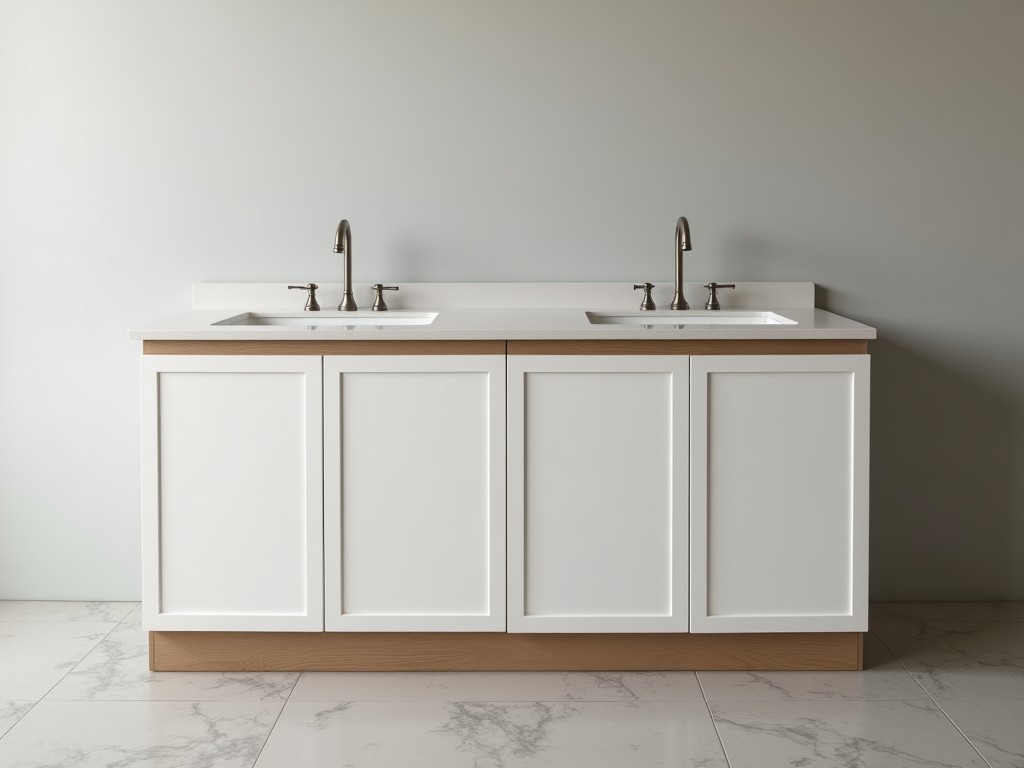
Laundry Sink Base Cabinet Top Supplier
Selecting a supplier for laundry sink base cabinet tops requires evaluating material compatibility, dimensional precision, and integration with existing cabinetry systems. Industrial buyers
- Category:
- Bathroom Cabinet
Laundry Sink Base Cabinet Top Supplier
Selecting a supplier for laundry sink base cabinet tops requires evaluating material compatibility, dimensional precision, and integration with existing cabinetry systems. Industrial buyers prioritize suppliers who can deliver consistent quality across production runs while accommodating project-specific modifications.
Material Composition and Performance Characteristics
Laundry sink base cabinet tops are commonly fabricated from solid surface composites, stainless steel grades, or high-pressure laminate (HPL) over moisture-resistant substrates. Solid surface materials offer seamless joints and resistance to staining from detergents and bleach, while 304 stainless steel provides corrosion resistance in high-humidity environments. HPL finishes require edge sealing to prevent water ingress into particleboard or MDF cores, which can lead to swelling over time.
Thermal expansion coefficients vary significantly between materials: solid surface averages 25–35 µm/m·°C, stainless steel 16–18 µm/m·°C, and HPL-covered substrates 30–50 µm/m·°C depending on core density. Suppliers must account for these differences during fabrication to avoid joint stress or cracking under temperature fluctuations common in utility rooms.
Dimensional Tolerances and Fabrication Standards
Critical dimensions include overall length, width, thickness, and cutout precision for sink bowls and faucet decks. Typical thickness ranges from 12 mm for laminate composites to 20–25 mm for solid surface and stainless steel options. Length tolerances are generally held to ±1.5 mm for standard runs, with tighter ±0.5 mm achievable for CNC-machined joints in seamless installations.
Cutout radii for sink bowls must match manufacturer specifications to prevent stress concentration; a 3 mm radius is common for solid surface, while stainless steel often requires 5–6 mm to accommodate forming limitations. Overhang beyond cabinet fronts typically ranges from 10–20 mm to facilitate cleaning and prevent water drip onto doors, with exact values determined by door thickness and hinge clearance.
Edge Treatment and Sealing Methods
Edge finishing directly impacts long-term moisture resistance and aesthetic continuity. Solid surface edges are typically joined via adhesive bonding and sanded to a uniform finish, creating a monolithic appearance. Stainless steel edges may be rolled, welded, or fitted with complementary trim to eliminate sharp edges and prevent corrosion initiation points.
For laminate tops, PVC or ABS edge bands are applied using hot-melt adhesives, with sealant applied at the seam between the edge band and top surface to block moisture migration. Joint sealant selection—neutral cure silicone or polyurethane—depends on substrate compatibility and expected movement; acidic cure silicones can degrade certain substrates over time and are avoided in utility applications.
Customization Capabilities and Project Integration
Suppliers accommodate customization through parametric design files, allowing adjustments to sink bowl placement, faucet hole patterns, and backsplash height. Backsplashes are frequently integrated to protect wall surfaces from splashing, with standard heights of 100 mm but adjustable to 150 mm or higher based on sink depth and wall finish.
Cutouts for accessories such as soap dispensers, spray nozzles, or laundry chute connections require precise location data from the client’s plumbing layout. Suppliers typically request DXF or DWG files with datum points referenced to cabinet carcass edges to ensure alignment during installation. Modifications to standard designs are evaluated for structural impact, particularly when reducing material thickness near cutouts.
Quality Control and Inspection Protocols
Dimensional verification occurs at multiple stages: after raw material cutting, post-forming, and pre-shipment. Coordinate measuring machines (CMM) or digital calipers validate critical dimensions, while visual inspections under 500 lux lighting assess surface finish, joint uniformity, and edge integrity. Color consistency is checked against master samples under D65 lighting for solid surface and laminate options.
Adhesive bond strength in solid surface joints is tested using pull-off methods per ASTM D4541, with minimum acceptable values typically exceeding 1.5 MPa. Stainless steel welds undergo dye penetrant inspection to detect surface-breaking defects. For laminate tops, adhesion of edge bands is verified via peel testing according to EN 14323 standards, with failure at the bond line indicating inadequate processing.
Packaging and Logistics Considerations
Finished tops are packaged to prevent edge chipping and surface scratching during transit. Common methods include horizontal stacking with corrugated dividers, vertical placement in A-frame racks with foam padding, or individual wrapping in polyethylene stretch film combined with corner protectors. Heavy-gauge corrugated cardboard or reusable plastic crates are used for outer protection, with internal bracing to limit flexing.
Palletized shipments typically accommodate 10–20 units depending on size and weight, with maximum stack heights limited to 1.2 m to prevent deformation. Shock indicators and tilt sensors may be included for long-distance or export shipments to monitor handling conditions. Suppliers provide packing lists detailing part numbers, dimensions, and material grades to facilitate receiving inspection.
| Attribute | Typical Range / Option | Notes |
|---|---|---|
| Material Thickness | 12–25 mm | Dependent on substrate and finish |
| Length Tolerance | ±0.5 to ±1.5 mm | Tighter tolerances achievable with CNC |
| Standard Overhang | 10–20 mm | Based on door clearance and cleaning access |
| Backsplash Height | 100–150 mm | Customizable per wall protection needs |
| Edge Sealant Type | Neutral cure silicone/PU | Avoid acidic cure in utility environments |
Applications in Commercial and Institutional Laundry Facilities
Laundry sink base cabinet tops are specified in environments where exposure to alkaline detergents, chlorine bleach, and high humidity is routine. In hospitality linen rooms, the tops must resist repeated contact with wet linens and cleaning agents without degradation. In healthcare facilities, non-porous surfaces support infection control protocols by enabling effective cleaning and preventing microbial harborage in seams or pores.
Industrial laundries and uniform supply services require tops that can withstand impact from metal carts and abrasion from scrubbing brushes. Solid surface and 304 stainless steel are preferred in these settings due to their repairability and resistance to chemical etching. Educational institutions often select HPL tops with sealed edges for cost-effective performance in moderate-use settings, provided maintenance includes periodic sealant inspection.
For technical specifications, customization requests, or project consultation, contact our engineering team to discuss material selection, dimensional requirements, and integration with your laundry cabinetry system.
Request Technical Consultation


