Floating Bathroom Vanity With Sink
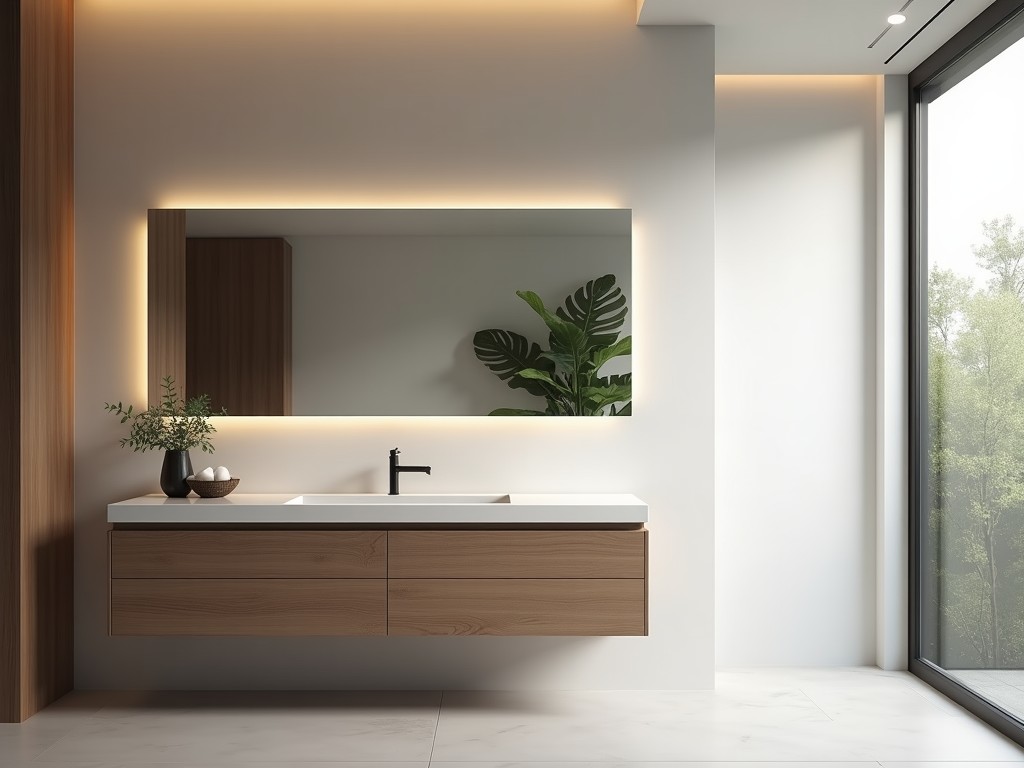
Floating Bathroom Vanity With Sink
A floating bathroom vanity with integrated sink combines a wall-mounted cabinet and a molded basin into a single structural unit. This design eliminates visible plumbing supports and creates a
- Category:
- Bathroom Cabinet
Floating Bathroom Vanity with Integrated Sink
A floating bathroom vanity with integrated sink combines a wall-mounted cabinet and a molded basin into a single structural unit. This design eliminates visible plumbing supports and creates a continuous surface that simplifies cleaning and enhances spatial perception in compact bathrooms. Industrial buyers specify these units for high-traffic commercial restrooms, hospitality suites, and premium residential developments where durability, hygiene, and installation efficiency are critical.
The vanity body is typically constructed from moisture-resistant engineered wood or solid surface composites, with edge sealing to prevent water ingress. The sink basin is either thermoformed from the same material as the cabinet or bonded as a separate insert, ensuring seamless transition between horizontal and vertical surfaces. Load-bearing capacity is engineered to support dynamic loads from daily use, with wall anchors rated for minimum 150 kg per mounting point when installed on reinforced studs or concrete backing.
Material Options and Performance Characteristics
Material selection directly impacts long-term performance in wet environments. Common options include:
- High-pressure laminate (HPL) over moisture-resistant MDF: resistant to surface abrasion and staining, with edge banding sealed to prevent delamination;
- Solid surface (acrylic or polyester-based): non-porous, repairable, and capable of seamless integration with sink basin;
- Quartz composite: high impact resistance, low thermal expansion, and consistent color throughout the thickness;
- Marine-grade plywood with waterproof coating: used in high-humidity zones where structural flexibility is required.
Each material undergoes standardized testing for water absorption (ASTM D570), surface hardness (ASTM D785), and chemical resistance (ASTM D1308). Typical values for solid surface include water absorption <0.05%, Barcol hardness 50-60, and resistance to common bathroom cleaners without surface degradation.
Structural Design and Installation Requirements
The floating configuration relies on concealed wall brackets that transfer load directly to the building structure. Brackets are typically fabricated from cold-rolled steel with powder-coated finish, designed to accommodate vertical adjustment ±5 mm for alignment tolerance. Mounting holes are pre-drilled at 16-inch or 400-mm centers to match standard stud spacing, with optional templates for concrete or masonry substrates.
Plumbing rough-in must accommodate the integrated sink’s drain outlet position, which is typically centered 18-22 inches above finished floor and offset 4-6 inches from the back wall to allow for P-trap installation. Supply lines are routed through the cabinet rear or side panels, with access holes sized for 1/2-inch copper or PEX tubing. Ventilation clearance of at least 20 mm behind the vanity is recommended to prevent moisture trapping.
Dimensional Standards and Customization Logic
Standard widths range from 600 mm to 1200 mm in 100-mm increments, depths from 450 mm to 550 mm, and heights from 800 mm to 850 mm (including sink basin depth). Custom lengths are achievable through modular panel joining, with seamless joints possible in solid surface and quartz materials. Height adjustment is limited by ergonomic standards; deviations beyond 750–900 mm from floor to sink rim require ADA compliance review.
Basin geometry options include rectangular, oval, or asymmetrical shapes, with bowl depth typically 120-180 mm to balance splash containment and user comfort. Faucet drilling patterns are customizable: single-hole, 4-inch centerset, or 8-inch widespread, with hole locations specified relative to basin centerline. Overflow provisions are included by default unless explicitly omitted for design-specific applications.
Quality Control and Manufacturing Considerations
Production follows ISO 9001-aligned processes with in-line checks at material cutting, edge sealing, basin forming, and final assembly. Critical control points include:
- Adhesive bond strength between cabinet and sink insert (minimum 1.5 MPa shear test);
- Surface flatness tolerance (±0.5 mm over 300 mm length);
- Edge sealing continuity (holiday testing with 90V DC probe);
- Load test of wall brackets (static 200 kg for 10 minutes with zero deflection).
Finished units undergo 24-hour water exposure testing to verify no swelling, delamination, or leakage at joints. Documentation includes material safety data sheets (MSDS), installation templates, and load certification reports available upon request.
Typical Applications in Commercial and Residential Projects
In hospitality environments, floating vanities reduce cleaning time by eliminating floor-contact surfaces where moisture and microbes accumulate. The open space beneath improves accessibility for cleaning robots and supports ADA-compliant clear floor space requirements. In multi-family residential projects, standardized dimensions allow for rapid rough-in and reduced on-site labor. For healthcare auxiliary spaces (e.g., staff restrooms), non-porous solid surface options minimize bacterial retention and withstand frequent disinfection with quaternary ammonium or alcohol-based solutions.
Retail and office buildings benefit from the modern aesthetic and reduced visual clutter, which contributes to perceived cleanliness and space efficiency. The absence of legs or toe kicks eliminates tripping hazards and simplifies flooring installation, particularly in retrofit scenarios where existing tile or vinyl must remain intact.
| Parameter | Typical Range | Customizable? |
|---|---|---|
| Width | 600–1200 mm | Yes, in 50-mm increments |
| Depth | 450–550 mm | Yes, subject to sink clearance |
| Height (to sink rim) | 800–850 mm | Limited by ergonomics |
| Basin Depth | 120–180 mm | Yes, within material limits |
| Load Capacity per Anchor | ≥150 kg | Engineered to project specs |
Lead times vary based on material and complexity: standard HPL units ship in 3–4 weeks, solid surface and quartz in 4–6 weeks. Packaging includes corner protectors, edge foam, and moisture-barrier wrapping for export shipments. Installation hardware and templates are included with every unit.



